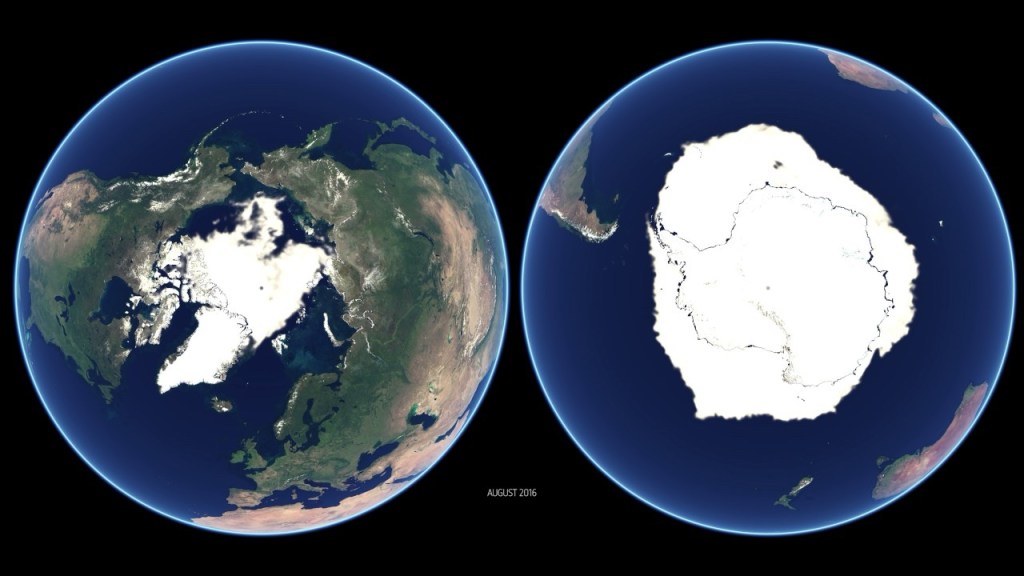
The theory of true polar wander (TPW)—where Earth’s outer shell shifts relative to the rotational axis—can be tied to the mass migration of ancient humans across the Bering Strait during the Ice Ages by considering the climatic and environmental changes such shifts could have caused. The TPW theory posits that Earth’s solid crust might have shifted, relocating the geographic poles. Such a movement could explain irregular glaciation patterns observed during the Ice Ages, where some northern regions (like Siberia and Alaska) remained ice-free while areas farther south were heavily glaciated. This aligns with evidence that the Bering Strait and the surrounding land (Beringia) remained a habitable, ice-free corridor despite widespread glaciation elsewhere. This ice-free state could have been due to localized warming or reduced snowfall caused by changes in Earth’s rotational dynamics.
Beringia, the land bridge connecting Siberia and Alaska, was exposed during glacial periods due to lower sea levels. If TPW played a role in shaping ice sheet distribution, it may have also influenced the habitability and accessibility of this region. These conditions made Beringia a viable migration route for ancient humans traveling from Asia to the Americas around 20,000–15,000 years ago. The TPW theory suggests dynamic climatic shifts, which could have influenced the timing of human migrations. For example, periodic pole shifts may have created windows of opportunity with milder climates, allowing human groups to survive and migrate. Seasonal shifts in glaciation could have made the route more traversable. If TPW contributed to rapid environmental changes, ancient humans likely adapted by following resources, such as game and plants, that shifted with the climate. This would have driven migration patterns, including the journey across Beringia.
True polar wander may provide an additional layer of explanation for why certain regions, such as Beringia, remained habitable and ice-free during glacial maxima. By altering Earth’s climatic zones and redistributing ice sheets, TPW could have indirectly facilitated the mass migration of ancient humans across the Bering Strait and into the Americas. This theory, while speculative, adds nuance to our understanding of how ancient humans navigated an ever-changing Ice Age world.
The migrations of ancient humans across Beringia, potentially influenced by climate shifts tied to true polar wander (TPW), provide a compelling explanation for the widespread similarities in archaeological findings across continents. Human dispersal via Beringia allowed ancient humans to migrate from Siberia into the Americas during the last Ice Age, carrying with them shared cultural practices, technologies, and knowledge systems. Similarities in stone tool technologies, such as Clovis points in North America and earlier tools in Siberia, reflect a common technological heritage developed before or during migration. If TPW altered climatic zones, it could have funneled groups of humans through specific regions like Beringia, concentrating populations in areas that supported survival. This shared geography would have amplified cultural exchange and technological diffusion.
The challenges of glacial climates, such as hunting large mammals like mammoths and bison, required similar survival strategies. Migrating groups developed tools, shelter designs, and clothing adapted to cold, which they carried and modified as they spread across continents. Bone and ivory tools, portable art, and cold-adapted dwellings found across Siberia, Beringia, and into North and South America suggest these practices were disseminated during migration. TPW-driven shifts in Earth’s poles could have altered ecosystems, influencing the distribution of megafauna and plant life. These environmental changes may have led humans across different continents to converge on similar hunting and foraging strategies, creating parallel developments in material culture.
As humans spread across continents, they adapted shared cultural foundations to diverse environments. This explains why similar motifs in art, burial practices, and tool use are found in distant regions. Petroglyphs and cave art found in Europe, Siberia, and the Americas, as well as burial mounds and ritual objects, suggest shared spiritual practices. These similarities are likely the result of common ancestral practices carried during migration, later evolving independently in different regions. Environmental parallels created by TPW, such as tundra and steppe ecosystems, might have driven humans to independently develop similar solutions, reinforcing the appearance of a shared heritage.
Beringia acted as both a migratory corridor and a staging ground for human populations. Cultural continuity between Siberian and North American sites, such as Denali Complex tools, supports the idea that technologies and ideas were shared extensively before dispersing further. The later spread of technologies like projectile points or pottery across North and South America reflects a ripple effect from these initial migrations. Once humans reached new territories, cultural exchange continued through trade networks. Similar artifacts, such as symbolic carvings or tool types, suggest long-distance interaction or parallel evolution influenced by shared migratory roots.
The mass migrations facilitated by climatic shifts, potentially influenced by TPW, created a foundation for shared cultural traits across continents. These migrations explain why similar archaeological patterns in tools, art, and burial practices are found in distant regions like Siberia, the Americas, and beyond. The environmental pressures of the Ice Age—and the shared experiences of the migrating populations—united human groups in ways that still echo in the archaeological record today.
The similarities between monumental structures like Machu Picchu, the Egyptian pyramids, and the Mayan pyramids can be viewed through the lens of human migration, shared cultural diffusion, and adaptation to environmental shifts, potentially influenced by phenomena such as true polar wander (TPW) and ancient seafaring. Human migrations during the Ice Age and beyond, potentially shaped by TPW-induced environmental changes, laid the groundwork for common cultural practices that later evolved into monumental architecture. Early migrations from Africa to Asia, across Beringia into the Americas, and through oceanic routes spread foundational ideas, including a focus on celestial alignment, religious symbolism, and hierarchical societies. The shared need to connect with the cosmos and express societal power led to strikingly similar architectural principles, such as the pyramids of Egypt aligned with stars like Orion’s Belt, the Mayan pyramids tracking solar and lunar cycles, and the terraces of Machu Picchu designed for both agriculture and spiritual purposes.
TPW might have influenced migration and cultural development by altering climatic zones and habitable regions. Ancient civilizations like the Egyptians, Mayans, and Incas placed immense importance on astronomy. If TPW caused shifts in Earth’s poles, it might have also shifted the skies, prompting migrations and recalibrations of sacred architecture to align with changing celestial patterns. The global fascination with sun gods and celestial tracking, such as Ra in Egypt, Inti in Inca culture, and the Mayan sun deity Kinich Ahau, might reflect a shared ancestral focus on adapting to climatic changes caused by pole shifts. TPW-induced environmental changes may have encouraged certain regions to become hubs of innovation and monumental architecture. For instance, the fertile Nile Valley enabled the construction of pyramids, Mesoamerica’s warm, predictable climate allowed Mayan cities to flourish, and Andean highlands supported the development of Machu Picchu.
Ancient seafaring peoples might have acted as conduits for spreading architectural knowledge and cultural practices, connecting seemingly disparate civilizations. Oceanic peoples, from Polynesians to pre-Columbian seafarers, were capable of long-distance travel and cultural exchange. This network could have facilitated the diffusion of ideas across continents. The Austronesians, for example, navigated the Pacific, potentially linking Asia, the Americas, and Oceania. This could explain shared practices such as pyramid-building and celestial alignment. Evidence of transoceanic contact, like similarities in maize cultivation across continents, hints at a broader network of interaction. Civilizations independently invented monumental architecture due to shared human tendencies, but similarities like stepped pyramids in Mesoamerica, ziggurats in Mesopotamia, and the Egyptian pyramids suggest that ancient maritime contact might have reinforced these patterns.
The Inca’s construction of Machu Picchu illustrates how migration and adaptation to unique environments led to architectural brilliance. Machu Picchu’s design mirrors other ancient sites in its alignment with celestial bodies, reflecting a shared human response to navigating Ice Age skies, where pole shifts influenced what stars were visible and culturally significant. The terraces and water management systems reflect knowledge potentially rooted in earlier migratory agricultural practices. If TPW caused climatic shifts, it might explain the geographic distribution of monumental architecture. TPW may have rendered some regions uninhabitable while making others suitable for human settlement, concentrating populations in areas like the Nile Valley, Mesoamerica, and the Andes. These areas became cultural hubs where shared practices, such as monument-building, flourished and diverged. Ancient cultures likely observed environmental changes, including shifts in weather, sea levels, and the stars. These changes might have been tied to TPW and influenced the design of monumental structures to harmonize with perceived cosmic order.
The construction of Machu Picchu, the pyramids of Egypt, and the Mayan pyramids represents a human tendency to express power, spirituality, and harmony with the cosmos. Migration, environmental adaptation, and possible transoceanic contact all contributed to these developments. In the face of climatic instability, ancient peoples used monumental architecture to establish permanence and order, reflecting their connection to ancestral traditions carried through migrations. The global distribution of similar architectural forms highlights humanity’s shared origins and innovative adaptations to their unique environments. The theory of true polar wander, combined with Ice Age migrations and maritime networks, provides a compelling framework for understanding the parallels between Machu Picchu, the pyramids of Egypt, and Mayan structures. TPW may have indirectly shaped human movement, environmental pressures, and celestial awareness, while oceanic peoples facilitated the exchange of knowledge, tying together the monumental legacies of ancient civilizations.
Afghanistan, cannabis, and the global migration and cultural diffusion during ancient times, potentially influenced by theories like true polar wander (TPW), reflect how human movement, environmental changes, and trade networks shaped civilizations and their shared practices. Afghanistan has long been a cultural and geographic crossroads, connecting the Middle East, Central Asia, and the Indian subcontinent. Its location along the ancient Silk Road facilitated the exchange of goods, ideas, and technologies, including cannabis cultivation and use. Afghanistan’s position near the Hindu Kush mountains provided fertile valleys and routes for ancient migrations. These regions likely became hubs for human settlement during the Ice Ages as populations adapted to changes influenced by TPW. The region’s rugged terrain protected ancient cultures while also allowing innovations like agriculture, which included the domestication of cannabis. Cannabis is native to Central Asia, including Afghanistan, and its use dates back thousands of years. Migrating humans likely carried cannabis seeds across continents as they moved due to climate shifts or environmental pressures. Archaeological evidence suggests cannabis was used for fibers (hemp), medicine, and psychoactive purposes. Its versatility made it a valuable crop for ancient peoples adapting to different climates.
Cannabis provides a unique lens through which to examine human migration and cultural diffusion. As humans migrated across continents—via Beringia, the Silk Road, or maritime routes—they brought cannabis with them. Its cultivation is found in diverse archaeological contexts, from China’s Yangshao culture to prehistoric Europe and the Americas. In Afghanistan, cannabis likely thrived in the fertile soils of valleys like the Helmand River basin, serving as an important resource for both subsistence and trade. Ancient societies that built monumental structures, such as the Egyptians, Mayans, and Incas, might have also utilized cannabis for spiritual rituals or practical purposes. For example, Egyptians referenced cannabis in medicinal texts like the Ebers Papyrus, and Mayan shamans and other American cultures used psychoactive plants, which may parallel cannabis use in Afro-Eurasia.
TPW might have influenced the spread and cultivation of cannabis. Cannabis is highly adaptable, thriving in various climates. TPW-induced changes in Earth’s poles and climatic zones could have expanded its natural range, making it a companion crop for migrating humans. During glacial periods, cannabis may have played a critical role in survival, providing food (seeds), clothing (fibers), and psychoactive substances for rituals that helped unify communities. As the Ice Ages receded, regions like Afghanistan, with their temperate climates, became ideal for cannabis cultivation. From here, cannabis likely spread to the Middle East, India, and beyond through trade and migration networks, eventually reaching the Americas.
The Silk Road, which passed through Afghanistan, played a crucial role in spreading cannabis and cultural ideas to other monumental civilizations. Cannabis seeds, fibers, and psychoactive products were likely exchanged along the Silk Road, linking Afghanistan with Egypt, Mesopotamia, India, and China. These exchanges contributed to shared agricultural practices and cultural rituals. The use of cannabis in spiritual contexts, such as Hinduism’s association with Shiva or ancient Chinese burial rites, reflects its cultural significance. The Silk Road also facilitated the exchange of architectural ideas. For instance, the stepped pyramids of Mesopotamia and Egypt might share conceptual links with later Mayan pyramids due to distant but connected migratory origins. Similarly, Afghan stupa-like structures (e.g., in Bamiyan) echo the spiritual and celestial focus found in Machu Picchu or Mayan cities.
Cannabis’s spread wasn’t confined to land routes—it also likely traveled with oceanic peoples, tying it to transoceanic theories of cultural diffusion. Ancient seafarers, such as Austronesians, may have carried cannabis seeds to distant islands, much like they spread crops like bananas and taro. The ability of cannabis to adapt to new environments made it an ideal crop for these voyages, and its psychoactive properties could have played a role in rituals tied to celestial navigation. Oceanic peoples’ potential contact with the Americas, combined with Afro-Eurasian exchanges, may explain why psychoactive plants play a prominent role in spiritual practices across distant civilizations.
Afghanistan’s centrality in human migration and cannabis cultivation ties it to the broader patterns of monumental civilizations and cultural diffusion. The cultivation and use of cannabis, originating in regions like Afghanistan, became a unifying thread for ancient societies. Its spread reflects the interconnectedness of human migration, environmental adaptation, and cultural exchange. Despite climatic changes caused by TPW, Afghanistan’s mountainous terrain provided relative stability, making it a hub for innovation, including cannabis domestication, which later spread to monumental civilizations like Egypt, the Mayans, and Inca. Afghanistan, cannabis, and ancient migrations converge as part of a broader narrative of how environmental changes, possibly influenced by true polar wander, shaped human history. Afghanistan’s role as a cultural crossroads helped disseminate cannabis, technologies, and ideas that influenced monumental cultures like those of Egypt, the Mayans, and the Incas. Combined with maritime networks, cannabis became a symbol of humanity’s adaptability and interconnectedness, bridging continents and civilizations across time.

 ov1d.com