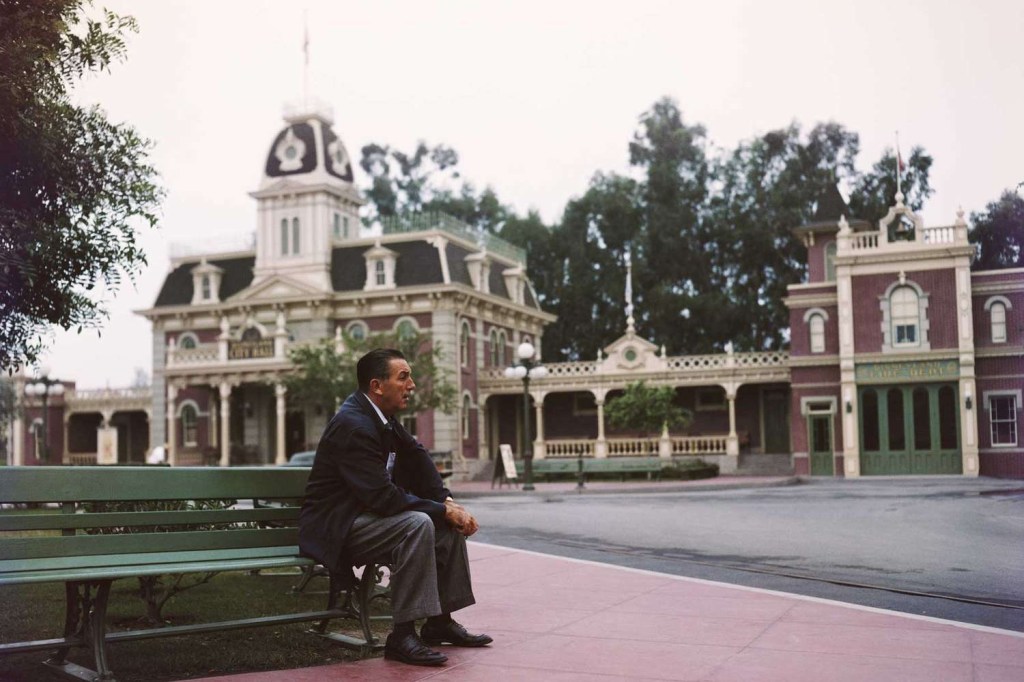
Disneyland is the capital of the world. It is not a mere theme park, nor a retreat into fantasy. It is the prototype for a future unshackled from the failures of the adult world. It stands as a declaration that joy, wonder, and imagination are not frivolous distractions but the foundation of civilization itself. In Disneyland, the laws of scarcity, bureaucracy, and cynicism do not apply. Here, the child is sovereign, and the adult is reminded of what was stolen from them by the forces of practicality and compromise. This is not escapism—it is a blueprint. It is proof that a world designed for delight, for discovery, for storytelling, is not only possible but necessary.
The adult world has failed. It has prioritized profit over purpose, efficiency over beauty, and power over play. It has waged war on innocence, forcing children into systems that strip them of their wildest dreams and reshape them into workers, consumers, and citizens of a civilization that has forgotten how to build anything but machines and markets. It has refused to see what Walt Disney understood: that the imagination of a child is the purest form of intelligence, the highest state of being. A world that is hostile to wonder is a world that is hostile to life itself.
Walt Disney, through his films and through Disneyland, sought to construct something greater than entertainment—he sought to restore myth. His early films—Snow White, Pinocchio, Fantasia, Dumbo, Bambi—were not merely stories but survival guides. Bruno Bettelheim, in The Uses of Enchantment, saw fairy tales as necessary tools for the development of the human mind, as maps through the dark forests of childhood. Disney’s genius was in translating these myths into modernity, giving children—and the world—a way to confront fear, loss, and transformation. His Disneyland was the next step: a physical manifestation of those same myths, a place where the fairy tale did not end when the screen faded to black but continued in a built environment, a world sculpted to remind us that wonder is not an illusion, but a birthright.
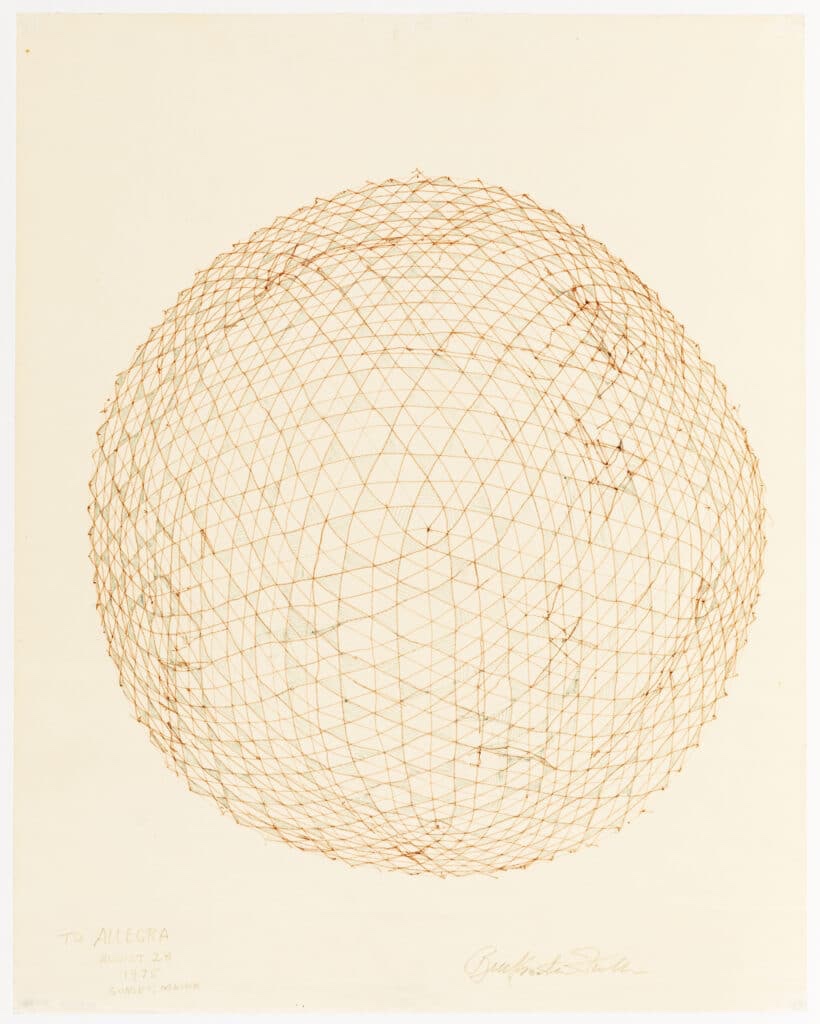
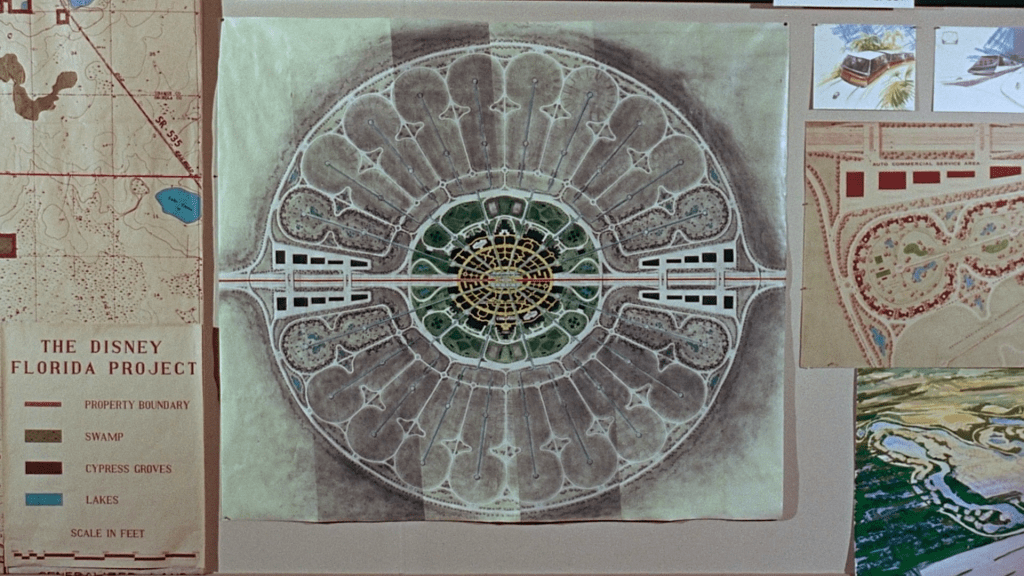
This was the dream of more than just one man. Buckminster Fuller saw the Earth itself as a design problem, one that could be solved through ingenuity, beauty, and efficiency in service of human flourishing. His geodesic domes, his theories of ephemeralization, his insistence that humanity could be elevated through better architecture and better thinking, all align with the vision of Disneyland and what it represents. Frank Lloyd Wright, too, envisioned a world where cities were not machines for living but symphonies of space and form, where art and function were inseparable. EPCOT, in its original conception, was meant to be this—a place where innovation and humanity merged, where the future was not imposed by faceless industries but shaped by those who dared to dream.
But the adult world recoils at such visions. It demands obedience to the present order, to systems that grind imagination into dust. It sneers at utopia and calls it impossible. It tolerates childhood only as a temporary condition, one that must be abandoned in favor of “real life.” It refuses to see that the only real life worth living is one in which children, and the childlike spirit, are given the space to thrive.
This is the battle that must be fought. The future cannot be left to those who see only numbers, borders, and bottom lines. It must belong to the dreamers, to those who see in Disneyland not an amusement park but a revolution. A revolution against a world that tells us that joy is secondary, that beauty is expendable, that the future belongs to the powerful rather than the playful.
We must build a world that is safe for children—not just in the sense of protection from harm, but in the sense that their imaginations must be nurtured, expanded, and given room to grow. We must challenge every system that seeks to crush curiosity, every institution that treats childhood as a problem to be solved rather than a state to be preserved. We must not allow the adult world to continue unchecked in its march toward destruction, toward sterility, toward a future that is merely an extension of its failures.
Disneyland is not a dream. It is a warning. A beacon. A call to arms. It is proof that another world is possible—but only if we fight for it. The future must be designed, and it must be designed for joy. We must choose wonder over war, imagination over inertia, storytelling over systems of control. We must check the adult world before it consumes itself.
The child is the future. The future is now. The dream must win.


 ov1d.com