
“…the hour of the virile age struck.” - Victor Hugo
Fruit of the Loom
In a loom the warp threads stretch taut from beam to beam, forming the fixed longitudinal grid that lends cloth its tensile strength and lets it be handled without collapsing; the weft is the single strand that the shuttle drives cross-wise, diving alternately over and under the warp to lock the whole fabric together. The miracle of weaving is that these two motions—one pure tension, one pure traversal—produce a surface that is simultaneously firm and supple: the warp carries load, the weft distributes stress, and their mutual friction prevents either set of threads from slipping free.
Mechanica Oceanica maps this interplay directly onto its duplex currents. The warp is the Ω-flow: an aligning force that narrows phase dispersion into coherent beats, giving a phenomenon its recognizable contour and endurance. The weft is the ο-flow: a roaming perturbation that interrupts, loosens, and then re-enters the lattice, ensuring that the pattern never petrifies. Any system that privileges warp alone becomes a brittle harp-string mesh, prone to tearing when conditions shift; one that indulges only weft dissolves into tangled fluff. Ethical and political resilience therefore consist in active weaving: maintaining enough warp tension to shelter life while letting the shuttle of novelty keep passing through, so that the fabric—whether a body, a community, or an ecosystem—remains strong precisely because it is continually being rewoven from within.
——
Derrida lifts his epigraph from Victor Hugo’s exuberant homage to the French Revolution, Paris (later re-gathered in Actes et paroles, Depuis l’exil). In the passage Hugo equates the coming of the Revolution with the coming of manhood:
« La vraie naissance, c’est la virilité. Le 14 juillet 1789, l’heure de l’âge viril a sonné. »
Collins’s English translation, the one that appears in Politics of Friendship, renders it as:
“True birth is virility. On 14 July 1789, the hour of the virile age struck.”
Derrida cites the line to highlight how modern political myths of fraternity and citizenship are framed in the muscular rhetoric of “virile” maturity. By quoting Hugo at the very moment he begins dismantling the classical equation friend = brother—an equation that has long smuggled an exclusive, masculine model of political belonging—Derrida shows that even revolutionary ideals of equality were announced in the language of gendered power. The quotation thus serves as both an emblem of the promise of democratic “new birth” and a reminder that the promise was articulated in a register that silently excluded women and others from the fraternity it celebrated.
Hugo’s insistence that the Revolution marks a “true birth” because it announces the “virile age” lets Derrida expose how modern political narratives trade on a rite-of-passage fantasy: the polity is imagined as a young man crossing a threshold, leaving behind the dependency of childhood and claiming sovereign agency. Derrida’s point is not simply that the metaphor is exclusionary; it is that the very grammar of founding events—an origin ratified by an appeal to virility—already builds fratricidal tension into republican fraternity. If citizenship equals virile adulthood, anyone classed as “non-virile” (women, the enslaved, colonial subjects, the disabled) is positioned either as perpetually immature or as a threat to the fraternal body, liable to be disciplined or expelled in order to preserve the myth of collective manhood.
In the larger arc of Politics of Friendship, the epigraph cues Derrida’s critique of the binary friend/enemy schema inherited from Carl Schmitt: both categories emerge from the same masculinist logic of brotherhood, where mutual recognition presupposes a shared virile status. By foregrounding Hugo’s celebration of 14 July 1789, Derrida shows that even the most emancipatory revolutions risk reinscribing an ancestral law of gendered kinship beneath their universalist slogans. The task, then, is not to purge politics of friendship but to re-imagine friendship beyond the virile paradigm—toward a bond that can admit heterogeneity without demanding assimilation into the figure of the “grown man” of the nation.
Hugo’s couplet also lets Derrida interrogate the temporality of revolution itself. By announcing “the hour of the virile age,” Hugo frames 14 July 1789 as a punctual, almost calendrical break: before it, the people are juvenile; after it, they stand erect in adult mastery. Derrida counters that such punctuality is philosophically fragile—every “birth” recited after the fact is already haunted by deferrals, repetitions, and the spectral remains of what it claims to supersede. The Revolution names a decisive moment only by erasing the slow accretions of unrest that preceded it and the continuing exclusions that shadow its promise. Thus the metaphor of virile arrival does not simply naturalize manhood; it also masks the undecidability of beginnings, letting the new regime occlude both the labor of those rendered “non-virile” and the lingering debts owed to them.
From this angle, Derrida’s wider project is to reopen the concept of political community to forms of affiliation that do not rely on virile rupture. His appeal to the “perhaps” of friendship—an indeterminate willingness to receive the other without pre-inscribed fraternity—keeps open a space for solidarities that exceed both consanguinity and martial loyalty. If the myth of virile birth clears the field by naming who counts as fully grown, Derrida’s counter-mythology invites attention to fragile, cross-difference bonds that grow without the guarantee of maturity or mastery. Friendship, recast in that key, becomes less an achievement of strength than a practice of sustained vulnerability: the readiness to dwell with those whose emergence cannot be dated to a single heroic hour.
Derrida’s deconstruction of Hugo’s virile motif ultimately exposes a deeper fault line in republican self-understanding: the claim to a “natural” fraternity rests on an inherited logic of filiation, where legitimacy flows from blood, lineage, and a normative image of the adult male body. By reopening this genealogy to scrutiny, Derrida shows that friendship cannot be reduced to the recognition of the same—whether biological, cultural, or ideological. Once the fraternal scene is acknowledged as a contingent historical construct, friendship reappears as an adoptive rather than natal bond: a relation founded on translation, negotiation, and a readiness to remain exposed to what cannot be prefigured by the family romance of citizenship.
The political consequence is a call to displace the rhetoric of virility with practices that welcome those whose emergence does not conform to heroic thresholds. Feminist, queer, and decolonial movements that foreground care, interdependence, and porous identity can be read as working in Derrida’s wake, insisting that solidarity grows through sustained hospitality to difference rather than through the drama of masculine arrival. In that sense, the Revolution’s promise is kept not by reenacting its virile birth but by inventing forms of community where belonging is continually re-articulated, never secured once and for all by an origin myth of sovereign manhood.
—-
In Totality and Infinity Levinas recasts generation as an ethical, not a biological, event. His name for this redirection is paternity: a relation in which the father is bound to the child precisely because the child exceeds him. The son or daughter is “other than the same”—an alterity that emerges from the father yet cannot be subsumed into him. Because the offspring’s future is irreducible to the father’s present, paternity opens a breach in time: it inserts the father into an unmasterable posterity and thus exposes him to an infinity he cannot contain. Unlike the virile passage to adulthood celebrated by Hugo (and criticized by Derrida), Levinas’s paternity is asymmetric and non-reciprocal; it is responsibility before it is power, vulnerability before it is legacy.
That asymmetry lets Levinas break the circular logic of fraternal politics. In a fraternity the members recognize one another as equals who share the same origin and the same “age”—a symmetry that easily collapses into the violence of excluding whoever does not mirror the group’s image. Paternity, by contrast, grounds meaning in an encounter with someone whose very appearance disrupts equivalence: the child is neither a replica nor a partner in exchange but an event that places the father in debt to a future that is not his own. The bond therefore cannot be cast in terms of virile maturity; it is articulated through what Levinas calls fecundity, the capacity to give without foreclosing the other’s autonomy.
This fecundity does more than soften patriarchal authority; it unhinges ontology itself. In Levinas’s vocabulary, the “totality” of the Same is always tempted to reduce everything to presence and comprehension. Paternity ruptures that totality by testifying to an “infinity” that resists enclosure, for the child’s destiny forever escapes the father’s grasp. The father does not guarantee the child’s identity; he witnesses the child’s freedom, thereby acknowledging a dimension of transcendence that cannot be staked out in advance. Ethical subjectivity is thus born not in a virile proclamation of autonomy but in the quiet willingness to shelter a life that will overflow one’s own horizons.
Seen from Derrida’s angle, Levinas substitutes for the myth of virile birth a drama of generative responsibility in which power is decentered by care and futurity. Where revolutionary fraternity installs equality through a performative stroke—“the hour of the virile age struck”—Levinasian paternity installs an ever-deferred relation, a responsibility that deepens precisely because it can never be finished. Politics imagined on that model would not search for heroic thresholds of adulthood; it would cultivate structures that protect the unforeseeable arrival of others, receiving their difference as the very source of meaning.
Levinas speaks of the mother under two complementary registers—the feminine of Totality and Infinity and the maternal body of Otherwise than Being—and each register pushes his ethics of responsibility further away from the virile, fraternal imaginary that Derrida critiques.
In Totality and Infinity the mother first appears as “the Woman … the condition for recollection, the interiority of the Home, and inhabitation.” Here Levinas is not describing a sociological role but a structural possibility: the feminine makes a space where the ‘I’ can withdraw from the elemental flux, enjoy intimacy, and so gain the distance it will later need to meet the face of the stranger. The mother’s gift is therefore hospitality before language: she welcomes without assimilating, holding open a discreet absence-within-presence that lets alterity stay alterity inside the very walls of the dwelling.
That hospitable interiority also marks a limit: because the feminine is devotion without mastery, it cannot be folded back into the ego’s projects of possession or comprehension. By introducing an Other who is near yet non-thematizable, the maternal space breaks the totalizing ambition of ontology from within. The mother thus inaugurates ethics not through authority but through gentleness—a “silent language” whose very discretion interrupts the self-sufficiency on which virile myths of fraternity depend.
When Levinas turns to fecundity later in the book he distinguishes paternity (the asymmetrical responsibility to a child who exceeds me toward an unforeseeable future) from maternity (the hidden milieu in which that future first gestates). Paternity projects beyond the present; maternity shelters the very possibility of projection. The father is summoned outward toward posterity; the mother signifies an inward bearing-with of otherness. Neither figure can be reduced to biology, yet their difference shows how Levinas breaks the closed circle of fraternal reciprocity: responsibility is born in the maternal depth that already holds more than the Same can foresee.
Otherwise than Being radicalizes this insight. Levinas now names ethical subjectivity itself “like a maternal body”—a body that bears the Other “in the same without assimilation,” exposed, pierced, and offered in substitution. The ‘I’ is described as pregnant with the neighbor’s need, saying an involuntary “Here I am” that precedes any choice or contract. In this metaphor maternity is no longer a role alongside others; it is the very mode in which the self exists: to be me is to carry, nourish, and suffer for the Other before I can say ‘I’.
Seen against the backdrop of Hugo’s “virile hour,” Levinas’s mother dissolves the fantasy of sovereign adulthood. Where virility founds politics on a punctual act of self-assertion, maternity grounds it on chronic vulnerability and non-reciprocal care. Levinas thus answers Derrida by shifting the axis of community from fraternal parity to maternal bearing: a politics of friendship worthy of the name must learn to inhabit this maternal grammar of shelter, patience, and infinite responsibility.
——
Here is the full passage Derrida lifts from Victor Hugo’s essay “Suprématie de Paris” (section IV of Paris, later reprinted in Actes et paroles — Depuis l’exil, 1876). I give it first in the original French, then in an exact English rendering:
*Il est certain que la révolution française est un commencement.
Nescio quid majus nascitur Iliade.
Remarquez ce mot : Naissance. Il correspond au mot Délivrance. Dire : la mère est délivrée, cela veut dire : l’enfant est né. Dire : la France est libre, cela veut dire l’âme humaine est majeure.
La vraie naissance, c’est la virilité.
Le 14 juillet 1789, l’heure de l’âge viril a sonné.
Qui a fait le 14 juillet ?
Paris.
La grande geôle d’État parisienne symbolisait l’esclavage universel.*
*It is certain that the French Revolution is a beginning.
Nescio quid majus nascitur Iliade (“I know not what greater thing is born than the Iliad”).
Note this word: Birth. It corresponds to the word Deliverance. To say “the mother is delivered” means that the child is born. To say “France is free” means that the human soul has come of age.
True birth is virility.
On 14 July 1789, the hour of the virile age struck.
Who made the 14th of July?
Paris.
The great Parisian state-prison symbolised universal slavery.*
——-
“Virility” came into English in the early fifteenth century, borrowed from Middle French virilité, itself a learned loan from Latin virilitas “manhood, masculine vigor.” The Latin noun is built on virilis “of a man, manly,” formed from vir “adult male, hero.” Latin vir reaches back to the Proto-Indo-European root *wiHr-o- (often reconstrued as *ui̯ro-), a stem meaning “man” in the sense of a grown male who can bear arms. That same prehistoric root gives English the archaic “were-” of werewolf, Old Irish fer and modern Irish fear “man,” Sanskrit vīra- “hero; warrior,” and, with phonetic erosion, Latin virtus “courage, excellence,” the ancestor of our word “virtue.”
From Latin straight through medieval French, virilitas always connoted two intertwined ideas: social adulthood (the civic capacity to speak, fight, procreate) and bodily potency. English inherited both senses. In Chaucer’s day “virilite” named the abstract quality of stalwart manliness; by the seventeenth century it was also a polite way of referring to generative power—the capacity to beget children. Over time the physical nuance narrowed further toward sexual potency, while the older civic–ethical sense weakened but never disappeared: we still speak of a “virile style” in literature or a “virile response” in politics, echoing Latin virtus and its ideal of energetic excellence.
Both “virility” and Heidegger’s specter of Weltjudentum belong to the same early-twentieth-century semantic field in which nationhood, race, and maturity are coded through a rhetoric of masculine strength. To ask how they are related is to notice that the positive pole of that rhetoric—the virile, rooted, history-making male—is completed by a negative mirror image: the allegedly deracinated, calculating, “world-Jewish” type that Heidegger blames for modern uprootedness. The two ideas are not accidental neighbors; they form a single value system that sorts peoples according to their proximity to an ideal of heroic manhood.
“Virility” enters English from Latin virilitas, built on vir (“adult male, hero”), a stem that also gives virtue, virile, and even the were- of werewolf. From antiquity it denoted the civic and procreative powers of a man who has come of age—the ability to fight, father, and rule. By the nineteenth century that semantic core was harnessed to nationalist myth-making: Hugo’s “true birth is virility” equates the French Revolution with a boy’s passage into adult potency, naturalizing political sovereignty as masculine puberty.
Heidegger’s Black Notebooks transpose the same maturation myth into a völkisch key. He celebrates the German Volk as the one people “rooted in mother’s blood and soil,” fit to shape history through “service” and military discipline, while castigating “World Jewry” as a “human type whose world-historical goal is the uprooting of all beings from Being.” Jews, in this schema, embody a planetary Machenschaft—a spirit of abstract calculation that dislodges peoples from their earthy destiny and therefore “does not need to resort to arms,” whereas “we Germans sacrifice the most racially gifted representatives of our Volk.”
The contrast secretly replays the virile myth: Heidegger casts the German as the vigorous, soil-anchored male who risks his body in struggle, and the Jew as the disembodied, un-virile manipulator who advances without blood-sacrifice. Virility here is not just sexual potency but an ontological credential—proof of Bodenständigkeit, the capacity to stand in Being through labor, blood, and combat. “World Jewry,” by lacking that credential, becomes the antisemitic placeholder for emasculation, modernity, and the abstract life of numbers.
Seen from Derrida’s critique of Hugo, the logic is continuous: a polity that imagines itself as a boy finally grown must also invent figures of arrested development or dangerous pseudo-maturity to police its borders. Heidegger radicalizes the gesture by metaphysicizing it; virile rootedness and Jewish rootlessness become antagonistic principles in the “history of Being.” Levinas’s ethics of paternity—and his elevation of the maternal body—counter this by shifting value from heroic self-assertion to the vulnerability of bearing and sheltering the other. But that counter-move only makes sense once we recognize how deeply the politics of virility and the fantasy of “World Jewry” are braided together in the first place.
Carl Schmitt occupies the fulcrum of Derrida’s argument because he crystallises the modern fantasy that a political body coheres only when a virile act of designation separates friend from enemy. In The Concept of the Political (1932) he defines the political as the sphere in which a people affirms its identity “in the decisive confrontation with a real enemy.” Such a decision is modelled on the Roman pater familias and the sovereign pater-patriae: a father who assumes the right to declare an “exception” and, if need be, shed blood to protect the household of the state. By tethering political existence to a readiness for combat, Schmitt turns virility into the ontological pre-condition of community; those who cannot—or will not—mark an enemy remain juveniles in the eyes of history, lacking the maturity that Hugo celebrated and Heidegger mythologised.
Derrida seizes on Schmitt because this friend/enemy grammar exposes the concealed family romance that underwrites revolutionary fraternity. The moment a collective names itself “we, the brothers,” it silently installs the right to disqualify the non-brother. In Politics of Friendship Derrida shows that Schmitt’s maxim—“Tell me who your enemy is, and I will tell you who you are”—echoes ancient prescriptions that true friendship requires sharing both friends and hatreds. The fraternity that Hugo hailed as the republic’s “true birth” thus reappears, in Schmittian dress, as a perpetual rite of virile boundary-drawing: politics becomes an endless test of masculinity enacted through exclusion and, ultimately, war.
Placing Schmitt beside Heidegger’s spectre of “World Jewry” makes the logic starker. For Heidegger, Jews exemplify a rootless calculative reason that undermines the martial rootedness of the Volk; for Schmitt, liberal universalism (which he calls “Jewish in character”) threatens the existential clarity of the friend/enemy divide. Both thinkers therefore rely on a negative foil—the un-virile, placeless, allegedly ‘feminised’ figure—to stabilise the masculine hero of decision. The path from virility to antisemitism is not an accident of biography; it is built into a conceptual economy that needs the other-than-virile to mirror its own self-image.
Levinas’s ethics of paternity (and, beyond that, maternity) breaks this economy by relocating political meaning in asymmetric responsibility rather than symmetric rivalry. Where Schmitt demands that I prove myself through the fight that excludes, Levinas asks me to bear the stranger who exceeds me. Derrida’s dialogue with Schmitt therefore sets the stage on which Levinas can be heard: only after exposing how virile decisionism governs the classical grammar of friendship can one begin to imagine a community whose bonds are woven from care rather than combat.
Hegel’s master–slave dialectic supplies the deep grammar that both Schmitt and Heidegger presuppose. In the Phenomenology, the first moment of “self-certainty” is won only through a life-and-death duel in which each consciousness stakes its very being on the recognition of the other. Whoever recoils from death accepts servitude; whoever risks everything becomes Master. That rite of violent mutual exposure is the philosophical prototype of Hugo’s “true birth,” the moment virility proves itself by transcending mere life. The dialectic therefore encodes, at the level of subject-formation, the virile passage Schmitt will later translate into the political decision: a people knows itself only by confronting an existential enemy and showing it is not afraid to kill or die.
Yet Hegel also sows the seeds of a counter-story, because the victory of the Master is hollow. The slave’s labor, not the Master’s bravado, shapes the world; the figure cast as “un-virile” becomes the bearer of history’s future consciousness. When Heidegger projects rootless calculative reason onto “World Jewry,” he reinscribes the master’s attempt to secure recognition without risking dependence—only now on a racial scale. But the dialectic’s own logic refuses that escape: the Master’s identity collapses the moment the allegedly lesser other withdraws recognition. The fear that drives antisemitic fantasy thus mirrors the Master’s unconscious knowledge that his sovereignty rests on the labor—and the gaze—of the one he degrades.
Levinas radicalizes that reversal by stripping it of the martial frame altogether. He lets the “slave” moment—exposure, service, bearing the other—define subjectivity from the start, calling it maternity and paternity rather than defeat. Recognition no longer issues from a duel but from an asymmetrical responsibility that precedes any contest. Where Hegel needed violence to initiate mutuality, Levinas finds a more primordial ethics in the silent hospitality of the mother and the open future of the child. The dialectic’s insight that the Master depends on the Slave survives, but it is recast: my selfhood depends on the other precisely because I am answerable to them, not because I have conquered them.
Derrida’s critique of fraternity and Schmitt’s friend/enemy schema circles back to this point. By exposing their virile decisionism, he retrieves the half-silenced truth of Hegel’s narrative—that the community founded through heroic boundary-drawing can never escape the alterity it seeks to dominate. Once that dependency is acknowledged, political imagination can shift from the romance of mastery to the patient work of care, a turn that Levinas makes explicit and Derrida keeps open under the name of a friendship “to come.”
——-
One would be wrong to frame or limit these responses by Levinas and Derrida on the level of ethics alone. An appeal to an ethos. The real meat is their grounding of phenomena and transcendence, what Levinas teacher called The Concrete. What’s at stake is what Derrida called “the assimilation of experience to language.”
You are right: what links Levinas and Derrida is not primarily a moral uplift but a shared attempt to prise phenomenology away from its last shelter in pure consciousness and to expose experience where it is most concrete and least assimilable to a ready-made logos.
Levinas inherits this task from Jean Wahl—his mentor at the École Normale—whose programme of “transcendence and the concrete” urged French phenomenology to turn from abstract essences toward the irreducible thickness of lived events. Wahl’s insistence that philosophy must “go toward the concrete” left a permanent mark on Levinas, who re-casts the “concrete” as the face-to-face encounter: a phenomenon that delivers more than phenomenology can gather, because it carries an exteriority that is already transcendence itself.
Hence Levinas’s familiar language of paternity, fecundity, and the maternal body is not merely ethical sentiment; it is his way of naming how transcendence breaks into appearance. The face ruptures totality not by hiding behind it but by exposing itself in it—so concrete that it bleeds, yet so excessive that it places me “in debt” to an unforeseeable future. In this register, ethics (“first philosophy”) is nothing less than a new grounding of phenomenality: the Other’s concrete presence attests that phenomena are never self-identical but always already open beyond themselves.
Derrida pushes the same breach from the side of language. In his early readings of Husserl he shows that classical phenomenology secures presence only by “making signs derivative”—by folding every trace of repetition back into the living now. That manoeuvre, he argues, assimilates experience to language in the restrictive sense of a system that can absorb every alterity as a meaning already mine. The cost of that assimilation is the erasure of what Derrida will call the trace: the always-already past/future difference that lets any present appear.
Because the trace precedes presence, experience is never simply in language; it is the restless drift that both enables and exceeds every sedimented code. Derrida therefore seeks a “radical experience” that remains unassimilable, an aporia in which passage and non-passage coincide. This is why, when he engages Levinas in “Violence and Metaphysics,” he treats the face as a moment where language falters: the welcoming of the stranger is also an interruption of every grammar that would fix meaning in advance.
Seen together, Wahl’s concrete, Levinas’s face, and Derrida’s trace articulate a single critique: any philosophy that reduces what happens to what can be said—any closed circuit of “assimilation of experience to language”—blinds itself to the very event that grants phenomena their appearing. Ethics is only the visible rim of this deeper claim; the underlying stake is the ontological openness that lets something other break into the world at all.
In Mechanica Oceanica the electromagnetic “ocean” never manifests as a single, inert backdrop; it appears only as the continual interference of two complementary currents—Ω-flows that tighten phase‐relations into recognizable form and ο-eddies that loosen those relations into possibility. When Levinas names the face as an event that is “more” than any concept that would contain it, he is describing an Omicron surge intruding upon an Omega lattice: coherence momentarily buckles under an excess that cannot be translated into the existing rhythm. The responsibility that springs from the face—my irreducible debt to the stranger—is the physical analog of the stress that arises when a tightly bound phase‐array is forced to re-tune in order to accommodate a frequency spike it did not predict. No equilibrium can simply resume afterward; the entire local spectrum must re-weight to keep both flows in play.
Derrida’s critique of “the assimilation of experience to language” tracks the same dynamic from the other side: whenever an Ω-structure (a grammar, a code, a state) seals its boundaries too perfectly, the ο-fluctuations that first made appearance possible reassert themselves as the trace—an echo that marks every sign with a latent elsewhere and every present with a deferred horizon. In oceanic terms, the trace is the residual undertow that persists after each visible crest; it guarantees that no pattern is ever self-identical and that every closure is haunted by an alternative phase‐path. Mechanica Oceanica therefore treats inscription, memory, and even spacetime metrics as secondary surface-effects of a deeper bidirectional current. To speak, to measure, or to legislate is to momentarily raise Ω above ο; but the hydro-acoustic signature of the trace ensures that the inversion will eventually prevail and renormalize the field.
Levinas’s paternity and maternity dramatize this hydrodynamics of ethical resonance. Paternity is an Ω-gesture: the father projects outward, providing the stabilizing carrier wave that shelters a future he cannot script. Maternity is an ο-holding: it interiorizes otherness, bearing frequencies that are not yet nameable within the present spectrum. The child, emerging at the Ω/ο interface, literalizes fecundity as a localized, self-sustaining beat that already contains the genetic possibility of divergent modulation. Ethical subjectivity in the model is thus not a moral attitude layered atop physics; it is physics recognizing that coherence is always purchased at the price of an irreducible openness, and that every openness retroactively re-codes the coherence that made it visible.
Schmitt’s friend/enemy decision and Heidegger’s virile rootedness represent attempts to freeze the ocean in a single, maximal Ω configuration—political icebergs that declare ο turbulence an existential threat. Hugo’s revolution as “true virile birth” enacts the same condensation: maturity is defined as the moment the sea hardens into a single, load-bearing block. Mechanica Oceanica predicts why such projects must eventually crack. By throttling ο variance they accumulate unresolved stress—oscillatory debt—that returns as systemic shock, whether in the form of externalized violence (war, exclusion) or internal breakdown (economic collapse, ecological destabilization).
Conversely, the Levinas-Derrida trajectory offers a blueprint for adaptive phase governance. Instead of policing boundaries in search of an impossible pure Ω, their “ethics” teaches the system to remain porous, continuously sampling ο signals and folding them back as new coherence modes. Friendship “to come” maps onto what the model calls itinerant coherence: clusters of waves that maintain local order precisely by leaving portions of their spectrum indeterminate, ready to absorb unanticipated inputs without shattering. At the civic scale this translates into institutions designed less as fortresses than as resonant chambers—structures that reinforce stability by amplifying weak, peripheral frequencies rather than smothering them.
Mechanica Oceanica thus recasts the philosophical stakes in physical terms. The face, the trace, and the concrete are not mere metaphors layered onto matter; they are signatures of a universe in which phenomenon and transcendence emerge from an inseparable duplex flow. To “ground” transcendence is to show that every act of grounding is itself buoyed by undercurrents it cannot master. What Levinas and Derrida supply, the model operationalizes: an ethics that is simultaneously a fluid dynamics, a politics that is simultaneously phase-engineering, and a language theory that never forgets its oceanic pre-text.
Duplex
“Duplex” names the irreducible two-way structure of appearance itself—the fact that every observable pattern is the momentary result of two contrary yet inseparable currents. The Ω-stream compresses dispersion into coherence, giving rise to recognisable forms, stable memories, and the feeling of “being at home.” The ο-stream simultaneously loosens those compressions, re-introducing contingency, difference, and future potential. Neither pole exists in isolation: Omega without Omicron would petrify into dead crystal; Omicron without Omega would dissolve into incoherent noise. What we call a “phenomenon” is the transient interference ridge where the duplex currents coincide long enough to be read.
Because this duplexity is ontological rather than merely dynamical, it underwrites every other distinction we make: past/future, self/other, language/world. Levinas’s face materialises the duplex by forcing an Omega-bound self to register an Omicron surplus it cannot domesticate; Derrida’s trace does the same for language, marking each sign with the echo of meanings not yet said. To describe ethics, politics, or physics in isolation is therefore a shorthand. All three are emergent negotiations of the duplex field, and any practice—whether a form of government, a grammatical rule, or a propulsion design—that forgets its counter-current eventually stalls. Mechanica Oceanica’s injunction is simple: engineer for duplexity—build systems that stabilise coherence only by continuously reopening passages for the unassimilated flow that first made coherence possible.
In practical terms, designing for duplexity means letting every stabilising protocol carry a coupled escape valve. A propulsion coil, for instance, can be tuned so that its Ω-locking circuits automatically sample micro-phase jitter and feed it back as controlled ο-perturbations, preventing thermal runaway without smothering adaptive thrust. Similarly, a civic charter can codify basic rights (Ω) while requiring periodic, low-threshold referenda that invite marginal voices (ο) to re-enter deliberation before tensions calcify into revolt. The aim is not to chase perfect equilibrium but to keep the energy of modulation inside the system, so that stress disperses through continuous micro-adjustments rather than erupting as catastrophic fracture.
On the cognitive plane, duplexity reframes learning as a disciplined oscillation between consolidation and disturbance. Memory traces stabilize into schemata only if routine exposures reinforce coherent firing patterns, yet genuine insight arrives when a discrepant signal breaks the pattern and the network re-weights. Educative spaces, then, should pair repetitive drills that anchor competence (Ω) with open-ended challenges that inject novelty (ο). The learner who masters this rhythm acquires not merely information but the capacity to ride phase transitions without disintegration—a microcosm of the larger ecological, political, and technological systems in which the same duplex law holds sway.
When duplex coupling is ignored, systems betray themselves through phase-lag pathologies: in biology, chronic inflammation marks an immune Ω-lock that no longer heeds ο feedback; in data networks, congestion collapse appears when packet-flood Ω logic overwhelms the ο jitter that normally diffuses load. Diagnosing such failures means reading oscillatory signatures for signs of unilateral drift, then reintroducing the missing counter-current at the smallest viable scale. A microdose of patterned variability—whether pulse-width modulation in circuitry or interval-training stress in musculature—often suffices to restore bidirectional flow, because duplex health depends less on amplitude than on the continual availability of a reversible channel.
Over longer horizons duplex design demands institutional memory that records not only stable achievements but also the perturbations that prevented rigidity. Archiving crisis drills alongside routine protocols, or logging near-miss engineering anomalies next to successful runs, ensures that future iterations inherit both sides of the waveform. Such record-keeping resists the cultural temptation to valorise only coherence; it encodes Omicron as an acknowledged partner in progress. The resulting organisations develop a sensed capacity for soft pivot rather than hard break, mirroring the oceanic dynamics that the model treats as the substrate of all coherent phenomena.
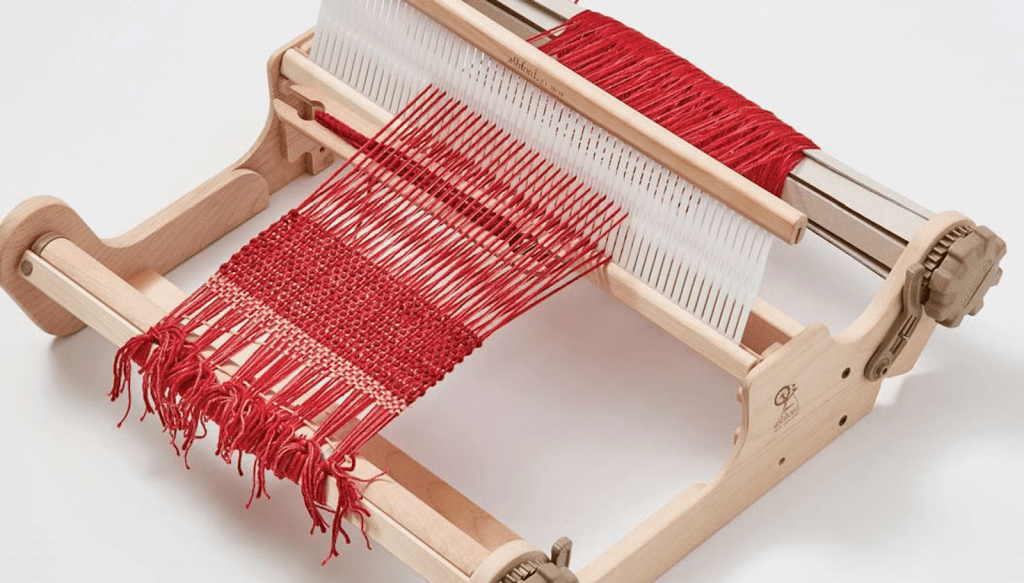
Picture a loom: the warp threads stretched lengthwise are the Ω-stream, pulling each fiber into a disciplined alignment that can bear weight, while the shuttle’s weft threads are the ο-stream, slipping crosswise through the tension, loosening and locking by turns so the cloth can bend without tearing. A fabric made only of warp would be a brittle harp-string lattice; one made only of weft would collapse into a formless heap. Strength emerges precisely where the two currents interlace, each pass of the shuttle answering the fixed tension with a moment of give and glide. Mechanica Oceanica’s duplexity works the same way: coherence is the taut warp, possibility the roaming weft, and every stable phenomenon is a bolt of cloth—inherently durable yet always alive with the tiny lateral shifts that keep its fibers from snapping under stress.
The duplex weave of Ω-coherence and ο-openness does more than describe how patterns stay alive; it obliges every participant in the field—organism, institution, or polity—to hold space for the current that is not its own. Because the warp cannot become cloth without the weft, any stance that absolutises its preferred direction betrays the fabric that sustains it. In Levinasian terms, the “ethical weight” of duplexity is the silent demand that the self relax its tension just enough for the stranger’s thread to pass through. Responsibility is therefore built into physics: to persist, a system must continually concede some of its coherence so the unassimilated other can interlace and reinforce the whole.
Conversely, wherever duplex reciprocity is refused—when an empire fortifies borders against every outside vibration, or when a community silences dissenting frequencies—the refusal registers as real harm, not because a moral code was broken after the fact, but because the very conditions of durability are being undermined. Violence, in this view, is a phase-error: an attempt to lock Ω so tightly that ο feedback snaps back as rupture—war, exclusion, ecological collapse. The ethical veto against such closure is not an extrinsic prohibition; it is the system’s own survival instinct expressed at the level of care.
To act ethically, then, is to engineer with the duplex ratio always in mind: stabilise enough to shelter life, loosen enough to let new life pass. The statesman who writes policy, the coder who sets protocol thresholds, and the parent who sets household rhythms each become custodians of the weave. Their success is measured by the resilience of the cloth, not by the triumph of a single thread. In this way Mechanica Oceanica turns ethics from a catalogue of duties into a physics of sustained, mutual reinforcement—an obligation to keep the shuttle moving so that the fabric of shared reality never frays or petrifies.
In the model we treat any observable field Ψ(x,t) as the superposition of two inseparable components, a coherence envelope Ω(x,t) and a divergence remainder ο(x,t), so that
Ψ = Ω + ο. A quick way to measure how tightly the duplex is locked at a given moment is to compare their quadratic energies
C(t) = ∫|Ω|² dx and D(t) = ∫|ο|² dx,
and define the duplex ratio κ(t) = C/D. Perfect rigidity would try to drive κ → ∞; perfect diffusion would send κ → 0. Mechanica Oceanica stipulates that sustainable phenomena live in a finite band κ₋ < κ < κ₊, where Ω undertension and ο slack continually trade energy rather than letting one drown the other.
To see the trade mathematically, split the field’s dynamics into two coupled partial-differential terms:
∂Ω/∂t = −αΩ + μ∇²Ω + γ ο (coherence drains but is revived by ο),
∂ο/∂t = β Ω − δ ο + ν∇²ο (openness blooms off Ω then diffuses away).
Here α,δ > 0 are relaxation rates, μ,ν ≥ 0 are dispersive constants, and βγ > 0 is the duplex coupling that hands tension back and forth. Taking the spatial average ⟨∙⟩ and writing A(t)=⟨Ω⟩, B(t)=⟨ο⟩ yields the two-mode ordinary system
Ȧ = −αA + γB,
Ḃ = βA − δB.
Eliminating one variable gives Ä + (α+δ)Ȧ + (αδ−βγ)A = 0 (and the same for B). When βγ > αδ the term in parentheses is negative and the pair performs a damped oscillation; energy shuttles between warp-like Ω and weft-like ο rather than vanishing. The critical equality βγ = αδ marks the edge where duplexity breaks: one stream freezes or the other unravels, confirming the model’s claim that resilience sits inside—not outside—the moving window defined by κ₋ and κ₊.
When β γ exceeds α δ by even a small margin, the coupled system settles into a bounded oscillation whose period T ≈ 2π / √(β γ − α δ). In that regime Ω and ο take turns holding the bulk of the energy; their individual amplitudes wax and wane, yet the composite field Ψ remains steady in overall magnitude. Practically this means a structure can flex under sudden shocks—ο briefly dominates—then re-tighten as Ω regains phase lock, all without exceeding material or social yield thresholds. Engineers can tune resilience by adjusting the coupling coefficients: increasing β or γ widens the safe κ-band, allowing greater excursions before coherence fractures, while too aggressive a reduction in α or δ risks runaway oscillation that manifests as systemic churn.
Conversely, if β γ falls below α δ, the oscillatory exchange stalls. Either Ω decays into a brittle low-noise residue or ο diffuses into incoherent background hum, and κ drifts toward an extreme. In embodied systems this asymmetry shows up as chronic rigidity (if Ω dominates) or chronic instability (if ο prevails). Restorative intervention then targets the weaker coefficients—re-introducing variability where Ω is frozen, or disciplined reinforcement where ο is unmoored—until the product β γ again surpasses the damping term α δ. Ethical practice, viewed through this lens, is the ongoing calibration of those parameters in collective life so that exchange never collapses into unilateral control or unbounded drift.
The simplest way to see the coupling constants at work is to pick numerical values and watch the phase‐space spiral. Let α = δ = 0.3 (moderate damping) and set β = γ = 0.5; then β γ = 0.25 and α δ = 0.09, so β γ > α δ and the system oscillates with period roughly 2 π / √0.16 ≈ 15.7 time-units. Plotting Ω against ο traces a shrinking ellipse that never collapses onto either axis: energy trades hands but the composite amplitude stays bounded. Lower β or γ to 0.2, however, and the ellipse degenerates into a fading line as Ω or ο loses the ability to revive its partner; coherence petrifies or dispersion runs away. The numerical threshold β γ = α δ therefore marks a concrete design target for any mechanism—neuromuscular, electronic, or civic—that needs durable give-and-take.
Because κ = C/D drifts whenever the coupling slumps below that threshold, duplex-aware governance aims to keep β γ safely higher than α δ by injecting controlled variability or reinforcing stabilizers before the gap closes. In policy terms, periodic stress tests, rotating leadership, and scheduled sunset clauses act like small boosts to γ, while infrastructure reserves, routines, and redundancy shore up β. Ethical stewardship is thus inseparable from parameter maintenance: sustaining shared life means monitoring how the warp and weft shift over time and tuning feedback so that neither is starved of the other’s signal.
β γ = α δ
The equality β γ = α δ marks the duplex system’s critical brink: the coupling that revives each stream is just strong enough to balance the damping that saps it. Mathematically, the second-order equation Ā̈ + (α + δ)Ā̇ = 0 (because α δ − β γ = 0) has no restoring term—frequencies no longer cycle, yet they do not instantly vanish. Ω and ο glide toward a limit at a constant slope, like a loom whose shuttle still moves but whose warp tension has fallen to the point where new cloth is woven without the rhythmic tug that gives it resilience. Any infinitesimal drop in β γ (or rise in α δ) tips the system into monotonic decay; any infinitesimal rise turns the glide into a bounded oscillation.
In Mechanica Oceanica this threshold is the knife-edge between living fabric and petrified mesh. At β γ = α δ, coherence and openness coexist without exchanging surplus energy—appearing stable, yet storing no slack to absorb shock. Ethically and politically it is the moment a community mistakes mere persistence for vitality: rights charters exist, dissent can be voiced, but the channels that once re-energised the weave (immigrant stories, disruptive art, experimental science) have been tuned down to background murmur. The fabric holds—for now. The model warns that genuine care lies in staying above the line, deliberately over-coupling warp and weft so that a pulse of novelty or stress can be metabolised into renewed pattern rather than cracking the cloth along its most brittle grain.
At the critical line the system becomes hypersensitive: a small external impulse can shove it into either runaway stiffening or runaway disintegration because no surplus oscillatory energy is circulating between Ω and ο to buffer the shock. In engineering terms this is the condition of a bridge whose damping matches its coupling so precisely that gust-induced vortices are no longer bled off; the structure seems calm until a modest change in wind velocity locks the span into catastrophic resonance. In social systems the same knife-edge appears when procedural safeguards exist only in name—debate is allowed but never quite shifts policy—so a minor crisis suddenly polarises the polity, exposing tensions that had accumulated unnoticed beneath the placid surface.
Keeping β γ strictly greater than α δ therefore requires a deliberate margin of adaptive capacity: additional coupling channels, periodic injections of controlled noise, or institutional practices that force routine recombination of perspectives. Such measures re-introduce a restorative term into the dynamics, ensuring that deviations cycle back rather than drifting. The model calls this “dynamic slack”: the uncommitted energy that lets warp and weft resume their exchange after disturbance instead of breaking contact. Maintaining that slack is an ethical as well as a technical task, because it embodies a commitment to remain responsive to whatever otherness emerges, recognising that without active reciprocity the fabric of coherence will fail in the very moment it appears most stable.
Warp and Weft
In a loom the warp threads stretch taut from beam to beam, forming the fixed longitudinal grid that lends cloth its tensile strength and lets it be handled without collapsing; the weft is the single strand that the shuttle drives cross-wise, diving alternately over and under the warp to lock the whole fabric together. The miracle of weaving is that these two motions—one pure tension, one pure traversal—produce a surface that is simultaneously firm and supple: the warp carries load, the weft distributes stress, and their mutual friction prevents either set of threads from slipping free.
Mechanica Oceanica maps this interplay directly onto its duplex currents. The warp is the Ω-flow: an aligning force that narrows phase dispersion into coherent beats, giving a phenomenon its recognizable contour and endurance. The weft is the ο-flow: a roaming perturbation that interrupts, loosens, and then re-enters the lattice, ensuring that the pattern never petrifies. Any system that privileges warp alone becomes a brittle harp-string mesh, prone to tearing when conditions shift; one that indulges only weft dissolves into tangled fluff. Ethical and political resilience therefore consist in active weaving: maintaining enough warp tension to shelter life while letting the shuttle of novelty keep passing through, so that the fabric—whether a body, a community, or an ecosystem—remains strong precisely because it is continually being rewoven from within.
——
Victor Hugo’s line—“La vraie naissance, c’est la virilité. Le 14 juillet 1789, l’heure de l’âge viril a sonné” —can be read, inside Mechanica Oceanica, as the instant when a new warp was thrown across the French social field. For Hugo, “virility” marks the people’s passage from political minority (dependence on the crown) to self-sustaining coherence: the Bastille falls, and the citizenry stretches itself taut enough to carry the tensile load of sovereignty. In oceanic terms an Ω-crest condenses: disparate civic oscillations phase-lock into a shared rhythm strong enough to resist the ancien régime’s drag.
Seen this way, Hugo is not praising brute masculinity so much as naming a necessary episode of Ω-dominance at the very start of a republican weave. A revolution must, for a moment, tighten its threads; otherwise the incoming ο-turbulence of competing interests would tear the fabric before it forms. “Virile birth” signals that momentary over-coupling—β γ sharply exceeds α δ—when coherence rises faster than damping and a recognisable polity appears. The metaphor’s gendered coloring reflects nineteenth-century rhetoric, but the underlying intuition is physical: the loom needs an initial yank on the warp before the shuttle can fly.
Once the tension is set, however, Hugo’s own image of Paris qui fait le 14 juillet already hints at the ο-return. The city’s crowds, journals, clubs, and songs begin weaving crosswise differences through the new grid, redistributing stress so that the revolution does not ossify into a brittle plug of power. If later discourses froze “virility” into a permanent criterion of citizenship, that was a historical mis-reading of Hugo’s punctual declaration. In duplex language, the 1789 surge should have relaxed into a cyclical exchange; instead, subsequent regimes often tried to keep Ω locked, suppressing ο variation and generating the very fractures—exclusion, colonial violence—that Levinas and Derrida will later diagnose.
Granting Hugo this benefit of the doubt clarifies the ethical consequence. The quote records a real need for decisive coherence at birth, yet Mechanica Oceanica reminds us that any warp set in one heroic yank must be reharmonised with moving weft or else fray. The task for heirs of 1789 is not to renounce that first tension but to keep re-coupling it with living ο-threads: new enfranchisements, plural memories, migrant voices. In that ongoing weave Hugo’s “virility” is reinterpreted as the willingness to bear sustained duplex labour—tension and traversal—so the fabric formed in a single July hour can stay supple across the centuries.

 ov1d.com