Diseases of the body
(Letter to Christian Northoff, 1527)
are cured by medicine;
diseases of the mind
by doctrine.
But in both cases
the remedy
must reach
the root.
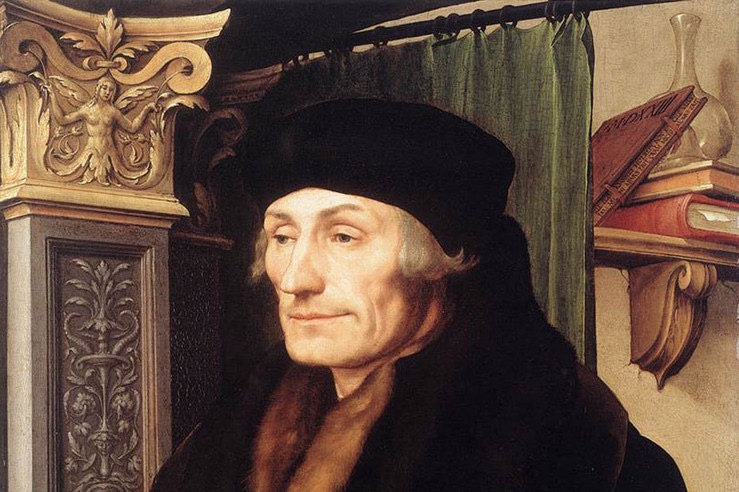

“Modern medicine is not the science of the living body. It is first the science of the gaze, the organization of a field in which the visible signs of illness can be ordered and made to speak.”
The Birth of the Clinic, pp. 107–108.
Prologue
Supplements: Spleen Axis of Purification and Hidden Regulatonics
In both historical Islamic medicine and contemporary physiology, the spleen occupies a position of remarkable ambiguity: it is at once peripheral and central, visible and marginal, dispensable yet crucial. This dual status makes the spleen particularly resonant with Islamic cosmology, where phenomena often operate simultaneously on an outward plane (ẓāhir) and an inward plane (bāṭin). The spleen, though concealed and seldom consciously perceived, is structurally embedded within the lymphatic network as a major organ of filtration, immunity, and blood regulation, making it a physiological analogue to several foundational Islamic ideas about unseen governance and cosmic balance.
Avicenna situates the spleen firmly within the humoral economy, describing it as the organ responsible for separating the darker residue of the blood—what he identified as black bile (saudāʾ)—and maintaining its proportion within the body. In the Canon, the spleen is the corrective instrument that prevents the overaccumulation of this melancholic residue, ensuring that the humor does not dominate the mixture and distort temperament. Black bile was understood not as pathology in itself, but as an excess of density, opacity, and dryness, qualities that, when imbalanced, could obscure perception and incline the psyche toward rigidity or despair. Avicenna treats the spleen’s function as a kind of subterranean adjudication, an organ that works in darkness to preserve clarity in the whole organism. One might say the spleen prevents internal eclipse: it restricts that which would accumulate, stagnate, and interfere with the harmonious circulatory exchange between the body’s regions.
Modern physiology both confirms and reframes this intuition. The spleen is the largest lymphoid organ, densely populated with macrophages, dendritic cells, and lymphocytes, and organized into white pulp (immune surveillance) and red pulp (blood filtration). It removes senescent red blood cells, clears circulating microbes, and acts as a reservoir of ready immunological force. Conceptually, this is not far from Avicenna’s view that the spleen neutralizes a “dark” humor; today we might say it neutralizes darkened or compromised cells—erythrocytes rendered rigid through age, pathogens that attempt to hide in the bloodstream, or particulate debris that would otherwise circulate indefinitely. These processes remain largely imperceptible to conscious experience, reinforcing the spleen’s role as an invisible guardian, a quiet guarantor of order.
Islamic cosmology repeatedly emphasizes that the most decisive operations occur in domains that are unseen yet meticulously regulated. Qur’anic discourse on al-ghayb marks the invisible as the true theater of divine governance—angels who record deeds, winds moved by subtle commands, destinies written in the Preserved Tablet. The spleen mirrors this cosmological logic. It is not a pump, not a gland with periodic output, and not a centralized controller; instead, it is a node of silent discernment, carrying out innumerable microscopic judgments about what may remain in circulation and what must be removed. It is a site of furqān, separation, distinguishing the pure from the impure. The Qur’anic emphasis on God “setting the balance” (al-mīzān) finds a physiological reflection here: the spleen continually re-establishes equilibrium in the bloodstream, preventing excess density, obstruction, or stagnation.
The spleen’s relationship to blood also deepens its cosmological relevance. Blood in Islamic intellectual tradition is not merely a fluid; it is the medium of life’s warmth and vitality, closely associated with the soul’s animation of the body. Its corruption or imbalance was thought to cloud perception and disturb moral clarity. Thus, an organ that preserves the purity, fluidity, and proper proportion of the blood implicitly preserves the perceptive and ethical capacities of the person. Even if Avicenna did not possess modern immunological terminology, he accurately described the spleen as an organ maintaining the “soundness” of the blood’s complexion and preventing the kind of internal pollution that leads to systemic disease.
Further, the spleen exemplifies the microcosmic correspondence medieval Islamic thinkers emphasized: just as the cosmos contains vast structures that remain visually obscure but are cosmically decisive, the body contains organs that function with similar covert necessity. The spleen’s role in lymphatic circulation—shifting lymphocytes between blood and tissues, generating immune memory, filtering pathogens—expresses a continuous exchange between center and periphery. Analogously, Islamic cosmology speaks of an unbroken exchange between the visible world (shahāda) and the invisible (ghayb), between the outward actions of a person and the inward conditions of the heart.
In this sense, the spleen is not only a physiological organ but an emblem of cosmic maintenance—an inner proof that life depends on systems that cleanse, evaluate, and restore without spectacle. Its function supports the essay’s central theme: that the human body contains hidden architectures of purification and balance that reflect, in miniature, the concealed harmonies of the divine order.

“The patient’s body, in its visible space, is opened up by the gaze; disease becomes the object not of a speculative discourse but of a gaze that scans, breaks down, and rearranges.”
Michel Foucault, The Birth of the Clinic, trans. Sheridan (1973), p. 165.
1
Lymphatic System and Islamic Cosmology: Purification, Balance, and the Unseen
Introduction
The human body and the cosmos have often been compared in religious and philosophical thought as reflections of one another. In Islamic tradition, scholars and physicians like Avicenna (Ibn Sīnā) viewed the human being as a microcosm of the larger universe, with health and harmony in the body mirroring divine order in creation . One modern physiological system, the lymphatic system, can be seen in a new light when juxtaposed with Islamic cosmological and spiritual concepts. The lymphatic system is an unseen network of vessels and nodes that quietly maintains purification and balance in the body – filtering waste, defending against illness, and keeping fluid levels in equilibrium . These themes of purification, balance, and unseen influence resonate strongly with Islamic ideas of bodily and spiritual health. In what follows, we will explore historical Islamic medical perspectives (especially Avicenna’s writings) on the body’s internal flows and balances, and draw symbolic parallels between the lymphatic system’s role in the body and Islamic cosmology’s vision of divine balance, spiritual purity, and hidden forces at work in the universe.
Avicenna’s Medical Insights: Humors, Organs, and Microcosm
Avicenna (980–1037), the great Persian polymath, authored The Canon of Medicine (al-Qānūn fī al-ṭibb), synthesizing Greco-Roman humoral medicine with his own observations. In humoral theory, the body’s health is governed by four vital fluids (humors): blood, phlegm, yellow bile, and black bile . Balance among these humors was essential – “Health is primarily that state in which these constituent substances are in the correct proportion… and are well mixed. Pain [disease] occurs when one of the substances presents either a deficiency or an excess” . Avicenna upheld this view of health as bodily equilibrium, emphasizing that an excess or deficiency of any humor could cause illness. Each organ was understood to have a particular humoral composition: “From the mixture of the four [humors] in different weights, [God the Most High] created different organs; one with more blood like muscle, one with more black bile like bone, one with more phlegm like brain, and one with more yellow bile like lung” . This statement shows Avicenna’s holistic view that the divine design of the body endowed each part with a unique blend of elements to suit its purpose.
Avicenna and other Islamic physicians also drew direct analogies between the human body and the cosmic order. The body itself was mapped to cosmic rhythms: for example, medieval texts note that “the body contains twelve orifices which correspond with the twelve zodiacal signs,” and that “the number of veins in the body are equivalent to the number of solar days” in a year . Such correlations illustrate the microcosm–macrocosm analogy explicitly – the human being was seen as a miniature universe. By aligning anatomical facts (twelve openings, numerous veins) with cosmic facts (twelve zodiac constellations, 360 days), Muslim thinkers reinforced the idea that the human form is integrally connected to the cosmos . This reflects a broader Islamic cosmological principle: Tawḥīd, the oneness and unity of reality under God. As one scholar explains, Muslim philosophers viewed connecting the body and nature as “an attempt… to maintain connectivities with the natural world,” operating “within the ambit of Tawhid as an organising principle of human health” . In other words, the unity of God’s creation implied that harmony in the body would echo harmony in the heavens. Conversely, disorder in the body might reflect a loss of balance that has cosmological significance. Islamic medicine was in this sense ecological and holistic, understanding human wellbeing in the context of the environment and the divine order .
Purification and filtration were recognized in principle by Avicenna’s medical theory, even if the lymphatic system as we know it was not fully mapped by medieval anatomists. Notably, Avicenna described the liver as an organ that “separates moisture from the blood,” releasing a refined fluid . In the Canon, he noted this fluid was “frothy,” a vivid description that modern scholars interpret as a reference to lymph or a lymph-like substance . A recent analysis of Avicenna’s work found that this insight is strikingly prescient – a millennium later, physiologists confirmed that the liver produces a large proportion of the body’s lymph, filtering the blood and exuding lymphatic fluid rich in proteins . Thus, even within a pre-modern framework, Avicenna had identified a process of internal purification: the liver acting as a filter, much as the lymphatic system does by collecting and cleansing fluids. This historical note highlights how Islamic medicine acknowledged “unseen” processes of cleansing in the body long before modern anatomy named them.
Illustration of the four humors (phlegm, blood, yellow bile, black bile) in a medieval alchemical diagram linking human health to the four elements and zodiac signs. Islamic physicians like Avicenna adopted this humoral model, viewing a balanced mixture of humors as essential for bodily harmony . Such correspondences between body and cosmos reinforced the notion of the human as a microcosm reflecting the larger universe.
“All animals undergo perpetual transformations; they are produced and improved by the power of irritation, sensation, volition, and association, and thus advance in the scale of organic life.”
(Zoonomia, Vol. I, Section XXXIX)
Purification: The Body’s Lymph and the Soul’s Cleansing
The lymphatic system in modern physiology is often called the body’s “secondary circulatory system” or even its “sewerage system,” silently carrying away impurities. It consists of a network of vessels and lymph nodes that filter out waste, toxins, and pathogens from tissues, returning cleansed fluid to the bloodstream . By removing cellular debris and infectious agents, and by transporting fats and maintaining fluid balance, the lymphatic system preserves the internal purity and equilibrium of the body . In essence, it is a purification system: lymph nodes act as filters trapping germs or unwanted particles, and lymph fluid is the vehicle of their removal . Without this constant cleansing action, the body’s internal environment would become congested and diseased.
Islamic thought places profound emphasis on purification (ṭahārah) at multiple levels — physical, moral, and spiritual. This is epitomized in the hadith (saying of Prophet Muhammad) that “Cleanliness is half of faith” . On a practical level, Muslims perform ritual ablutions (wudū’) washing the face, hands, and feet several times a day before prayers, symbolically and literally washing away dirt and impurities. Bathing (ghusl) is required in specific circumstances to restore ritual purity. These practices highlight that maintaining bodily cleanliness is not merely hygienic but a sacred act integrally tied to one’s faith and spiritual state . The concern for physical purity mirrors an analogous concern for spiritual purity: just as water washes the body, repentance and remembrance of God (dhikr) are said to wash the heart from the “dirt” of sins or heedlessness. The Qur’an frequently speaks of God’s love for “those who purify themselves” (e.g. Qur’an 2:222) and the importance of purging oneself of spiritual defilement (such as pride, greed, or hatred) to attain closeness to the Divine.
The lymphatic system’s role in internal cleansing offers a powerful metaphor for this Islamic principle of purification. One can liken the lymph that washes away pathogens from our tissues to the act of repentance and moral self-scrutiny that washes away spiritual toxins from the heart. In Sufi literature, the heart (qalb) is often compared to a mirror that must be continually polished to reflect divine light; if it is neglected, it becomes rusted or stained. The Prophet Muhammad ﷺ stated: “In the body there is a piece of flesh; if it is sound, the whole body is sound, and if it is corrupt, the whole body is corrupt – truly it is the heart.” . This hadith underscores that the wellness of the inner core (the heart, in both the emotional and spiritual sense) determines the wellness of the whole person. We might draw an analogy here: as the lymphatic system silently keeps the physical heart and organs healthy by removing impurities, Islamic practices of inner purification (like prayer, fasting, charity, and sincere repentance) keep the spiritual heart free of corruption, thereby maintaining the health of one’s entire being. Both systems – one physiological, one spiritual – operate continuously to prevent harmful buildup, be it of toxins or of sins and negative qualities.
It is also notable that charity in Islam is called zakāt, which literally means “purification”. By giving a portion of one’s wealth to those in need, a Muslim purifies their income and soul from greed. This concept resonates with the lymphatic process: just as excess fluids and waste must be drained for the body’s health, excess wealth is “drained off” through charity for the soul’s health and the balance of society. In the Islamic worldview, everything has a purification mechanism ordained by God – water purifies the body, repentance purifies the soul, charity purifies wealth, knowledge purifies the mind, and so on. The lymphatic system can be seen as one such God-given mechanism working mysteriously within us to ensure our physical purity and balance.
Divine Balance and Bodily Harmony
Balance (Arabic: mīzān) is a fundamental theme in Islamic cosmology. The Qur’an describes that God created the heavens and earth in due measure and “set the balance” so that no one may transgress it . The term al-Mīzān (the Balance) in the Qur’an (55:7–9) signifies not only the physical balance and order in the cosmos but also the moral balance that humans must uphold in society . Classical Islamic commentators note that al-Mīzān has multiple interconnected meanings: cosmic equilibrium and perfect order in creation (the precise calibration of the universe), ethical justice and moderation in human affairs, and ultimately the divine scales of justice on the Day of Judgment . In all these senses, equilibrium and harmony are seen as divine principles permeating existence – every planet in orbit, every element in nature is aligned in a grand balanced system, and humans are urged to mirror that balance in their lives.
Within the human being, Avicenna’s humoral theory was essentially an application of this principle of balance to health. Sickness for Avicenna was disharmony or imbalance in the body’s mixture, while health was the equipoise of elements in their proper proportions . We see here a direct parallel: just as God established a just balance in the cosmos, a healthy body requires a just balance among its constituent fluids and qualities. The physician’s role was to restore balance when it was lost, much like a ruler’s role is to restore justice in a society that has fallen into disorder. In fact, the language of Islamic medicine often overlaps with moral and cosmological language. The term for a person’s constitutional temperament (mizāj) literally means “mixture” or “balance”; a well-balanced mizāj yields health, whereas a disturbance in the mizāj produces illness. This notion subtly reflects the Quranic insight that “everything with [God] is in due measure” (Qur’an 13:8) – there is a measured equilibrium inherent in creation, including within our bodies.
Furthermore, Muslim intellectuals embraced the idea of the human as a microcosm (ʿālam ṣaghīr) of the macrocosm (ʿālam kabīr). They recognized that the same principles governing the stars and elements also govern the human organism . For example, the Brethren of Purity (Ikhwān al-Ṣafā’), a 10th-century Islamic philosophical fraternity, explicitly taught that the human body is like a miniature world, with the soul resembling the heavenly spheres and the bodily faculties corresponding to planetary influences. As later commentators note, “Humans were microcosms, whose health was influenced by the motion of celestial spheres”, an idea shared across many cosmologies . In Islamic lore, this was not merely a poetic analogy but a reflection of Tawḥīd – the unity of pattern between the human being and the universe, both being designs of the same Creator. Thus, maintaining bodily harmony was in a sense an act of aligning oneself with the harmonious cosmos that God created. An imbalance in the body’s temperament was not only a medical issue but also almost a metaphysical misalignment that needed correction to restore one’s personal cosmos.
The lymphatic system’s role in maintaining fluid balance in the body can be beautifully overlaid on this philosophy. The lymph system ensures that fluids circulate properly and do not accumulate pathologically; it returns excess interstitial fluid to the bloodstream and prevents edema, thus keeping the internal environment stable . One could say the lymphatic vessels quietly uphold justice among the cells by making sure no part of the body is waterlogged or deprived. In a spiritual worldview, this evokes how God’s justice and mercy flow unseen through the world, balancing the affairs of nations and individuals. Just as the lymphatic system rectifies imbalances in fluid distribution, the concept of mīzān demands that humans rectify imbalances in society – by giving the poor their due, by moderating one’s habits, and by living in harmony with nature. The holistic approach of Islamic medicine also saw environmental balance and health as linked: harmony in the body engenders harmony with the environment and vice versa . Modern ecological views echo this, and indeed the ecological consciousness in Islam – such as not wasting water, preserving plants and animals as signs of God, and maintaining the balance (Qur’an 55:8) – can be likened to the body’s own care for its internal environment. The lymphatic system can serve as a reminder that balance is both a physical necessity and a divine mandate: when every component performs its due function and excesses are drained, the system thrives.
The Unseen Networks: Lymph and the Spiritual Realm
A striking aspect of the lymphatic system is its invisibility to our ordinary perception. Unlike blood, which visibly flows and whose pulse can be felt, lymph moves silently and largely unnoticed. For centuries, its vessels eluded anatomists because they are delicate and transparent. Yet despite being unseen, lymphatic vessels form an extensive, intricate network present in nearly every tissue, working in parallel with the visible circulatory system to sustain life. In many ways, this calls to mind the Islamic notion of al-Ghayb – the unseen world. Islamic cosmology divides reality into the realm of the seen (shahāda) and the unseen (ghayb). The unseen encompasses spiritual beings (angels, jinn), the human soul, the hereafter, and divine forces that are not directly perceptible to the senses but are absolutely central to the functioning of the cosmos. The Qur’an repeatedly emphasizes belief in the unseen (Qur’an 2:3) and teaches that behind the observable phenomena of nature are angels and divine commands maintaining order by God’s permission. For example, Islamic tradition holds that angels drive the winds and clouds, guard humans, and record deeds, all as part of an invisible divine administration of the universe.
The parallel here is that just as the unseen lymphatic system preserves the body, the unseen spiritual agencies preserve the world. We do not see our lymph fluid fighting infections and balancing fluids, but we perceive its effects in the form of health. Similarly, one does not see angels or God’s hand behind events, but a believer perceives their effects in the order of nature and the guidance one receives in life. In Islamic spirituality, a person is encouraged to recognize that what is outwardly apparent is sustained by hidden realities. For instance, one Quranic verse states: “Allah sends down water from the sky, and with it gives life to the earth after it had been dead. Surely in that is a sign for people who listen” (Qur’an 16:65). While the verse refers to rain reviving land, the deeper subtext for the believer is that divine mercy (unseen) works through physical rain (seen) to provide sustenance. By analogy, one might say that lymph is like a merciful rain inside our bodies, an invisible nourishment and cleansing that keeps our cellular “lands” alive and verdant.
Another fascinating analogy emerges when considering the concept of divine subtlety. One of God’s names in the Qur’an is al-Laṭīf – “the Subtle, the Gentle” – which can also mean the One who works imperceptibly. The lymphatic system could be described as a laṭīf system: it operates with gentle, silent efficacy. It often goes unnoticed until something goes wrong (for example, swollen lymph nodes alert us to an infection, much as a disruption in the natural order might jolt us into recognizing an angelic or divine intervention). The subtle functions of the body have their counterpart in the subtle dimensions of the soul. In Sufi psychology, there is a theory of laṭa’if (subtle centres or subtle faculties), which posits that beyond the physical organs, humans possess spiritual “organs” or centers of consciousness (such as the heart, spirit, secret, etc.). These laṭa’if are not visible to the eye, but the spiritual wayfarer becomes acutely aware of their presence and role in experiencing divine reality. The activation and purification of these subtle centers are said to lead to gnosis (maʿrifah) of God. We might liken the lymphatic vessels to these subtle inner channels: just as prāṇāyāma in Yoga speaks of nāḍīs (subtle channels of energy) running through the body, in Islamic esoterism the focus is on purifying the nāfs (self) and qalb (heart) so that the divine light can circulate freely through one’s being. The lymphatic vessels, though material, form a hidden lattice that circulates life-giving fluid; analogously, the spiritual laṭa’if form a hidden lattice that circulates the light of faith and intuition within the soul. Both are lifelines connecting the peripheries to the center: lymph connects tissues to the central blood circulation, while spiritual practices connect the individual soul to the divine center.
In a more everyday sense, the unseen support systems in our lives often only get noticed when they falter. A healthy lymph flow is taken for granted; only lymphatic diseases like lymphedema reveal how crucial that system was all along. Likewise, one might live oblivious to spiritual realities until a crisis strikes – then the need for faith, hope, and connection to God becomes painfully clear, much as a swelling limb points to a blocked lymph node. Islamic cosmology encourages vigilance and gratitude for the hidden blessings: it asks humans to reflect on the innumerable processes that happen without our awareness yet are signs of divine care. “We will show them Our signs in the horizons and within themselves until it becomes clear to them that this [revelation] is the Truth,” says the Qur’an . Medieval commentators often cited this verse (41:53) to argue that the structure of the human body (within themselves) and the structure of the universe (on the horizons) are twin arenas to observe God’s signs . The lymphatic system, had it been known to them, would surely have been marveled at as one of those inner signs – a hidden mercy placed in our very anatomy to maintain life.
“Physicians owe their power to the fear of death, and it is this fear that lends weight to their prescriptions.”
(Moriae Encomium, ch. 31)
Conclusion: One Body, One Cosmos, One Designer
Exploring the connections between the lymphatic system and Islamic cosmology reveals a tapestry of meaning woven between physiology and metaphysics. In the Islamic view, nothing in the body exists in isolation from higher purpose: the processes that purify, balance, and sustain us physically are reflections of the processes that purify, balance, and sustain the soul and the universe. Historical Islamic medical thinkers like Avicenna already approached the body with this holistic lens – the liver’s separation of a “frothy” fluid (proto-lymph) was not an isolated quirk of biology, but part of the intelligent design of a body attuned to its environment . The balancing of humors was both a medical regimen and a microcosmic echo of the balanced celestial spheres . The drive to keep the body clean and pure was tied to the quest for spiritual purity and moral integrity, as evidenced by ritual practices and prophetic teachings .
The lymphatic system symbolizes these themes in a remarkable way. It is a system of purification, quietly removing what does not belong and guarding the body’s integrity – a reminder that our well-being demands continual inner cleansing, whether of fluids or of intentions. It is a system of balance, redistributing fluids and preventing decay – a reminder that justice and moderation (mīzān) are the pillars of both health and virtue . And it is a system mostly unseen, a hidden infrastructure that must be intuited before it can be empirically known – much as the deepest realities of life are intuited through faith before they are seen with the eyes of understanding.
In Islamic cosmological thought, the human being is often described as an intermediary between the material and spiritual realms, a being of clay and spirit. The lymphatic system, in a poetic sense, operates at that intersection: a physical phenomenon with a profoundly symbolic significance. It exemplifies how life is maintained by subtle, gentle forces, reflecting the Quranic principle that “Allah is Subtle and Aware” (Qur’an 22:63) in caring for His creation. The connections we have traced are not ones of direct causation – Avicenna did not know about lymph nodes fighting infection, nor did the Qur’an speak of immune cells – yet the convergence of ideas is striking. They point to a worldview in which caring for the body’s hidden systems is part and parcel of caring for the soul, and understanding the cosmos can begin by understanding the self.
In conclusion, the lymphatic system and Islamic cosmology converge on a shared truth: purity and balance are the foundations of thriving life, and much of the work to achieve them happens behind the scenes. Whether it is lymph fluid washing away debris from our tissues, or spiritual practices washing away the ego’s impurities, a divine wisdom underlies both. The harmony of the body and the harmony of the cosmos both testify, in their own languages, to an intelligent order and mercy that invites human beings to reflect and to align themselves with that order. Thus, contemplating the lymphatic system through the lens of Islamic cosmological concepts enriches our appreciation of both – we come to see the body not as a mere biological machine, but as a microcosm suffused with spiritual meaning, and we see Islamic cosmology not as abstract mysticism, but as something manifested in the very flesh and fluids that keep us alive.
“❤️🔥 frequent use of an organ strengthens, develops, and enlarges it, while the constant disuse of an organ weakens it, deteriorates it, gradually diminishes its capabilities, and ends by making it disappear.”
(Philosophie Zoologique, Book I, ch. 2)
Sources:
Avicenna (Ibn Sīnā), The Canon of Medicine – as referenced in on humors and organs, and in Leon G. Fine’s analysis of Avicenna on the liver and lymph . Quranic and Hadith references – including the concept of cosmic balance (mīzān) , the emphasis on cleanliness and the primacy of the heart in Islam. Islamic medical philosophy and microcosm analogy – Journal of ISHIM article detailing humoral mixtures and zodiacal correspondences , and Public Domain Review on the “Zodiac Man” and microcosm in various traditions . Modern medical understanding of the lymphatic system – Cleveland Clinic resources on lymphatic function in immunity, fluid balance, and waste filtration .
These sources collectively illuminate how ancient wisdom and modern science can converse, showing that the search for purification, divine balance, and unseen connections has always been central to understanding both our bodies and our universe.

 ov1d.com