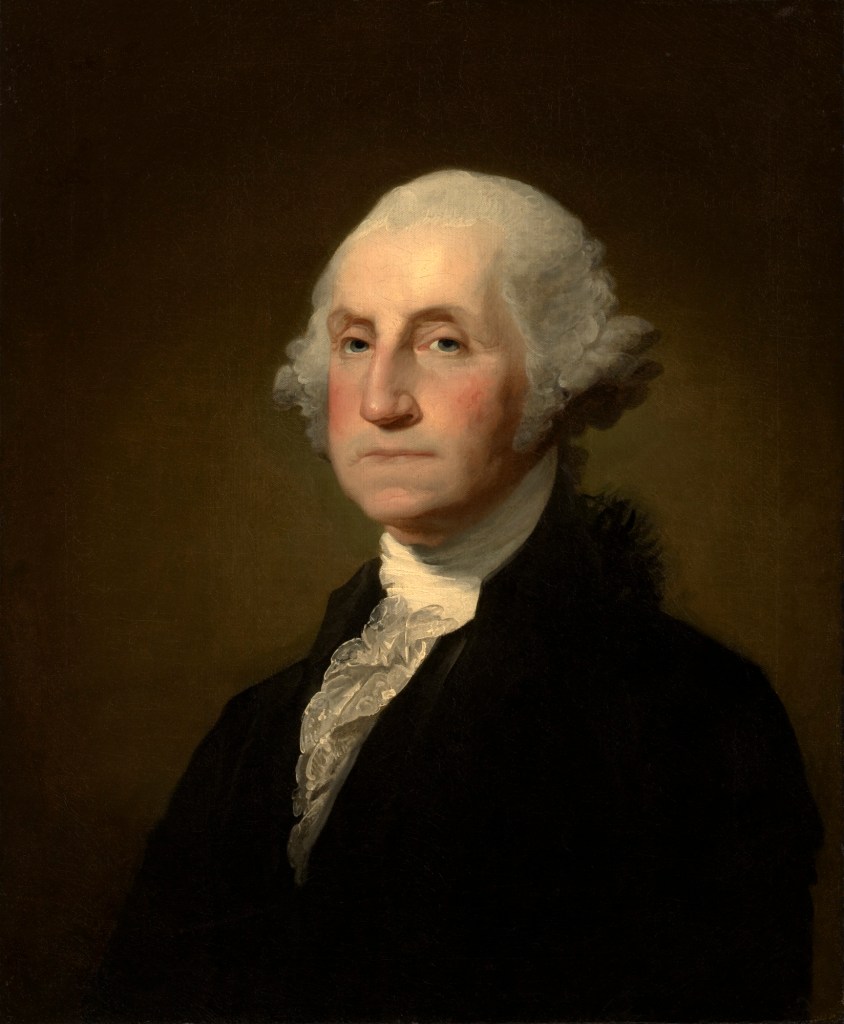
Thinking of George Washington
Here he makes sense, he embodies a rare historical moment in which speculation and restraint were held together rather than opposed. Washington was not a speculative philosopher in the academic sense, but he had a profound instinct for the dangers of bureaucratic self-justification. He distrusted standing armies, permanent offices, and centralized expertise not because he rejected knowledge, but because he understood how quickly technique hardens into authority and authority into self-preservation. His refusal of kingship, his willingness to relinquish command, and even his famously spare prose all express a commitment to keeping power provisional. That posture is philosophical in the deepest sense: it recognizes that no system, however rational, should be allowed to close over the future. What Washington intuited, without theorizing it, is exactly what later academies forget. Speculation is dangerous not because it is irrational, but because it reminds institutions that they are contingent. A bureau wants continuity; speculation introduces discontinuity. Washington’s greatness lies in the fact that he accepted discontinuity as the price of legitimacy. He understood that the republic would only remain real if it resisted the temptation to stabilize itself too fully, too quickly, into an administrative machine that mistook its procedures for its purpose. In that sense, he is closer to the philosophical spirit than many professional philosophers, because he knew when to step back and let the unresolved remain unresolved. So when you think of Washington in this context, you are thinking of a figure who grasped that learning, governance, and authority are not contests to be won but responsibilities to be borne lightly. He did not seek to dethrone speculation with bureaucracy; he sought to prevent bureaucracy from crowning itself as destiny. The tragedy of later academies is that they reverse this logic. They forget that knowledge lives only so long as it remains answerable to reality rather than to its own offices. Washington’s example stands as a quiet rebuke: not a theory, not a system, but a lived refusal to confuse anything with wisdom.
God Bless America

 ov1d.com