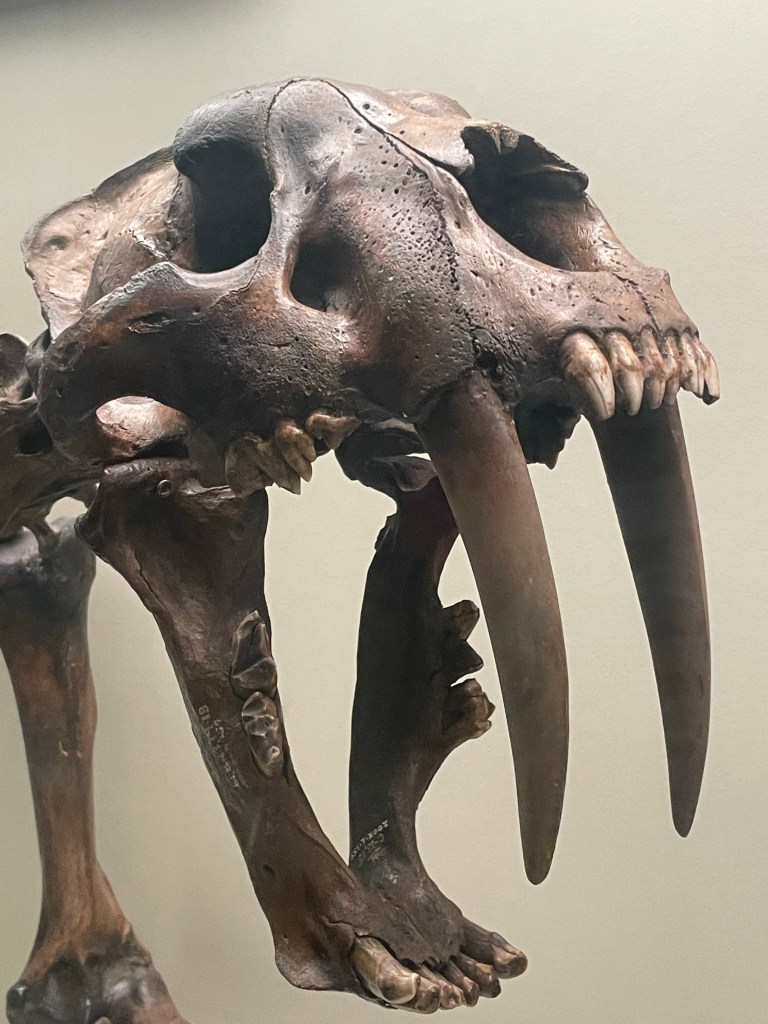
There are moments when life withdraws from haste and regains its natural cadence, when the body remembers that it was not made only for alarm and pursuit. In such moments, the inner tumult subsides, the breath deepens, and the world ceases to press upon us as demand. What awakens then is a quieter power: the capacity to dwell, to receive, to let things appear without coercion. This is the domain of restoration rather than conquest, where sensation gathers itself into clarity and the human being, no longer driven forward, becomes present to what is. Capacitance, at its deepest relevance here, names the body–brain’s ability to hold charge, delay discharge, and therefore sustain a state long enough for form, meaning, and relation to emerge. Biophysically, it is the property of membranes and tissues to store electrical potential; phenomenologically, it is the condition that prevents experience from collapsing into instantaneous reaction. A system with insufficient capacitance discharges immediately: stimulus becomes reflex, signal becomes noise, perception becomes threat. A system with adequate capacitance can pause, integrate, and resonate. That pause is not emptiness; it is the interval in which coherence forms. In neural terms, capacitance is what allows oscillations to nest, synchronize, and persist across time. It is what permits theta–gamma coupling in language, sustained semantic fields in comprehension, and recursive loops in thought. In autonomic terms, parasympathetic dominance effectively increases functional capacitance: heart rate slows, afferent feedback deepens, cortical excitability stabilizes. Time thickens. The organism gains the ability to remain with an input rather than expel it. This is why rest, digestion, sleep, and safety are not luxuries but structural prerequisites for cognition, ethics, and insight. Without capacitance, there is activity but no retention; motion but no meaning. Seen through phenomenology, capacitance is the bodily precondition of epoché. Bracketing the world requires the capacity not to discharge immediately into action or judgment. Intentionality itself presupposes storage: consciousness must be able to hold the object without consuming it. Levinas’s face of the Other appears only to a system with sufficient capacitance to tolerate interruption without annihilating it. Ethical responsibility is impossible in a low-capacitance regime, because everything unfamiliar is experienced as overload. What looks like moral failure often begins as physiological impatience. At the civilizational scale, capacitance distinguishes cultures that can metabolize difference from those that must suppress it. A high-capacitance society can absorb ambiguity, dissent, mourning, and delay without fragmenting. A low-capacitance society discharges immediately into control, spectacle, violence, or optimization. Language becomes fluent but hollow; institutions remain active but deaf; thought accelerates while sense evaporates. This is why collapse so often presents not as chaos but as brittle order: enforced coherence compensating for lost capacity to hold divergence. So capacitance is not a technical footnote. It is the hidden variable linking membrane physics, autonomic balance, phenomenological clarity, ethical responsiveness, and cultural resilience. It names the ability of a system—neural, personal, or collective—to stay open without dissolving, to delay without freezing, to receive without being destroyed. Where capacitance is preserved, meaning can form. Where it is depleted, everything still moves, but nothing can stay long enough to matter. The term capacitance originates in the Latin capacitas, meaning the ability to hold, contain, or receive, from capax, that which can take something in. Long before it became a technical concept, it referred to a vessel’s power to retain contents across time rather than merely to possess them momentarily. Even at its linguistic root, capacitance implies duration, patience, and the refusal of immediate release. As the concept developed within early electrical science, thinkers such as Franklin, Coulomb, and later Faraday recognized that electrical behavior could not be explained by charge alone. What mattered was configuration: separation, geometry, and the medium between bodies. Faraday’s decisive move was to locate capacitance not in isolated objects but in fields and relations. Storage became a property of an arrangement rather than a substance, quietly shifting scientific thought away from static entities toward distributed, relational structures. When the concept entered biology in the twentieth century, especially through membrane electrophysiology, its significance deepened. The neuronal membrane was understood as a literal capacitor, allowing living systems to delay discharge, integrate signals, and sustain form over time. Here capacitance ceased to be merely a physical parameter and became a condition of life itself. What began as a notion of containment became, in biological systems, the basis for memory, coherence, and the possibility that experience might persist long enough to become meaning. Capacitance in biology refers to the ability of living tissues—especially cell membranes—to store and release electrical charge over time, shaping how biological systems respond to signals. The clearest and most important example is the neuronal membrane. Every cell membrane is a lipid bilayer acting as an electrical insulator, with conductive fluids on either side. This makes the membrane a literal capacitor. When ions move, charge accumulates across the membrane, creating a voltage that does not change instantly but evolves over time according to the membrane’s capacitance. In neurons, membrane capacitance determines how fast or slow electrical signals can change. High capacitance means the membrane can hold more charge, slowing voltage changes and allowing signals to be integrated over time. Low capacitance allows rapid voltage shifts but little temporal integration. This property is fundamental to neural computation: it shapes synaptic summation, oscillations, action potential timing, and the ability to bind information across milliseconds to seconds. Without capacitance, neurons would fire reflexively with no memory or coherence. Capacitance also operates at larger biological scales. Dendritic trees increase surface area and therefore total capacitance, allowing neurons to function as temporal integrators rather than simple switches. Astrocytes and extracellular space modify effective capacitance and resistance by regulating ion concentrations and timing. At the tissue level, distributed capacitance contributes to measurable bioelectric fields such as EEG and ECG, which depend on the slow accumulation and release of charge across large populations of cells. Functionally, capacitance is what allows biology to delay response rather than immediately discharge. It enables holding, prediction, and stability in the presence of noise. In nervous systems, this delay is what makes perception, learning, and meaning possible. A biological system with insufficient capacitance reacts instantly but cannot integrate; one with sufficient capacitance can remain open long enough for structure, coherence, and adaptation to emerge. By “gooning” we mean the internet slang for prolonged, trance-like sexual stimulation and edging, and yes — there is a loose structural overlap with what we’ve been calling capacitance, but also an important difference. On the physiological side, edging and extended arousal do increase certain kinds of holding: sustained autonomic activation, prolonged dopaminergic drive, and delayed discharge. In a narrow electrical sense, the system is being kept in a charged state rather than releasing immediately. That can feel like increased “capacity to hold intensity.” But it is usually sympathetic-dominant, not parasympathetic. The body is in a mobilized, reward-seeking, looped excitation state. Time is stretched, but not thickened in the sense required for integration, meaning, or ethical receptivity. It is holding for stimulation, not holding for relation. What we’ve been talking about with capacitance is different in quality. It’s the ability to hold without compulsive drive — to sustain delay in a way that allows perception, interpretation, and otherness to appear. Parasympathetic-supported capacitance creates space for meaning and coherence. Gooning-style arousal creates space for intensified sensation and looping reward. Both involve delayed discharge, but one thickens experience, while the other narrows it around a single attractor. So the analogy works only at a very abstract level: both are about not immediately discharging. But one is a high-frequency, dopamine-driven holding pattern, and the other is a low-noise, integrative holding field. One amplifies stimulation. The other stabilizes sense. From the standpoint of perception, ethics, and phenomenology, they point in almost opposite directions, even if they share the superficial feature of “staying charged longer.” Aphasia refers to a group of language disorders caused by damage to specific brain regions involved in language. Wernicke’s aphasia, in particular, results from injury to Wernicke’s area, which is located in the posterior part of the left superior temporal gyrus in most people. This region is critical for language comprehension, especially the mapping of sounds onto meaning. In Wernicke’s aphasia, speech remains fluent in terms of rhythm, grammar, and articulation, but it loses semantic coherence. Patients speak easily and often at length, yet their sentences contain incorrect words, invented words (neologisms), or inappropriate substitutions, and they have great difficulty understanding spoken or written language. A striking feature is anosognosia: many patients are unaware that their speech does not make sense. This indicates that the problem is not motor control or effort, but a breakdown in internal monitoring of meaning. Neurologically, the disorder reflects a disruption of integrative processing rather than a loss of language per se. Wernicke’s area normally functions as a convergence zone where auditory input, lexical memory, and contextual expectation are bound together over time. Damage to this region breaks the temporal and semantic integration needed to stabilize meaning. Signals still flow, grammar still runs, but the phase relationships that link words to shared reference and context collapse. Clinically, Wernicke’s aphasia shows that language comprehension is not simply decoding words but sustaining coherence across time. The brain can generate well-formed linguistic output without understanding because comprehension depends on distributed connectivity and temporal integration across cortical networks, especially between Wernicke’s area, the angular gyrus, and frontal language regions. When that integration fails, speech becomes fluent noise: sound without shared sense. The parasympathetic nervous system is one half of the autonomic nervous system and is responsible for restoring, maintaining, and deepening the body’s internal order. It governs what is often summarized as “rest and digest,” but that phrase undersells its importance. Functionally, the parasympathetic system slows the heart, deepens and regularizes breathing, stimulates digestion and absorption, supports immune repair, and promotes sexual arousal and recovery. Its primary neurotransmitter is acetylcholine, and its most influential pathway is the vagus nerve, which carries extensive sensory information from the body back to the brain, shaping mood, attention, and perception. At a deeper level, the parasympathetic system is a regulator of time. By slowing physiological rhythms and increasing visceral feedback, it lengthens the window over which the brain can integrate signals. This temporal thickening is essential for coherent perception, learning, emotional regulation, and meaning-making. When parasympathetic tone is high, the nervous system can tolerate ambiguity, delay reaction, and remain receptive to incoming information without collapsing into reflex or defense. When it is suppressed, experience becomes hurried, fragmented, and threat-oriented, even in the absence of real danger. In mental and emotional life, parasympathetic dominance supports calm attention, empathy, and reflective thought. It counterbalances the sympathetic nervous system, which mobilizes energy for action, vigilance, and survival. Short bursts of sympathetic activation are adaptive, but chronic dominance leads to anxiety, irritability, cognitive narrowing, and exhaustion. The parasympathetic system is what allows recovery after stress and prevents the nervous system from becoming locked into perpetual emergency mode. From a clinical and phenomenological perspective, parasympathetic function is foundational to presence. Practices such as slow breathing, sleep, safe social contact, meditation, and unhurried bodily awareness increase vagal tone and parasympathetic activity. These states are not passive; they are the conditions under which perception becomes whole, language becomes meaningful, and ethical responsiveness becomes possible. Without adequate parasympathetic support, the body remains alive and active, but the capacity to dwell, integrate, and respond rather than react steadily erodes. Excuse me. Levinas’s ethics begins with interruption. The face of the Other does not arrive as information to be processed or mastered, but as a demand that halts the subject’s momentum and calls it into responsibility. This interruption presupposes a capacity to receive without seizing, to be affected without immediately converting the encounter into control, categorization, or defense. That capacity is not only philosophical; it is bodily. The parasympathetic nervous system provides the physiological condition for such interruption by slowing action, dampening threat reflexes, and sustaining openness. Without this autonomic ground, the Other cannot appear as Other at all, only as obstacle, resource, or danger. From this perspective, parasympathetic dominance is the biological correlate of Levinasian receptivity. When vagal tone is high, the organism can tolerate proximity without aggression, delay response without panic, and remain present to what exceeds it. This is precisely the posture Levinas describes: separation without annihilation, distance without indifference. The sympathetic system, by contrast, collapses alterity into urgency. Under chronic sympathetic activation, every encounter is pre-framed as something to manage or neutralize. Ethics becomes impossible not because of bad will, but because the body no longer supports the temporal space in which responsibility can arise. Levinas insists that ethics precedes ontology, that responsibility comes before comprehension. Neurobiologically, this maps onto the fact that parasympathetic afferents shape cortical processing before reflective thought occurs. The body registers safety or threat prior to cognition, and only under conditions of relative safety can perception widen rather than narrow. The face, in Levinas’s sense, is not perceived visually but received somatically, as a call that disorganizes self-centered coherence. A nervous system locked in sympathetic vigilance cannot be called in this way; it can only react. Responsibility requires a body capable of being slowed and opened by what it did not choose. This also clarifies why Levinas ties ethics to vulnerability rather than strength. Parasympathetic states are not states of dominance or control; they are states of regulated exposure. To be open to the Other is to risk being changed, unsettled, obligated. Biologically, that risk is tolerable only when the system is not already saturated with stress. Ethical subjectivity, then, is not heroic willpower layered atop physiology; it is an emergent property of a nervous system that can hold charge, delay discharge, and remain receptive. The parasympathetic system is what allows the subject to stay with the Other rather than overwrite it. In this light, Levinas’s ethics is neither mystical nor abstract. It is a precise description of what happens when a living system achieves enough internal regulation to let alterity appear without annihilating it. The face commands because the body can pause. Responsibility arises because reaction is not compulsory. Where parasympathetic capacity is chronically eroded—individually or culturally—the ethical field collapses, not into evil intention, but into reflexive management. The Other disappears, not by denial, but by physiological impossibility. When the parasympathetic nervous system comes into action, life ceases to rush past itself and begins, quietly, to arrive. The pulse loosens its grip on urgency, the breath sinks downward, digestion resumes its patient labor, and the senses recover their depth. One no longer scans the world for danger but allows appearances to unfold in their own time. The eye rests; the ear listens without grasping. In this softened tempo, perception thickens, memory warms, and thought no longer strikes but ripens. The body, relieved of its fevered vigilance, becomes hospitable to what approaches it. Here meaning is not seized but received, and the world, no longer an adversary or a task, stands forth as something that can be endured, contemplated, and answered.

 ov1d.com