
.
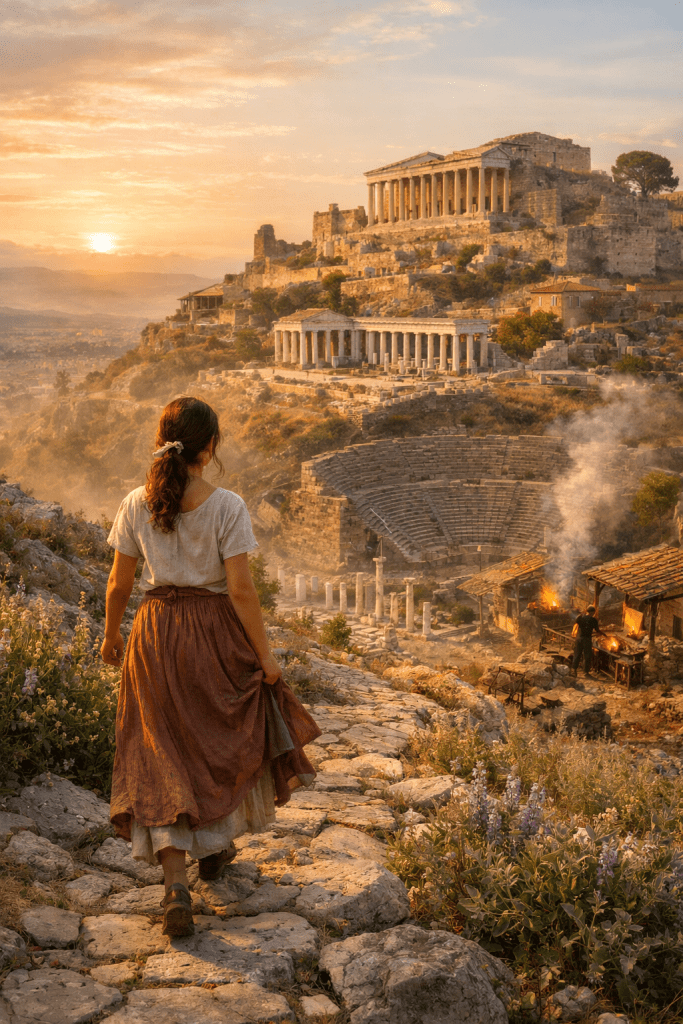
All evil results from the non-adaptation of constitution to conditions. This is true of everything that lives. Does a shrub dwindle in poor soil, or become sickly when deprived of light, or die outright if removed to a cold climate? it is because the harmony between its organization and its circumstances has been destroyed. | The doctrine that in living things there exists something more than the mechanical action of their component parts is daily losing its defenders. With this declaration in First Principles (1862), Herbert Spencer planted his flag against the resurging vitalisms of his century. Where Galen had invoked pneuma and Bergson would later evoke an élan vital, Spencer insisted that life’s marvels could be described without appealing to any extra-physical spirit. For him the task of philosophy was to trace one continuous spectrum from nebular gas to human consciousness, dissolving medieval quarrels over “living” versus “inert” matter into a single evolutionary procession. Born in 1820 in Derby to a schoolmaster steeped in dissenting religion, Spencer trained first as a railway engineer, absorbing the calculus of stresses and gradients that would shape his later metaphors. A restless autodidact, he drifted into journalism in London; Social Statics (1851) made his name by applying liberal political theory to biology, and a shrewd American following (especially through E. L. Youmans’s Popular Science Monthly) secured financial independence. He devoted the last four decades of his long, neurotic life to the ten-volume “Synthetic Philosophy,” an audacious bid to fuse physics, biology, psychology, ethics, and sociology under one evolutionary law before dying, almost forgotten at home but revered abroad, in 1903. Spencer’s central axiom was the “instability of the homogeneous.” Whether starlight condensing into suns or protoplasm budding into creatures, every system, he argued, progresses from indefinite, incoherent uniformity to definite, coherent heterogeneity. This was evolution writ large, not confined to Darwinian natural selection but embracing cosmic, organic, and social realms alike. The same quantitative principles—conservation of energy, growth of complexity, adaptation through differentiation—sufficed, in his view, to explain why tissues mineralise into bone, how nervous systems centralise into brains, and why societies crystallise into political institutions. Hence Spencer’s coolness toward both the Paracelsian promise of “living salts” and Bergson’s later claim that life creates unforeseeable novelty. He conceded that current chemistry could not yet spell out the choreography of enzymes or consciousness, but he treated such gaps as temporary frontiers, not ontological divides. The appearance of spontaneity or inward striving, he wrote, was a function of our ignorance of minute conditions, not evidence of a sui generis life-power. Vitalism, for Spencer, repeated the medieval error of multiplying entities whenever causal analysis faltered. Placed beside our imagined vitalist supermarket, Spencer would tolerate the tanks, sprouts, and fermenting barrels only as vivid instances of matter reorganising itself under physical laws; he would dismiss the talk of “souls” in lettuce and kefir as poetry masquerading as explanation. Yet, unlike the cruder mechanists whom Bergson ridiculed, Spencer acknowledged an ultimate mystery: the “Unknowable” substratum that underlies both mind and matter. In this way he straddled the quarrel—rejecting vital forces while admitting a metaphysical veil—but he would still argue that the scientific programme marches forward by extending chemistry into biology, not by resurrecting Galen’s pneuma or Bergson’s élan. Spencer’s mechanistic confidence drew sharp criticism from contemporaries who saw in his sweeping generalisations a neglect of empirical detail. Embryologists such as William Bateson argued that Spencer’s principle of differentiation did not account for the discontinuous, sometimes saltatory patterns emerging in heredity, while physiologists pointed out that the qualitative behaviour of living protoplasm resisted reduction to Spencerian symmetry-breaking. In philosophy, pragmatists like William James dismissed Spencer’s “relentless logic” as an intellectual prison that strained real experience through abstract uniformities, noting that his concept of the Unknowable did little practical work beyond halting further inquiry. Despite these critiques, Spencer shaped early sociology and popular evolutionary discourse more powerfully than Darwin in many Anglophone circles. His notion of societal evolution underpinned classical liberal arguments for limited government and was later co-opted by social Darwinists to defend laissez-faire capitalism, even as biologists moved past his formulas. By 1900, vitalism found a new footing in experimental embryology and Bergsonian metaphysics precisely because Spencer’s system, though grand, left unanswered how purposive organisation and genuine novelty arise from physical continuity alone. His legacy thus stands as a foil: a monumental attempt to synthesise life and mind within physics, whose insufficiencies cleared conceptual space for the twentieth-century revival of non-mechanistic biology. La Mettrie’s radical manifesto L’Homme-machine (1747) had already stripped the human body of any occult vis viva, declaring mind a function of organised matter much as music is a property of a well-tuned harpsichord. Spencer admired this audacity, adopting its central tenet—that the same energetic transformations rule nerves and stars alike—yet he softened La Mettrie’s militant atheism by framing the cosmos as an “Inscrutable Power” rather than a mere automaton. Where the French physician caricatured vitalists as theologians in disguise, Spencer treated them as provisional placeholders for mechanisms still undiscovered; but both agreed that invoking immaterial essences arrests explanation. The contrast becomes sharper when Bergson enters the scene. To Bergson, La Mettrie’s man-machine and Spencer’s law-ridden organism both misconstrue life as a spatial contrivance, ignoring the durée in which vital creativity unfolds. Yet Bergson inadvertently inherits their battlefield: his élan vital stands precisely where La Mettrie had razed the soul and Spencer had erected evolutionary mechanics. Thus the eighteenth-century mechanist, the Victorian synthesiser, and the modern vitalist form a relay: La Mettrie launches the assault on vital spirits, Spencer expands the material programme to cosmic scale, and Bergson reasserts an inner spring of novelty against their shared reductionism—each position intelligible only against the echoes of the others. The debate now threads through genomics labs where programmers model cellular circuits as if they were logic gates, while biophysicists still confront emergent behaviors that refuse tidy prediction; every new technique, from CRISPR editing to synthetic protocells, becomes a test case in deciding whether life is merely code or an open-ended event. The persistence of statistical gaps—why identical genomes unfold differently, why consciousness accompanies certain neural patterns—keeps a space in which arguments for irreducible vitality can still take root without reverting to mysticism. Meanwhile, the grocery aisle’s contrast between inert formulations and perishable organisms signals broader choices in medicine, agriculture, and environmental policy: whether to pursue total control by reduction and standardization, or to design with the grain of living systems, allowing self-organization and temporal rhythms to guide intervention. Each path carries costs and promises, and our collective stance toward everything from soil microbes to neural implants will show which side of the enduring polarity we privilege in practice. Re-imagining the supermarket through a vitalist lens means stocking only those foods whose internal architecture of cells, enzymes, and micro-organisms is still coherent enough to manifest what the older writers called “souls” or “vital spirits.” In this scheme an egg remains a miniature cosmos: its albumen keeps reactive proteins folded and ready, its yolk holds the energy of an embryo, and, if fertilised, the germinal disc can resume mitosis. A scoop of protein powder, by contrast, is a pile of denatured chains shorn of membranes, co-factors, and metabolic promise; it feeds but no longer lives. The aisles would therefore be rebuilt around intact, perishable bodies rather than extracted fractions. Along one wall tanks circulate seawater for oysters, mussels, lobsters, and whole fish, each organism still exchanging oxygen with its medium. Beside them cages hold live hens for same-day slaughter or for fertilised eggs that can be incubated. Carcasses awaiting butchery hang only briefly, because once rigor mortis gives way to enzymatic softening the flesh is already surrendering its vital structure and must be eaten or boiled into broth at once. Milk comes raw or merely cooled; its native lipases, lactobacilli, and immunoglobulins are undisturbed, so it ferments naturally within days unless transformed intentionally into kefir or fresh cheese, both of which stay active with lactic acid bacteria. The produce section feels less like refrigeration and more like a conservatory. Heads of lettuce stand in shallow trays of running water, their cut stems still drawing fluid; carrots, beets, and radishes are sold with soil clinging to the skin to keep the outer cells from collapsing; herbs arrive rooted in plugs so leaves continue photosynthesising under grow-lights. Bins of seeds, grains, and pulses are restricted to those capable of germination: quinoa that still sprouts, barley with the aleurone layer intact, chickpeas that green within hours of soaking. Even flours are made to order in a small stone mill so that the lipases and peroxidases in the bran have not yet oxidised the germ oils. Fermentation replaces industrial canning at the centre of the shop. Cabbage, daikon, and cucumbers submerge in brine, their own epiphytic microbes lowering the pH instead of steam sterilisation. Miso, soy sauce, and tempeh rest in ventilated wooden casks where kōji mycelia continue to secrete proteases. Honey is sold unfiltered, its invertase and wild yeast colonies intact; vinegars pulse with mother cultures; sourdough starter can be ladled into a crock to carry home alive like a household pet. Nothing on these shelves can ignore time, because the metabolic clock keeps ticking—ripening, acidifying, sprouting, or, if neglected, rotting. What disappears is everything that has been flaked, isolated, fractionated, or rendered sterile: refined sugars, deodorised seed oils, boxed cereals, canned stews, ultra-pasteurised milk, freeze-dried coffee, vitamin tablets, synthetic gums, synthetic dyes. Even seemingly innocuous conveniences such as white rice or rolled oats are absent unless their embryos have somehow survived abrading and steaming. The retail rhythm thus shifts from monthly stock-ups to nearly daily foraging, echoing the older medical conviction that nourishment lies not in abstract macronutrients but in the still-organised forces by which one organism may beget life in another. In effect the store becomes a mediated commons between farm, ocean, barnyard, and kitchen, curating flows of living matter rather than distributing the embalmed abundance of modern logistics. Vitalism is restored not as nostalgia but as a deliberate refusal to sever food from the processes that first made it pulse. Long before Bronze-Age Mysians or Attalid Greeks, the Pergamum high ridge took shape at the hinge where the African plate slides beneath the Anatolian micro-plate: Jurassic limestones and radiolarites of the ancient Tethys seabed were crumpled into nappes, then hoisted skyward during Cretaceous and early Cenozoic collisions, while later Miocene rifting opened the nearby Aegean grabens and left the Kaikos (Bakırçay) River to lay down fertile alluvium at the hill’s foot. Hominin flint scatters on the surrounding terraces hint at intermittent Palaeolithic foraging perhaps 200 000 years ago, followed by early Neolithic farmers who, by the seventh millennium BCE, cultivated wheat and herded sheep in the river-fed plains, building mud-brick hamlets whose potsherds and obsidian blades form the faint archaeological substratum beneath every later layer of Pergamene history. Long before Greek settlers turned Pergamum into a Hellenistic beacon, the rugged hills of north-western Anatolia were home to Bronze-Age Anatolian peoples whom Hittite tablets collectively label as Luwian-speaking kingdoms such as Arzawa, Mira, and the Seha River Land; within this mosaic the local inhabitants were known to later Greeks as the Mysians—an indigenous group mythically linked to Telephus, son of Heracles, and remembered in Homer as allies of Troy. These Mysians, together with related coastal populations the Hittites called Karkisa (Carians) and Millawanda (Miletans), cultivated the fertile Caicus valley, worshipped syncretic Anatolian deities, and left a faint archaeological trail of hill-forts and tumuli that underlay the later Attalid acropolis. Pergamum, perched on a steep hill above the Caicus River valley in what is now western Turkey, rose from a modest fortress in the fourth century BCE to a glittering Hellenistic capital famed for its terraced acropolis, royal palaces, and colossal altar to Zeus; under the Attalid dynasty it rivaled Alexandria with a library said to hold 200,000 scrolls and fostered advances in parchment manufacture (charta pergamena). After bequeathal to Rome in 133 BCE it became the administrative hub of the new province of Asia, prospering through trade, coinage, and the renowned Asklepieion healing sanctuary that attracted patients from across the Mediterranean. Even as imperial power shifted, Pergamum remained a vibrant center of learning, medicine, and the arts, its monumental architecture and urban planning influencing later Greco-Roman cities and leaving stratified ruins that still testify to its cultural and scientific stature. Galen of Pergamum (c. 129 – c. 216 CE) was a Greek physician-philosopher whose blend of Hippocratic humoral theory with meticulous animal dissection made him the defining medical authority of the Greco-Roman world and, through later Arabic and Latin transmission, of Europe until the Renaissance. Educated in Pergamum, Smyrna, Corinth, and Alexandria, he honed surgical skill as doctor to gladiators before settling in Rome, where his court patients included Marcus Aurelius. Galen’s prolific corpus—spanning anatomy, physiology, pharmacology, and logic—sought to reconcile empirical observation with Stoic-inspired teleology; its syntheses, preserved and commented upon for a millennium, shaped clinical textbooks, pharmacy, and even theology well into early modernity. Second-century Pergamum, a provincial capital of Rome, was an insular hill-city whose civic life orbited an imperial cult temple, an Asklepieion hospital, and a royal library, all funded by grain levies and Anatolian trade, while local elites mediated power through clientage to proconsuls and the Emperor; twentieth-century France, by contrast, was a centralized republican nation-state commanding colonies on four continents, industrial mass production, and universal suffrage, its political authority vested in elected assemblies and a bureaucratic prefecture radiating from Paris. Pergamum’s economy depended on regional agriculture, parchment manufacture, and pilgrimage medicine, with knowledge transmitted by grammarians reciting scrolls in porticoes; France’s relied on coal, steel, automobiles, and later aerospace, with research institutionalized in universities, state laboratories, and global publishing houses. Culturally, Pergamum fused Greek polis traditions with Anatolian cults under a Roman veneer, producing marble altars and Galenic medical treatises for a Mediterranean audience, whereas France framed its artistic modernism—Impressionism to New Wave cinema—as both national patrimony and international avant-garde, broadcast through railways, radio, and film. Socially, Pergamum stratified citizens, metics, freedmen, and slaves beneath paternalistic patronage, while France negotiated class conflict through unions, welfare legislation, and periodic upheavals from the Dreyfus Affair to May 1968. Yet both societies positioned themselves as cultural arbiters—Pergamum rivaling Alexandria in letters, France claiming the mission civilisatrice—and each leveraged state power to curate knowledge, whether by scriptorium or by lycée, revealing a through-line of political centrality harnessed to cultural prestige. Henri-Louis Bergson (1859 – 1941) was a Paris-born French philosopher whose Polish-Jewish and Anglo-Irish parentage set him at the cosmopolitan margins of the Third Republic’s intellectual elite; after brilliant studies at the Lycée Condorcet and the École Normale Supérieure he taught in provincial lycées until appointment to the Collège de France, where Essai sur les données immédiates de la conscience (1889), Matière et mémoire (1896), and especially L’Évolution créatrice (1907) advanced his signature ideas of durée and élan vital, challenging mechanistic determinism with a dynamic metaphysics of time and life. International lecture tours and translations made him the most celebrated continental thinker of the pre-war decades, culminating in the 1927 Nobel Prize in Literature for a prose that fused intuition and science. As a member of the League of Nations’ International Commission for Intellectual Cooperation he championed cultural exchange, yet declining health and the Vichy regime’s anti-Jewish laws darkened his last years; steadfast in solidarity with persecuted Jews, he died in occupied Paris on 3 January 1941, leaving a legacy that shaped phenomenology, modernist art, and process philosophy. For Henri Bergson, vitalism names the insight that biological evolution is propelled by an irreducible “élan vital,” a continuous, creative impulse that drives matter toward ever-new forms. Unlike mechanistic or teleological schemes, this life-force is neither a fixed blueprint nor a sum of physico-chemical interactions; it is a qualitative surge of duration (durée), inseparable from time’s flow, that explains the unpredictable novelty, differentiation, and complexity seen in living organisms. Vitalism is the old but persistent idea that living creatures do what they do because they possess a special “life-force” beyond ordinary physics and chemistry: Aristotle called it the psyche, Galen spoke of pneuma, eighteenth-century doctors such as Georg Stahl named it the “sensitive soul,” and later thinkers like Henri Bergson coined élan vital; although laboratory successes—such as Wöhler’s 1828 lab-made urea and modern biochemistry—showed that many “organic” processes follow the same rules as non-living matter, the notion keeps reappearing whenever people feel that the mechanics of molecules still don’t fully explain growth, healing, and consciousness. Vitalism—from Latin vitalis (“of life”), itself rooted in vita (“life”)—names the conviction that living beings owe their distinctive phenomena to an irreducible life-principle beyond physico-chemical forces. Classic historians trace the thread back to Aristotle’s psyche as form, through Galen’s pneuma zotikon, to the spiritus and archaeus of Renaissance iatrochemists; yet its modern historiography usually begins with Georg Ernst Stahl’s eighteenth-century anima sensitiva, which cast the “soul” as an organizing, combustion-regulating agent inside matter. Historians such as L. J. Rather and Peter Hanns Reill show how Stahl’s program, taken up by Montpellier vitalists like Paul-Joseph Barthez and later by Xavier Bichat, framed life as a hierarchy of “vital properties” resistant to Cartesian mechanism, thereby shaping the curriculum of French and German medical schools before 1850. The doctrine’s historicity emerges starkly in its nineteenth-century crises: Wöhler’s 1828 synthesis of urea undermined the belief that organic compounds required a vital force, Claude Bernard’s experimental physiology dissolved Bichat’s boundaries, and by 1900 most laboratories adopted biochemical reductionism. Yet Bergson’s élan vital (1907) and Hans Driesch’s embryological “entelechy” briefly revived the idea, and contemporary historians reassess vitalism not as an obsolete metaphysics but as a heuristic that spurred empirical advances by insisting that “life” posed questions chemistry alone could not yet answer. The scandal that once set Galenists and Paracelsians at each other’s throats—whether life demands a special “living” substance or is governed by the same chemistry that smelts ore—filtered down the centuries and helped shape the intellectual weather Henri Bergson inherited. In France the antimony quarrel fed an institutional rift: the Montpellier medical school kept a modified vitalism alive through Barthez and Bichat, while Paris championed the mechanistic physiology of Magendie and Claude Bernard. By the late nineteenth century this unresolved tension echoed through biology classrooms, popular science journals, and the embryological work of Hans Driesch, all of which Bergson followed closely. When he forged his notion of élan vital in L’Évolution créatrice (1907), he was reacting both to Darwinian chance-and-selection (which seemed too mechanical) and to the chemical reductionism that the seventeenth-century iatro-chemists had inaugurated. Bergson recast the old debate’s “vital principle” as a continuous, time-soaked creative impulse that no laboratory analysis could freeze into parts—thus transposing the early modern quarrel from the pharmacy shelf to a metaphysics of becoming, but keeping its central claim intact: life is more than the sum of its reagents. In the damp lecture halls of Paris, where the smell of hot tallow mingled with the acrid perfume of mortar-ground simples, two camps glared at each other like rival processions on a feast day. The venerable Galenists—grave men in fox-fur robes—swore that true remedies must pulse with the warm sap or animal steam of nature’s own creatures, for only blood remembered blood, and leaf remembered leaf; to pour a dead salt into living veins, they muttered, was to command the body to die a little. Yet across the cobbled courtyard strode the Paracelsians, eyes alight with the blue flame of the furnace, proclaiming that life itself was but a secret chemistry, and that even the sullen ores—mercury, vitriol, antimony—could be coaxed, like recalcitrant patients, into beneficent service. Pamphlets flew, edicts thundered, and in 1566 the Faculty, clutching its Latin decrees like a reliquary, banned the treacherous metal; still, in shadowed sickrooms, antimonial wine slid down fever-cracked throats and wrestled death for the right to linger. Decades later, when Louis XIV’s own physicians pressed the cup to royal lips and found the king unpoisoned but revived, the prohibition dissolved as surely as a salt in water, and the city, ever fickle, turned to greet its new apostle of cure. Thus the old notion of a hidden vital breath, transmitted only by living flesh, yielded—not with a theologian’s surrender but with a lover’s sigh—to the austere seduction of the crucible. Henri-Louis Bergson (1859 – 1941) was a Paris-born French philosopher whose Polish-Jewish and Anglo-Irish parentage set him at the cosmopolitan margins of the Third Republic’s intellectual elite; after brilliant studies at the Lycée Condorcet and the École Normale Supérieure he taught in provincial lycées until appointment to the Collège de France, where Essai sur les données immédiates de la conscience (1889), Matière et mémoire (1896), and especially L’Évolution créatrice (1907) advanced his signature ideas of durée and élan vital, challenging mechanistic determinism with a dynamic metaphysics of time and life. International lecture tours and translations made him the most celebrated continental thinker of the pre-war decades, culminating in the 1927 Nobel Prize in Literature for a prose that fused intuition and science. As a member of the League of Nations’ International Commission for Intellectual Cooperation he championed cultural exchange, yet declining health and the Vichy regime’s anti-Jewish laws darkened his last years; steadfast in solidarity with persecuted Jews, he died in occupied Paris on 3 January 1941, leaving a legacy that shaped phenomenology, modernist art, and process philosophy. For Henri Bergson, vitalism names the insight that biological evolution is propelled by an irreducible “élan vital,” a continuous, creative impulse that drives matter toward ever-new forms. Unlike mechanistic or teleological schemes, this life-force is neither a fixed blueprint nor a sum of physico-chemical interactions; it is a qualitative surge of duration (durée), inseparable from time’s flow, that explains the unpredictable novelty, differentiation, and complexity seen in living organisms. Second-century Pergamum, a provincial capital of Rome, was an insular hill-city whose civic life orbited an imperial cult temple, an Asklepieion hospital, and a royal library, all funded by grain levies and Anatolian trade, while local elites mediated power through clientage to proconsuls and the Emperor; twentieth-century France, by contrast, was a centralized republican nation-state commanding colonies on four continents, industrial mass production, and universal suffrage, its political authority vested in elected assemblies and a bureaucratic prefecture radiating from Paris. Pergamum’s economy depended on regional agriculture, parchment manufacture, and pilgrimage medicine, with knowledge transmitted by grammarians reciting scrolls in porticoes; France’s relied on coal, steel, automobiles, and later aerospace, with research institutionalized in universities, state laboratories, and global publishing houses. Culturally, Pergamum fused Greek polis traditions with Anatolian cults under a Roman veneer, producing marble altars and Galenic medical treatises for a Mediterranean audience, whereas France framed its artistic modernism—Impressionism to New Wave cinema—as both national patrimony and international avant-garde, broadcast through railways, radio, and film. Socially, Pergamum stratified citizens, metics, freedmen, and slaves beneath paternalistic patronage, while France negotiated class conflict through unions, welfare legislation, and periodic upheavals from the Dreyfus Affair to May 1968. Yet both societies positioned themselves as cultural arbiters—Pergamum rivaling Alexandria in letters, France claiming the mission civilisatrice—and each leveraged state power to curate knowledge, whether by scriptorium or by lycée, revealing a through-line of political centrality harnessed to cultural prestige. Vitalism is the old but persistent idea that living creatures do what they do because they possess a special “life-force” beyond ordinary physics and chemistry: Aristotle called it the psyche, Galen spoke of pneuma, eighteenth-century doctors such as Georg Stahl named it the “sensitive soul,” and later thinkers like Henri Bergson coined élan vital; although laboratory successes—such as Wöhler’s 1828 lab-made urea and modern biochemistry—showed that many “organic” processes follow the same rules as non-living matter, the notion keeps reappearing whenever people feel that the mechanics of molecules still don’t fully explain growth, healing, and consciousness. The antimony controversy did not vanish with its courtly resolution; it sedimented into French medical pedagogy as a dialectic between Montpellier’s post-Galenic vitalisme—Paul-Joseph Barthez’s principe vital, then Xavier Bichat’s twenty-one “vital properties” of tissues—and the Parisian laboratoire, where François Magendie and Claude Bernard framed physiology as physico-chemical experiment conducted in vitro. That curricular split, sharpened by Romantic Naturphilosophie and by Louis Pasteur’s germ theory, formed the intellectual milieu in which Bergson studied at the École Normale and later lectured at the Collège de France. Reading Bichat side by side with Bernard, Bergson saw two unresolved legacies: an insistence on irreducible organisation inherited from the Galenic–Paracelsian pharmacy, and a triumphalist chemistry that claimed every residue of life could be precipitated into reagents. His own élan vital re-inscribed the former within a philosophy of creative duration, while treating the latter as a category error—an attempt to spatialise a fundamentally temporal phenomenon. The seventeenth-century quarrel thus supplied both the vocabulary (“vital principle”) and the adversary (chemical mechanism) against which Bergson would argue that evolution is an ongoing invention rather than a rearrangement of pre-fabricated parts, keeping alive—though now in metaphysical dress—the ancient conviction that living form possesses a generative impulse no crucible can exhaust. Bergson’s vitalism drew methodological legitimacy from embryological experiments that revived the old pharmacological dispute on a cellular stage. When Hans Driesch separated sea-urchin blastomeres in the 1890s and each half still formed a complete larva, chemical determinists explained the outcome by diffusion gradients; Bergson, informed by this controversy through French translations in Revue de métaphysique et de morale, cited the case as empirical evidence that living organization exceeds any additive schema of parts. He interpreted Driesch’s “entelechy” as an experimental restatement of the seventeenth-century claim that life possesses a principle (archē vivendi) irreducible to material interactions—precisely the stance Galenists had fought to defend against mineral therapeutics. By embedding Driesch’s results within his philosophy of durée, Bergson historicized the antimony quarrel as the first modern confrontation between spatialized mechanism and temporal creativity, arguing that only an intuition that follows the flow of becoming can grasp why an embryo or an evolving lineage persistently invents unforeseen form. This recontextualization reverberated through early twentieth-century debates on heredity, prompting figures such as Étienne Rabaud and Charles Blondel to revisit Montpellier vitalism while contesting mechanistic readings of Mendelism. In Bergson’s lectures these thinkers found a framework that connected Galenic virtus, Paracelsian spagyric art, and contemporary experimental biology into a single genealogy of resistance to reductionism. The result was a short-lived but influential “Bergsonian biology” that argued, against physiochemical orthodoxy, for research programs targeting irreversibility, morphogenetic fields, and organism-level agency—programs that persisted, muted, in French theoretical biology well into the 1930s and later resurfaced in discussions of autopoiesis and systems theory. Thus the early modern feud over salts versus living spirits did not merely prefigure Bergson’s ideas; it furnished the historical substrate through which his élan vital could circulate as both a philosophical and a scientific provocation. Bergson’s later engagement with psychiatric and neurological case studies kept the old vitalist-mechanist tension at the centre of his critique of scientific method. Reading Charcot, Janet, and Ribot, he argued that clinical phenomena such as hysteria or aphasia expose a dynamic reorganisation of functions that cannot be mapped by localist or purely chemical explanations. This stance perpetuated the Galenic intuition that pathology reflects disturbances in an organizing principle, not merely faults in molecular infrastructure, and it sustained his opposition to the laboratory habit of equating explanation with spatial dissection. At the same time, Bergson’s influence on French intellectual culture ensured that the vitalist vocabulary persisted in disciplines far removed from medicine. Literary modernists—Proust in his reflections on involuntary memory, Breton in surrealist theory, and later Merleau-Ponty in phenomenology—borrowed the language of duration and creative impulse to contest deterministic models of mind and society. Through these channels the seventeenth-century quarrel about living salts effectively migrated into debates on perception, art, and politics, showing that the legacy of the antimony war is not confined to the history of pharmacology but remains embedded in broader questions about the limits of analytical reduction. Pergamum’s strata of power, learning, and cult practice offered Galen an almost pre-made curriculum: centuries before his birth the Attalid kings had elevated the hilltop fortress into a pedagogical showpiece, endowing a library second only to Alexandria and expanding the Asklepieion—a healing precinct that fused ancient Anatolian incubation rites with rational Hippocratic therapy—into a destination for pilgrims and scholars alike. The abundance of scrolls (copied on the local invention, parchment) let a precocious youth consult Hippocrates side by side with Aristotelian teleology, while the temple’s sacrificial theatre and anatomical votives accustomed him early to the spectacle of bodily interiors. Rome’s annexation added two decisive ingredients: a garrisoned amphitheatre whose gladiators required quick surgical repair, giving Galen hands-on trauma experience, and the cosmopolitan traffic of merchants and officials whose ailments furnished clinical variety. Thus the city’s layered past—Mysian healing cults, Hellenistic royal patronage, bibliophilic rivalry with Alexandria, and Roman martial entertainment—interlocked to shape a milieu where empirical dissection, philosophical speculation, and public medicine converged, enabling Galen to fuse anatomy, pharmacology, and teleological reasoning into the synthetic system that would dominate medicine for a millennium. She climbed the granite road at sunrise, skirts brushing sage and heliotrope, and saw the city unfold like a marble fan against the bleaching sky. Pergamon sat aloof on its ridge, tiers of porticoes stacked one upon another as if the hillside had learned architecture from the swallows’ nests. The library’s colonnade shimmered in the early light, scrolls inside murmuring, she imagined, with the rustle of distant seas; below, the Asklepieion’s white peristyle exhaled warm incense that mingled with the sharper scent of parchment stretched on drying frames. From far down in the theatre a lone flute rose, thin as a reed, and was answered by the clash of a blacksmith’s hammer—a dialogue of beauty and iron that made her heartbeat quicken. Everywhere the stones were veined with histories older than memory: Mysian earth turned Attalid marble, now wearing the imperial purple of Rome. Yet amid all this gravity of gods and kings, she felt an illicit thrill; for in the glint of bronze cuirasses and the hush of scholars bent over papyrus she sensed another city, one neither priests nor prefects could command—the invisible Pergamon of aspirations, poised, like herself, between the valley’s green fecundity and the perilous sky above the acropolis. Or maybe she stepped from the Métro at Saint-Germain-des-Prés just as the morning cafés unlatched their zinc counters, and Paris rose around her like a cathedral of steam and lilac-tinged exhaust. The pavements glittered with broken mica and yesterday’s rain; newsboys barked headlines about a Balkan assassination while a girl in cloche and patent shoes rehearsed Charleston steps beside a gramophone whose needle scratched as though the city itself were impatient for tempo. She moved north, skirts brushing café chairs where painters daubed vermilion onto napkins, past bookstalls exhaling the musk of sun-warmed ink, until the Seine unfurled—a ribbon of tarnished pewter catching the first flash of an omnibus’s brass lamps. High above, the Eiffel girders turned rose-gold, and she felt again that illicit thrill: between the rumble of Citroën engines and the hush of vellum in the Bibliothèque Sainte-Geneviève there existed another Paris, invisible yet palpable, where the restless conversations of art, speed, and memory gathered like swallows under the bridge arches—waiting, as she was, for the bell of some unimagined hour to ring. Across two millennia the question has shifted from sacrificial smoke rising over Pergamum to neon light washing the aisles of a supermarket, yet the polarity remains: is life an irreducible pulse or a clever rearrangement of parts? Galen’s pneuma animated dissected arteries; La Mettrie silenced it beneath clockwork gears; Spencer draped the gears in cosmic law; Bergson pried them open again to let an unforeseeable surge pass through. Today the tanks of living shellfish beside sachets of freeze-dried whey replay the same dispute in retail miniature. Whether the next synthesis will side with the lettuce’s quiet respiration or the barcode’s indifferent scan is undecided, but history suggests the debate will not close—it will only change venues, because each generation rediscovers that explaining life means choosing, once more, between mechanism tidy enough to measure and mystery large enough to breathe. Andre Bazin, What is Cinema; “neorealism runs counter to the traditional categories of spectacle—above all, as regards acting.”
.


 ov1d.com