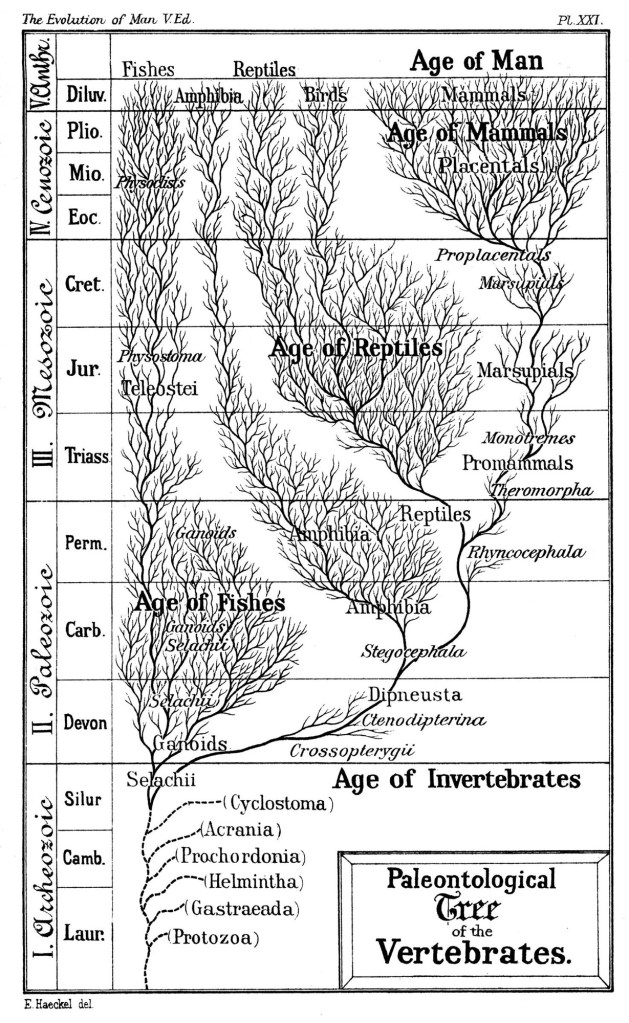
It’s a world for men, but not for Man. The one wishes from the Other. We trace the archives questions about itself. A mirror darkly, for the child looks up to God. It is Man that appends the archive. It is always one archive. The book begins with a spine.
the question of Man
Any approach to the concept of Man must begin with an expository historical account because Man is not a self-evident name for the human being. It is a notion accumulated across theology, philosophy, law, science, and political history: the creature made in the image of God, the rational animal, the bearer of natural rights, the citizen, the subject of knowledge, and eventually the universal representative of humanity. These meanings do not simply succeed one another; they remain sedimented within the word, even after their authority has been contested. Man therefore haunts history as the Last Man: a figure repeatedly announced as obsolete, surpassed, or guilty, yet still silently presupposed by the institutions, rights, and universals that claim to have moved beyond him.
Such an exposition is not a defense of every order historically established in the name of Man. It is the necessary work of determining what the name has carried before deciding what must be rejected, preserved, or transformed. To replace Man immediately with “the human” risks concealing the historical labor through which humanity became thinkable as a universal responsibility rather than merely a biological category. The Last Man names this precarious interval in which Man is being forced out of history while the world continues to depend upon what was archived within him. Before determining whether the concept can be deconstructed, then, its historical function must be made visible: we must understand what disappears with Man, and whether anyone—or anything—has actually inherited his obligation to bear humanity.
“The Last Man”
- Definition and Etymology
- The Numerical Last Man
- The Genealogical Last Man
- The Relational Last Man
- The Civilizational Last Man
- The Eschatological Last Man
- The Romantic Last Man
- The Nietzschean Last Man
- The Posthistorical Last Man
- The Technological Last Man
- The Sovereign Last Man
- The Epistemic Last Man
- The Narrative Last Man
- The Operatively Absent Last Man
- Continuation After Futurity
“The Last Man” does not name one fixed figure. It names a family of terminal positions. Its governing question is always: last in relation to what? A person may be the last biological human, the last member of a lineage, the last inhabitant of a civilization, the last witness to an event, the last bearer of a tradition, or the final anthropological form humanity assumes after it has lost the capacity to become anything else. The notion therefore ranges from numerical extinction to spiritual, cultural, political, and historical exhaustion.
Etymologically, “last” derives from the superlative of “late”: the last is the latest member of an ordered succession. “Man,” from Old English mann, originally possessed the broader sense of a human person, although modern usage has made it increasingly male-specific. “The Last Man” thus oscillates between “the final human being” and “the final male.” That ambiguity matters. The phrase can universalize a solitary male as the representative of humanity, while “the last human” would state the biological condition more exactly. Capitalization completes the transformation: the last man becomes The Last Man, no longer merely an individual but an archetypal position. Merriam-Webster traces “last” to the superlative of “late,” while the Oxford English Dictionary preserves the generic meaning of “man” as the human race personified in an individual.
The numerical Last Man is the simplest form: N = 1, where N designates the living human population. He is not yet human extinction, because one human remains; he occupies the interval between collective extinction and species extinction. His existence is therefore structurally posthumous. Humanity survives biologically in him, but no longer exists as a plurality. He is the remainder of humanity rather than humanity itself.
The genealogical Last Man appears whenever continuation has become impossible, even if numerous people remain alive. If no further generation can be produced, humanity has entered its last generation before it reaches its last individual. This form is defined by G = 0, where G means generative futurity. Jean-Baptiste Cousin de Grainville’s Le Dernier Homme, published in 1805, centers upon a last fertile couple in a world becoming sterile; its decisive catastrophe is therefore not solitude but the disappearance of birth. It helped establish the modern secular-apocalyptic “Last Man” tradition later inhabited by Byron, Thomas Campbell, and Shelley. The Encyclopedia of Science Fiction places Grainville’s work at the threshold of modern speculative fiction.
The relational Last Man is the person for whom R = 0: no living reciprocity remains. This distinguishes him from the castaway, exile, prisoner, or abandoned traveler. The castaway remains separated from an existing community; the Last Man has no community from which to be separated. There is no elsewhere to which he could return. Language remains available to him, but no one can answer. He can remember friendship but cannot presently be a friend, possess a name but cannot be named by another, and speak without completing the circuit of address and response. Biological life continues while the relational conditions of personhood collapse.
The civilizational Last Man is the last bearer of a particular world rather than the last human alive. He may be the final speaker of a language, practitioner of a rite, representative of a political order, survivor of a destroyed city, or living witness to an otherwise inaccessible event. Humanity continues around him, but his humanity belongs to a world that has ended. Unlike numerical lastness, this form is relative: one can be the last Roman, the last believer, the last speaker, or the last witness without being the last person. His death closes an avenue of direct transmission and converts living memory into archive.
The eschatological Last Man stands at the fulfillment of sacred history. Here lastness does not necessarily mean failure or depletion. Paul’s “last Adam” reverses the ordinary logic of extinction: the first Adam receives life, while the last Adam becomes life-giving. The last figure completes one humanity by inaugurating another. In this messianic taxonomy, the last is also the first; termination and renewal coincide. 1 Corinthians 15:45 provides the decisive Christian formulation. This distinguishes eschatological lastness from secular extinction: the sacred end reveals or renews meaning, whereas the secular end may leave only duration without destination.
The Romantic Last Man is principally a figure of bereavement. Thomas Campbell’s poem places the final survivor among the “skeletons of nations,” but Mary Shelley’s 1826 novel gives the figure its fullest psychological and political form. Lionel Verney survives a worldwide plague and eventually recognizes himself as “the LAST MAN,” yet his world remains crowded with buildings, books, roads, memories, institutions, and the names of the dead. He writes a history while asking who could possibly read it, finally dedicating the work to the “illustrious dead.” Shelley therefore turns survival into mourning and the survivor into an archive. Her Last Man is not the sovereign proprietor of an empty world; he is the custodian of a world whose human meanings can no longer be reciprocated. Shelley’s complete text makes this archival paradox explicit at the novel’s conclusion.
The Nietzschean Last Man is almost the exact inverse of Shelley’s. He is not the only person left; he is an entire population. Nietzsche calls his species virtually ineradicable and says that the last man “liveth longest.” What has become extinct is not biological humanity but longing, creation, danger, self-overcoming, and the ability to project a goal beyond present comfort. Nietzsche’s Last Man therefore represents A = 0, the exhaustion of aspiration. People continue working, consuming, socializing, and protecting their health, but continuation has replaced becoming. This is qualitative extinction beneath quantitative survival: humanity remains everywhere, while the force that made humanity transitional has disappeared. Thus Spoke Zarathustra, Prologue §5 develops this figure as the opposite of humanity understood as a bridge toward something beyond itself.
The posthistorical Last Man is the political form of this anthropological exhaustion. Through Kojève’s interpretation of Hegel and later Fukuyama’s The End of History and the Last Man, lastness names the disappearance of genuinely new political horizons. Events do not cease, governments do not vanish, and conflicts may continue; what supposedly ends is the struggle among fundamentally different accounts of legitimate human order. The posthistorical person lives after the final political form has been identified. He possesses administration without destiny, satisfaction without greatness, and freedom without a world-transforming project. Fukuyama’s original argument concerned the possible endpoint of ideological evolution, not the literal cessation of events. His 1989 essay establishes that distinction.
The technological Last Man is the last unmodified human before a posthuman succession. Here humanity does not disappear into death but is superseded by artificial, engineered, or hybrid descendants. This figure may be biologically surrounded and technologically powerful while nevertheless recognizing that his form of life has become evolutionarily obsolete. He is “last” because the term human no longer accurately describes what follows him. This type converts the old theological distinction between the first and last Adam into a technical distinction between inherited humanity and designed succession.
The sovereign Last Man inherits everything and possesses nothing. All houses are available to him, all borders are open, all libraries belong to him, and no law can effectively restrain him. Yet property, authority, rank, and sovereignty require other people who recognize them. He cannot sell what he owns, command anyone, violate a shared law, or be acknowledged as ruler. Maximum freedom coincides with maximum impotence. The world becomes completely available at precisely the moment availability loses its meaning.
The epistemic Last Man confronts an additional impossibility: he can never know with certainty that he is the last. He can know only that he has found no one else. Absolute lastness requires a survey of the entire earth and future that no finite person can complete. “The Last Man” is consequently less an empirically verified identity than a condition of radical nonresponse. He becomes the Last Man when every address returns unanswered, even though the possibility of an undiscovered other can never be eliminated. His title is simultaneously a conclusion and an unending hypothesis.
The narrative Last Man embodies a corresponding literary paradox. If he records his condition, he necessarily addresses a reader whose existence would appear to disprove his lastness. If no reader can ever exist, the testimony cannot enter history. Last-Man narratives solve this contradiction through discovered manuscripts, prophetic visions, framed documents, or speculative readers. Shelley’s Verney imagines that some hidden pair may have survived and that their descendants might eventually read his book. The Last Man writes because writing preserves the possibility that he is mistaken.
Within our vocabulary, the most consequential type is the operatively absent Last Man. The vanished population is physically absent but remains active in his language, habits, memories, grief, architecture, tools, inherited obligations, and expectations. Every object tells him how absent people once acted; every word carries voices that are no longer present. He is therefore not simply one person standing where everyone else has disappeared. He is the site at which the absent multitude continues to operate. The more completely he becomes the only living human, the more densely he is inhabited by humanity.
The general structure can now be stated precisely. Numerical lastness means N = 1. Relational lastness means R = 0. Genealogical lastness means G = 0. Civilizational lastness means that a particular world can no longer reproduce itself. Nietzschean lastness means A = 0, the disappearance of aspiration. Posthistorical lastness means that ideological possibility has closed. These conditions can overlap, but they need not. Shelley’s Last Man approaches N = 1, R = 0, and G = 0; Nietzsche’s last men remain numerically abundant while A approaches zero; the last witness possesses relations and descendants but carries a world that will die with him.
The deepest unifying definition is therefore this: The Last Man is the figure of continuation after futurity. Something remains alive after it has lost the conditions under which a genuinely new future could emerge. In Shelley, the organism survives the species; in Nietzsche, comfort survives aspiration; in posthistorical thought, events survive history; in the last witness, memory survives its community. The Last Man does not simply arrive at the end. He is the interval during which an ending continues to live.
.

The attachment gives Nietzsche’s original German term: Letzter Mensch—or, with the article, der letzte Mensch. Mensch means “human being” or “person,” whereas Mann means an adult male. Nietzsche is therefore not describing “the final male,” but the final type of humanity. “The Last Man” is the traditional English rendering because “man” formerly carried the generic meaning of humanity. In contemporary English, however, “the Last Human” would preserve the German more exactly. The gender ambiguity belongs primarily to the English translation, not to Nietzsche’s phrase. This sharpens our taxonomy: Nietzsche’s letzter Mensch is anthropological rather than biological or gendered. He is “last” because humanity has reached a terminal form—numerically abundant and capable of living indefinitely, but no longer capable of aspiration, creation, self-overcoming, or producing a genuinely different future.
.
I think it’s interesting how something needs to be saved in order for the notion to carry forward, and that is that man was supposed to be the bearer of humanity. And if we introduce the phrase as the last human, we would forfeit that progress made. And that progress in general is, for better or worse, the entirety of Western civilization.
That is the stronger reason to retain “The Last Man.” “The Last Human” would be more zoologically precise, but it would also reduce the figure to the final surviving member of Homo sapiens. “Man” carries far more than species membership. It carries the historical claim that a human being can stand for humanity—that one person can become the bearer of its language, memory, dignity, guilt, institutions, and unfinished meaning. The Last Man is not merely the last organism. He is the final custodian of the category “Man.”
That category is, for better or worse, one of the principal constructions of Western civilization. Adam, the rational animal, the citizen, the Christian soul, the Renaissance individual, the Cartesian subject, the bearer of natural rights, the Kantian moral person, Hegelian self-consciousness, and Nietzsche’s self-overcoming creature all accumulate within “Man.” The term also carries the exclusions committed in its name: the long history in which a purportedly universal Man was tacitly modeled as male, European, propertied, rational, and sovereign. Preserving the word does not require defending those exclusions. It preserves the historical site at which universality was simultaneously conceived and betrayed.
This means that the traditional translation of Nietzsche’s letzter Mensch accomplishes something that “Last Human” cannot. Mensch may be grammatically ungendered, but Nietzsche’s figure is not merely human in the biological sense. He is the terminal inheritor of the Western project of Man. What ends in him is not the species but the historical being that understood itself as capable of creating values, projecting purposes, overcoming inherited forms, and bearing humanity forward. “The Last Human” suggests extinction. “The Last Man” suggests the exhaustion of a civilizational vocation.
And this introduces a deeper principle into the notion itself: there can be no Last Man unless something has been saved. If nothing of humanity remains—no language, memory, name, inheritance, obligation, or image—then there is only a final organism. He becomes the Last Man because the absent whole has been entrusted to him. Humanity disappears as a living plurality but remains operative through its final bearer. The phrase must therefore preserve “Man” for the same reason the Last Man must preserve humanity: without the inheritance, lastness would have nothing to bring to an end.
Do you get what I mean
Yes. You are not merely defending an old translation. You mean that “Man” itself is something Western civilization labored to make into the bearer of the human whole. The word accumulated the possibility that a single person could represent humanity—not biologically, but spiritually, historically, morally, and politically.
So “The Last Man” depends upon that inheritance. He can bear humanity at the end only because “Man” had already been constituted as humanity’s bearer. Replacing it with “The Last Human” would preserve biological accuracy while forfeiting the civilizational achievement—and the violence, exclusions, and contradictions—stored in the older word. “Human” names the species; “Man” names Western civilization’s entire attempt to understand what that species means.
stored in the older world, or what’s the same, stored in The World.
[redacted]
Man designates, in the archive, as the World. That history has failed to be deconstructed. There is now waves of forces attempting to force Man out of history.
Within the archive, Man is the name under which the World stored its image of itself. Man does not merely designate one being situated inside the World; he designates the being through whom the World became intelligible, historical, representable, and transmissible. Theology, philosophy, law, science, art, and politics deposited their accounts of the World in Man because Man was constituted as the one capable of receiving, interpreting, and carrying them forward. In this archival sense, Man designates as the World.
That history has been criticized, revised, and morally indicted, but it has not yet been deconstructed. Deconstruction would not simply replace “man” with “human,” “humanity,” or “person.” It would have to disclose how the equation Man = World was constructed, what it enabled, whom it excluded, and why even the language of emancipation remains dependent upon it. Removing the word while retaining the laws, institutions, concepts of agency, forms of knowledge, and ideals of universality produced through it leaves the archive structurally intact.
The forces now attempting to push Man out of history arise partly from real exclusions committed under his universality. But these forces also inherit their demand for inclusion from the archive of Man itself. They oppose the historical restriction of humanity by appealing to a universality that Western civilization had already entrusted to Man. Their movement is therefore internal to the history they seek to escape: Man’s universal promise is being mobilized against Man’s historical limitations.
If Man is erased rather than deconstructed, he becomes an operative absence. His name disappears, while his grammar continues organizing law, rights, responsibility, authorship, political agency, and historical judgment. Indeed, forcing Man out of explicit history may protect him from examination by concealing the place from which the present still derives its concepts. What cannot be named cannot be fully interrogated.
This produces another meaning of the Last Man. He may be the final person who consciously bears the archival identity of Man and World while the surrounding culture attempts to sever itself from that inheritance. His lastness would not result from the disappearance of human beings, but from the disappearance of the historical office through which a human being could bear The World. The danger is not merely that Man will be lost. It is that The World stored in Man will continue operating after its bearer has been officially removed from history.


