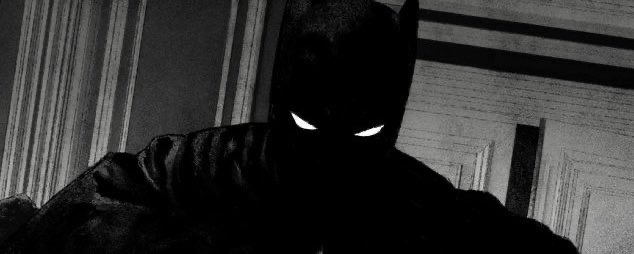
The concept of the indefinite requires a distinction between what is merely absent and what remains unresolved. The indefinite is not nothingness, nor is it a simple lack of determination. It names the domain in which a force has not yet achieved full articulation but is nevertheless operative. It is the barren field of possibility before a definitive form has emerged. Yet this openness contains an ambiguity: the indefinite can signify potential, but it can also signify failure. It is not only what has not yet been determined; it is also what remains suspended because determination was unchosen. This distinction recalls Dante’s depiction of the souls in the vestibule of Hell, those who never fully committed themselves to a direction in life. Their punishment is not the consequence of having chosen evil, but of having failed to choose at all. Their endless wailing represents a peculiar form of existence: a life that remained trapped within possibility without ever becoming actualized. They are not figures of divergence but figures of indeterminacy, suspended between alternatives and unable to gather themselves into a coherent form. The indefinite, in this sense, is not simply freedom before choice; it is also the condition produced when choice never arrives. This provides a revealing lens through which to interpret the Batman universe. The villains of Gotham often appear to represent a deliberate movement toward lawlessness. The Joker, the Riddler, and others seem to embody a rejection of order and a conscious embrace of divergence. Yet their relationship to their own positions is more complex. Despite their claims to absolute independence, they remain dependent upon the structures they oppose. They require Gotham, its institutions, its citizens, and even Batman himself as the stage upon which their identities become meaningful. Their lawlessness is therefore not fully sovereign; it remains reactive and parasitic upon the order it seeks to destroy. Batman represents a different relation to the indefinite. He enters a field characterized by uncertainty, fragmentation, and the failure of existing structures to produce coherence, yet he does not dissolve into that field. He carries determination into indeterminacy. He is the definite moving toward the indefinite: the figure who enters a space of unresolved possibilities while maintaining a commitment that allows response to occur. His sovereignty does not consist in escaping the indefinite, but in remaining present within it without surrendering the capacity to act. This reveals a more complex understanding of sovereignty. The sovereign is not merely the one who imposes order upon a field from outside. Rather, sovereignty belongs to the figure capable of confronting indeterminacy without becoming indeterminate. The failure of sovereignty occurs when one either refuses the call of the indefinite or mistakes destruction for freedom. The apathetic definite, the figure that preserves itself through withdrawal and refuses engagement, is not truly sovereign because it lacks responsiveness. Sovereignty requires entering the space of uncertainty where a genuine demand for action emerges. This structure clarifies the relationship between righteousness and memory. Memory preserves the force of what has withdrawn; it carries forward what is no longer immediately present but remains binding. Righteousness is the response to that preserved force. It is not conformity to a fixed object or possession of a permanent moral state, but the continual alignment of action with a reality whose claim exceeds immediate visibility. Memory makes the claim available, and righteousness answers it.
The obsent names the force that connects these movements. It is neither a simple absence nor a hidden presence waiting to be revealed. It is the condition in which what is absent continues to organize experience, action, and orientation. The indefinite is the field in which possibilities remain unresolved; the obsent is the operative force within that field; sovereignty is the capacity to respond to that force without reducing it prematurely; righteousness is the ongoing act of alignment; and memory is what allows the withdrawn to continue making a claim upon the present. Thus, “Toward the Indefinite” does not describe a movement toward ambiguity or nothingness. It describes a movement toward the field in which reality has not yet fully crystallized, where possibility remains open, and where the necessity of response becomes most apparent. The indefinite is not the absence of form, but the space in which form is demanded. Sovereignty is revealed not by escaping this space, but by entering it with the capacity to answer.
Gravity
What I am thinking about right now is the figure of the Omicron sovereign. The sovereign is traditionally understood as belonging to Ω (omega), because sovereignty appears to represent coherence, unity, and closure. It is the figure that gathers a multiplicity into a single organizing principle. In contrast, the beast, especially in the Derridean polemic between the beast and the sovereign, seems like the natural candidate for ο (omicron): the figure of divergence, exteriority, and disruption. But this would be a superficial reading if we simply assigned omega to order and omicron to disorder. The deeper problem is that coherence and divergence are not fixed moral categories; they can each take multiple forms. Once we move beyond this simple opposition, a more interesting configuration emerges: the sovereign as an omicron disturbance within a coherence of lawlessness. The sovereign does not always appear as the preservation of an existing order. Sometimes sovereignty emerges precisely where an order has lost its ability to sustain itself, where a system of lawlessness has achieved its own internal coherence. The sovereign then becomes the disruption that enters into a closed field of disorder, not to oppose coherence but to interrupt one form of coherence and potentially generate another. The sovereign becomes the disturbance within an already crystallized absence of law. Batman provides a compelling example of this structure. Gotham is not simply chaos; it possesses institutions, laws, and systems of authority. Yet those structures have failed to produce a stable coherence. Batman appears not as the embodiment of an already existing order but as an interruption within a broken order. He is an ο-event within a field that has attempted to become Ω through lawlessness. His presence reveals that even disorder can become structured, habitual, and self-reproducing. The sovereign, then, is not always the guardian of coherence; sometimes the sovereign is the disturbance that exposes the hidden coherence of divergence itself.
The figure of the Omicron sovereign reveals the deeper structure that the concept of the obsent seeks to name. Sovereignty is usually imagined as the highest expression of Ω: the completion of order, the presence of a principle that gathers and stabilizes a field. Yet the sovereign often appears not where coherence is fully present, but where coherence has withdrawn. The sovereign emerges as a response to an absence that has become operative. It is not simply the one who possesses order, but the one who appears when an order can no longer sustain itself through its own presence. This is why the sovereign cannot be reduced to the guardian of law. The sovereign occupies the threshold where law encounters its own limit: where what should organize reality is no longer fully present, yet continues to demand a response. In this sense, sovereignty is itself an obset. It is the force of an absent coherence that reorganizes the field around it. The sovereign does not merely represent what exists; the sovereign responds to what is missing but still governs. The Omicron sovereign therefore names a paradoxical structure: divergence becoming the site through which coherence is reconstructed. Like Batman appearing within the lawlessness of Gotham, the sovereign enters a field whose organizing principle has become absence. The disturbance is not external to the system but emerges from within its failure. The sovereign is the event through which an absent order announces its continued force. This structure extends beyond politics into the broader ontology of experience. What governs a world is not always what is immediately present within it. Promises, laws, memories, ideals, identities, and obligations all operate in this same manner: they exert force without appearing as objects. They organize action through withdrawal. The sovereign is therefore one expression of a more fundamental phenomenon—the reality of what is absent yet effective. It is this domain that the concept of the obsent seeks to articulate. The obsent names the condition in which absence does not signify a lack, but becomes an active principle of organization. Just as the sovereign may arise from the absence of coherence, and just as anger may arise from the absence of a resolution that nevertheless governs the body, experience itself is structured by forces that do not first arrive as present objects. The question is no longer only what appears, but what organizes appearance before it arrives.
The central thesis is that reality and affect are structured not only by what is present but by what is absent in an operative way that organizes experience prior to and beyond presence itself.
What is emerging is therefore not a collection of essays but a single conceptual architecture organized around the claim that experience is structured by operative absence as well as presence. Across references to Merleau-Ponty, Derrida, Cézanne, the Bose–Einstein condensate, and theological motifs such as the Divine Names, the same problem is repeatedly staged: under what conditions does something begin to govern experience before it becomes fully present? These figures are not treated as separate cases but as converging demonstrations that reality is shaped by what structures perception and thought prior to, alongside, and beyond what is given.
To make this claim precise, the concept of the obsent is introduced as the key term of the system. Presence is what is immediately given, and the trace is what remains after presence has withdrawn while still referring back to it; the obsent, by contrast, names what is not derived from presence at all but nevertheless organizes the field of experience as such. It is not a leftover or a sign of something absent, but the condition in which absence itself becomes structurally effective, determining orientation without becoming present.
On this basis, anger is redefined in strictly structural terms as the body’s registration that the field of experience has been reorganized by an obsent condition. It is not primarily a reaction to an identifiable object, but the lived disruption of orientation that occurs when what is not present nevertheless governs the structure of response.
This account directly rejects standard interpretations in order to clarify its ontological claim. Aristotle treats anger as a response to insult, the Stoics as a cognitive error, Spinoza as a form of sadness, Nietzsche as resentment, and contemporary psychology as affect regulation. In contrast, the present view holds that anger is the affective disclosure of operative absence itself, in which what is not present nonetheless structures how experience unfolds.
The obsent therefore functions as a bridge between phenomenology and hauntology by specifying a third term beyond presence and trace. Presence is what is given, the trace is what persists after withdrawal, and the obsent is what makes absence itself causally and structurally effective within experience. On this basis, phenomena such as grief, anticipation, and photography are not secondary emotional or representational effects but primary instances in which absence actively organizes perception and action.
From this perspective, anger is not directed toward something missing but arises from something whose absence is already operative within the structure of experience. This reformulation shifts the analysis decisively from psychology to ontology, since anger is no longer explained by misjudgment or loss but by a prior transformation in the conditions that make judgment and loss intelligible at all.
The project as a whole is therefore not a set of independent studies but a unified system of first principles in which all examples serve to articulate a single structure. Concepts such as differentiation, orientation, response, trace, obsent, and coherence function as the internal architecture of this system, while the various thinkers and phenomena serve as demonstrations of how operative absence structures reality across different domains.
A decisive question immediately follows from the introduction of the obsent: how can that which never becomes fully present nevertheless be known? The answer is that the obsent is not known as an object among other objects, nor as a hidden entity concealed behind appearances. It is known through the transformations it effects within the field of experience itself. We do not encounter the obsent directly; we encounter the reorganization of significance that it produces. It is disclosed not by appearing as a determinate object of perception, but by altering the conditions under which anything appears as significant at all. In this respect, the obsent is analogous to a condition rather than an object: it is recognized through the structure of its effects rather than through direct presentation. Its reality is therefore neither hypothetical nor mystical. It is phenomenological and ontological, disclosed whenever the organization of experience has been transformed prior to explicit conceptual recognition.
This also clarifies the relation between the obsent and presence. The obsent should not be understood as the opposite of presence, nor as a hidden reality competing with what is given. Rather, presence itself becomes intelligible only within a field already organized by operative absences that determine relevance, expectation, salience, possibility, and response. What appears does not first acquire meaning by virtue of becoming present. It appears as meaningful because the conditions governing its appearance have already been established. Presence is therefore not the foundation of intelligibility but one moment within a more fundamental economy of orientation. The obsent is not the negation of presence; it is the condition under which presence becomes capable of bearing significance.
The epistemological consequence is equally important. The obsent cannot be verified through direct observation in the manner of an empirical object, because it is not itself an object of experience. It is disclosed indirectly through the lawful transformations it produces in the organization of perception, judgment, and action. Just as a gravitational field is not observed independently of the motions through which it manifests itself, the obsent is recognized through the reconfiguration of experience that it makes possible. Its reality consists not in hidden substantiality but in demonstrable structural efficacy.
Once understood in this way, the obsent can no longer be confined to the domain of individual psychology. It operates wherever absence functions as an organizing condition rather than as a mere lack. Biological evolution is structured by unrealized possibilities; legal systems are governed by obligations and precedents that exceed any particular case; economies are organized by expectations of future value; political communities are sustained by symbolic identities that are never fully present in any individual instance; historical memory shapes action through events that no longer exist as present realities; and theology concerns realities whose efficacy cannot be reduced to empirical immediacy. These are not metaphorical extensions of a psychological concept but distinct manifestations of a common ontological structure. The obsent therefore designates a general principle of intelligibility: the manner in which operative absence structures the emergence of meaning, order, and action across heterogeneous domains of reality.
The distinction between the absent and the obset is the hinge that clarifies the entire structure. The absent is simply what is not present; the obset is what is absent yet remains operative. It is not merely a missing thing but a withdrawn presence that continues to organize action, memory, expectation, and judgment. A trace is one manifestation of an obset, but the obset exceeds the trace because its force does not depend upon visibility. A photograph of a deceased person is a trace, but the continuing grief, obligation, or love that governs the living is the obset. A promise after the speaker has departed, a law after its author is gone, a wound after the original injury, or a divine command after revelation has passed—all demonstrate the same structure: something no longer present continues to exert force.
For this reason, anger is not itself the obset. Anger is the affective registration of an obset. It emerges when the body encounters something that should be present, something that carries a claim upon reality, yet remains unresolved through absence. Anger is not merely an emotional eruption; it is the felt disturbance produced when an operative absence fails to find its proper fulfillment. The body registers a shadow with agency—not because the absent thing has returned, but because it continues to govern despite its withdrawal.
This distinction transforms the concept of righteousness. Righteousness is not a substance possessed by a person, nor a fixed moral state that someone permanently inhabits. It is a response to what remains binding despite not being fully present. Justice, covenant, promise, obligation, and divine command all function as obsets: they are not physical objects before us, yet they orient action. The righteous person is therefore not someone who owns righteousness but someone who continually adjusts action toward an operative order that exceeds immediate presence.
Righteousness, then, is fundamentally a verb. It is the continual re-phasing of action toward a reality that cannot simply be grasped or possessed. This explains why righteousness has an intrinsic temporality. It cannot be stored, inherited, or guaranteed by previous acts; each moment presents a new demand for alignment. Like a musical note that is not intrinsically harmonious or dissonant but becomes one through its relation to the surrounding field, an action becomes righteous through its attunement to the order it enters. The rightness does not reside in the action alone but in its timing, relation, and response.
The musical and physical analogies therefore become more precise. Phase alignment does not mean that one element absorbs another, but that distinct elements enter into a relation of coherence. A note is not righteous because it possesses harmony; it is righteous because it answers the structure of the chord. A biological system, an engineered network, or a living community remains viable through continuous correction, not because it possesses perfect order once and for all. Righteousness is this ongoing calibration: the narrowing of error through responsiveness to a reality that exceeds the individual act.
This also clarifies the concept of wickedness. The wicked are not simply people who possess wickedness as an internal substance. That would repeat the same error of turning an action into an identity. Rather, wickedness concerns a disruption of the relation between action and the order toward which action should be directed. The wicked are those who obstruct, distort, or prevent the movement of alignment. Their defining feature is not merely that they do wrong, but that they interfere with the possibility of right response itself. The biblical image of the stumbling block captures this precisely: the problem is not only the wrong action but the creation of conditions in which others are prevented from moving toward what is right.
Metanoia, then, becomes the restoration of this relation. Repentance is not merely regret over a past act; it is the turning of the whole trajectory back toward the operative reality that was neglected. It is the recognition that one has drifted from the order that continues to govern even in absence. Fear functions as the signal that this divergence has occurred, while peace is the stabilization that allows correction without collapse. The righteous life is therefore not a state of perfection but a continual process of listening, responding, correcting, and realigning.
The deeper structure is that reality is not governed only by what is immediately present. Much of what organizes human existence operates through what has withdrawn yet remains binding. The obset names this domain: the realm of absent forces that continue to shape the present. Righteousness is the art of responding faithfully to those forces, not by possessing them, but by continually bringing action into alignment with what remains true even when it cannot be directly seen.
“The Palace of Obsent” emerges as a transformation of Giordano Bruno’s Memory Palace. Whereas the traditional art of memory constructs an architecture for preserving and retrieving images, the Palace of Obsent begins from a deeper premise: that what governs experience is not limited to what can be stored, recalled, or made present. Memory does not merely preserve what has vanished; it reveals that absence itself can remain active. The Palace of Obsent is therefore not a repository of lost things but an architecture of forces that continue to shape reality after withdrawal.
The distinction between memory and obsent marks the central movement. Memory is often understood as a relation to the past, a mental representation of something that once appeared. But memory discloses something more fundamental: the past does not simply remain as an image within consciousness. It continues to orient action, identity, obligation, and meaning. A person who has died, a promise that has been spoken, a wound that has occurred, or a truth once encountered may no longer be immediately present, yet each continues to govern the present. Memory is therefore not merely a trace of presence; it is the experience of the obsent.
The Palace of Obsent is the space in which these withdrawn yet operative realities are arranged. Its chambers are not filled with objects but with relations: promises that bind beyond the presence of the speaker, laws that govern beyond the lifespan of their authors, traditions that shape communities beyond individual memory, and futures that guide action before they exist. The palace does not preserve things after they disappear; it reveals how disappearance itself can become a mode of presence through its effects.
This extends the Renaissance art of memory into an ontology of experience. Bruno imagined the memory palace as a miniature cosmos in which the mind could reflect the order of the universe. The Palace of Obsent reverses this direction: the universe itself becomes the greater palace, structured not only by visible forms but by invisible relations that organize those forms. Reality is not simply a collection of present entities; it is an architecture of forces, expectations, obligations, and meanings that often operate before they become explicit.
The concept of mīm provides the symbolic image of this architecture. The letter is a vessel: a curved form enclosing an unseen breath. It represents the moment before expression, the interior space where meaning gathers before becoming manifest. The Palace of Obsent is likewise a container for what cannot be directly displayed yet remains effective. It is the chamber between absence and appearance, where the withdrawn continues to shape the revealed.
The Palace of Obsent also provides a bridge between phenomenology and hauntology. Derrida’s trace describes what remains after presence has withdrawn, but the obsent names the deeper condition in which absence itself becomes structurally active. The ghost is not merely a return of something gone; it is evidence that what has withdrawn was never fully outside the present. The obsent is not an object hidden behind reality but a principle by which reality is organizized.
To enter the Palace of Obsent is therefore not to search for hidden objects but to perceive the architecture of influence. It is to recognize that memory, justice, love, grief, faith, and expectation all belong to the same order: they are realities whose power exceeds their presence. They demonstrate that being is not exhausted by what appears before the eye.
The final lesson of the Palace of Obsent is that humanity does not inhabit a world made only of things. We inhabit a world made of calls, echoes, promises, and possibilities. The present is continually shaped by what it cannot fully contain. The obsent is the name for this hidden architecture—the palace in which absence does not disappear, but continues to organize the world.
It also transforms the meaning of knowledge itself. If reality were composed only of present objects, knowing would consist primarily in accurate representation. But if the obsent is fundamental, then knowledge becomes an act of attunement: the capacity to perceive structures that are not directly visible but are revealed through their effects. The astronomer does not see gravity itself but the order it imposes upon motion; the historian does not encounter the past as present but recognizes its continued force through institutions, memories, and inherited forms; the ethical person does not see justice as an object but responds to the demand it places upon action. In each case, knowledge emerges through responsiveness to what exceeds immediate appearance.
The movement therefore becomes a different kind of epistemological architecture. Its rooms are not arranged according to objects but according to transformations. One chamber contains anticipation: the future that does not yet exist but already shapes the present. Another contains grief: the absence of a person whose relation continues to structure the life of those who remain. Another contains obligation: the invisible bond that persists even when no external authority is present. These chambers reveal that human existence is continually organized by realities that cannot be reduced to immediate perception.
This also changes the meaning of creation. Creation is not merely the bringing of something from non-being into presence. It is the process by which latent structures become articulated. The artist does not simply invent a form; the artist responds to possibilities that were already operative within material, imagination, and perception. Leonardo’s drawings, Bruno’s memory wheels, and the symbolic architectures of the Renaissance can be understood as attempts to reveal these hidden relations—the invisible order through which forms emerge.
This is not opposed to the visible world. It is the condition that allows the visible world to become meaningful. Presence is never encountered in isolation; every appearance arrives within a horizon of expectations, memories, possibilities, and inherited structures. What is seen is always surrounded by what is not seen but nevertheless determines how seeing occurs. The visible is illuminated by the invisible architecture that makes visibility possible.
This provides a deeper interpretation of the mirror. A mirror does not simply duplicate what stands before it; it reveals a relationship between presence and absence. The reflected image is neither the original object nor a mere copy. It is a new mode of appearance produced through distance, separation, and relation. Likewise, the obsent is not a hidden object behind presence but the relational field through which presence gains significance.
We complete the movement from mīm to memory. The letter mīm begins as a symbol of enclosure: the holding of an unseen breath within form. Memory becomes the human experience of this enclosure, preserving what has withdrawn while allowing it to remain active. The obsent then becomes the philosophical articulation of the same structure: the recognition that withdrawal does not eliminate reality but can become one of the ways reality operates.
In the end, the Palace of Obsent is a “palace” not of things but of c0ntinuities. It houses everything that remains influential after it has ceased to appear directly. It is the architecture of the promise after the speaker has departed, the meaning after the word has been spoken, the law after the legislator has vanished, and the love that continues after the beloved is gone. It is the place where absence reveals its hidden power—not as emptiness, but as a force that continues to shape the world.
The deepest claim is that reality is not a stage upon which present objects appear; it is a living architecture in which visible forms are continually organized by invisible relations. The world remembers itself through what it cannot fully display. The obsent is that memory written into the structure of being itself and yet remains fluid and elusive upon request.


