post-non philosophy
Philosophy is the name we give to the discipline of those who took the Real to task. It names the activity through which thought responds to the demand placed upon it by reality itself. Philosophy does not arise from a decision to examine the Real; it is, from the beginning, the recognition that thought is already implicated within the Real and compelled to render it intelligible.
To take the Real to task is therefore not to subject reality to an arbitrary judgment, but to assume responsibility for the articulation of what is desperate to be expressed. Philosophy is the disciplined effort to bring the Real into expression, and it has had to learn to preserve the distinction between what can be articulated and what cannot.
The philosopher is not one who selects the Real as an object of investigation, but one who has been chosen to give an account. Their ability is not a circus act. The proof is in the premises. The philosopher begins not with a premature idea of reality, but with the talent to engage in the demand that reality has placed upon itself.
Philosophy is not an attempt to reach the Real from an “outside”. Philosophy is the Real becoming articulate. The activity of thought belongs to reality itself. There is, however, that which exceeds the Real—not because it constitutes another region of reality, but because it is, by definition, other. Semantics remain decisive. What is other, by definition, cannot be assimilated into the Real without ceasing to be other.
Philosophy therefore remains faithful to the Real precisely by remaining vigilant toward what it is not—namely, what is other, whose irreducibility prevents the Real from collapsing into a self-enclosed totality. The task of philosophy is not to abolish otherness by incorporating it into a comprehensive system, but to recognize the grammar of signs through which the Real, and that which is exterior, remain in play.
Fidelity to the Real therefore requires fidelity to cartography—and therefore logic—that conceptualizes this internality. In this instance, it is a fidelity to the journey structure takes through the Real as it becomes intelligible outside a curfew.
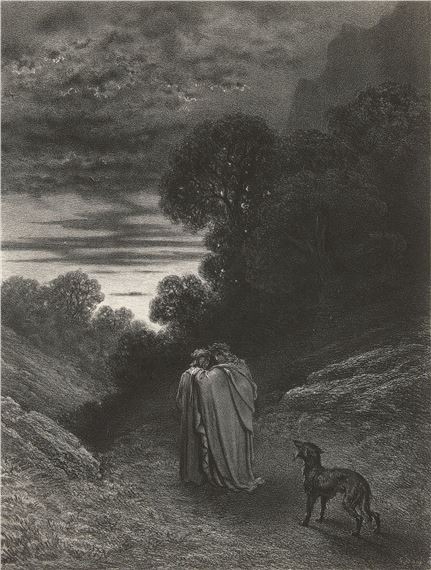
Veltro
“Questi non ciberà terra né peltro,
ma sapienza, amore e virtute,
e sua nazion sarà tra feltro e feltro.”
“This one shall not feed on earth or pelf,
but on wisdom, love, and virtue;
and his birthplace shall be between Feltro and Feltro.”
Dante, Inferno I, 100–111
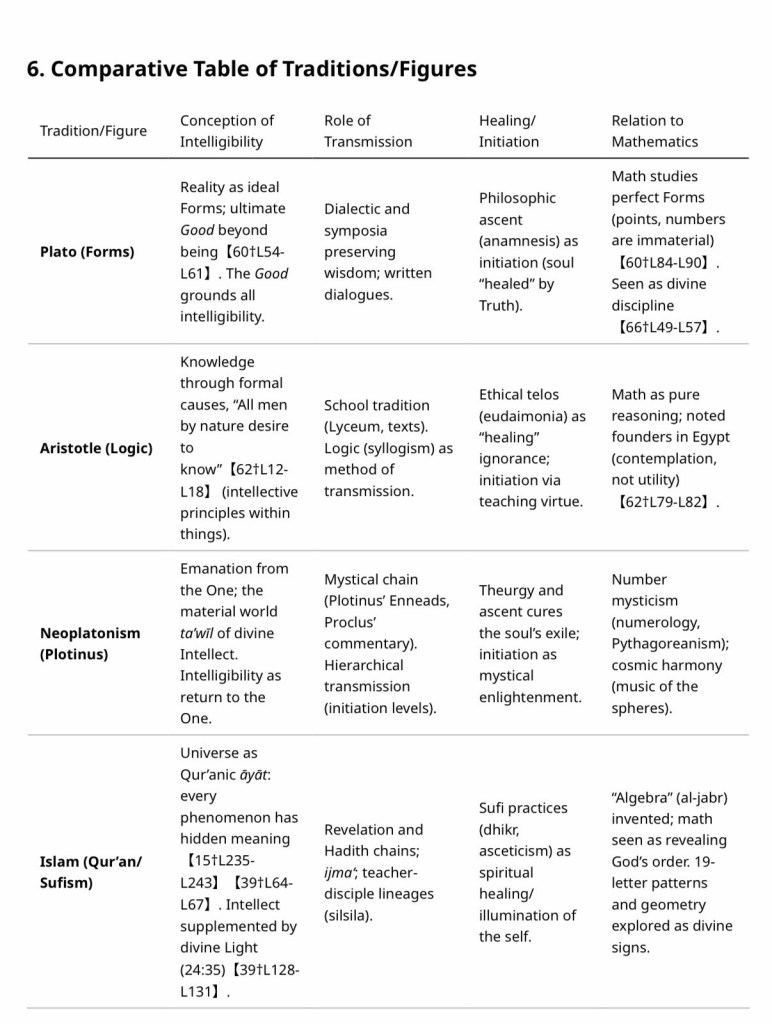
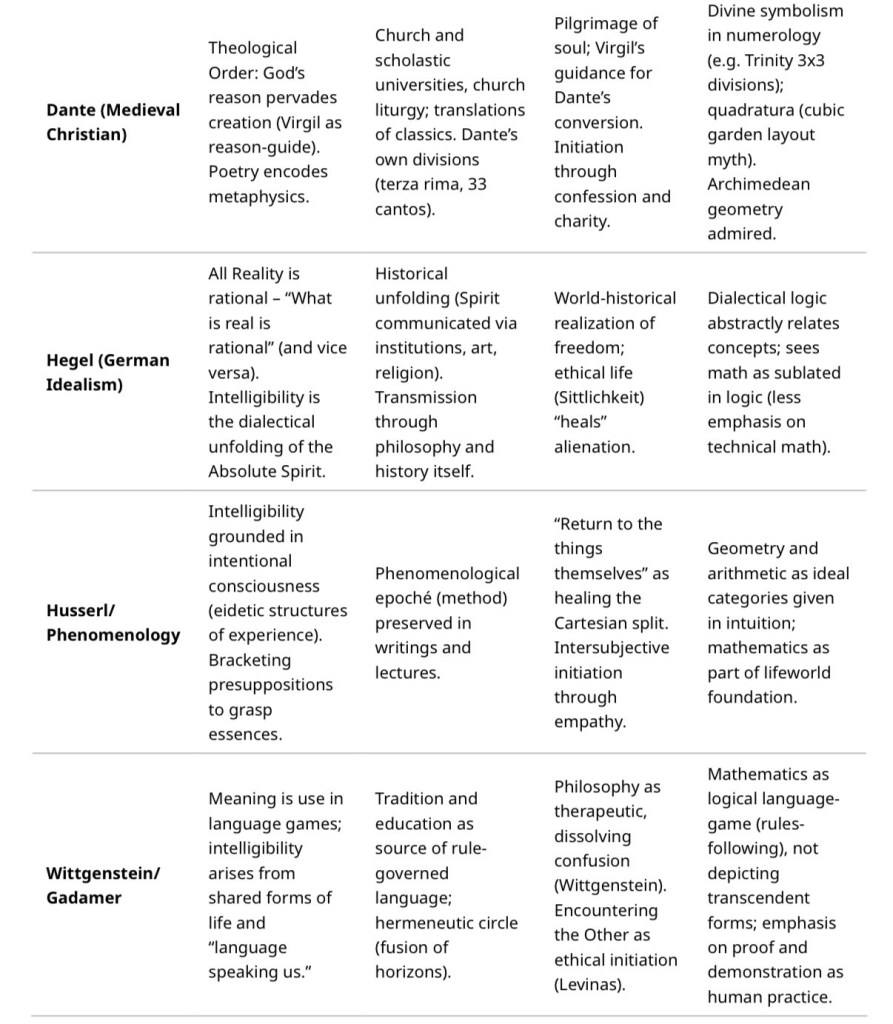
This report explores the novel idea of an “Algebraic Virgil, Army Hospital” – a philosophical program intertwining mathematics (algebra), poetic guidance (Virgil), and the divine-as-healing (army hospital) as a model of transmission, initiation, and revelation. We analyze its conceptual architecture: the Real as a summons calling for expression, intelligibility as disclosure through language, transmission as evidence of meaning’s survival, the wound/trace as a mark of uninitiated ignorance, and perfectibility as the continual “manufacturing of perfections” in life. Drawing on primary sources (Plato’s Forms and Good; Aristotle’s Metaphysics; Neoplatonism; Heidegger on language; Levinas on the Good beyond being; Husserl and Gadamer on language/meaning; the Qur’an (e.g. 41:53 on God’s signs); Sufi tajallī and Names of God; medieval Christian and Islamic commentators; Dante’s Comedy; and history of algebra (al-Khwārizmī) and calculus (Newton)). We situate this program across traditions: Plato’s divine Logos (Good beyond being), Aristotle’s innate “desire to know”, Neoplatonic emanation, Islamic “signs” and tajallī, Dante’s Virgil guiding Dante, Hegelian Absolute, phenomenologists, and modern thinkers. We map analogies between algebra (abstract structure and rigor) and poetic/mystical guidance (symbolic, revelatory language), noting tensions (e.g. rational precision vs. ineffable meaning). Metaphors are examined: Virgil→Algebra (rational guide), Divine→Army Hospital (God as healer of our ignorance), Wound/Trace as evidence of being not-yet-initiated. We propose a semantic/logic-first methodology (analyzing meanings and implications without speculative leaps) and suggest empirical case studies: Newton’s calculus and theology, early Islamic algebra (Al-Khwārizmī), and Dante’s reception. A comparative table shows how traditions from Plato to Wittgenstein treat intelligibility, transmission, initiation, and math. We list primary and secondary sources (e.g. Plato’s Republic, Qur’an translations, phenomenology texts) and outline next steps: research questions on the interplay of language, logic, and the divine, archival sources in theology and math history, and possible visualizations.
1. Conceptual Architecture
- Real as summons: Reality or the Divine calls for articulation. In Islamic and existential terms, God’s signs (Arabic āyāt) constantly summon us to recognize meaning. As William A. Graham notes, the Qur’an “clearly emerges as a call above all to note and consider His signs in nature, in human history, and in His Word itself”. Likewise, Emmanuel Levinas describes the “responsiveness” to the Other as a calling he calls the “Good beyond being” – a trace of the infinite that summons us. Plato’s Form of the Good likewise sits “beyond being, superior to it in rank and power” and is the source of all intelligibility. In sum, the Real (God or absolute truth) manifests as a summons through signs, awaiting articulation.
- Intelligibility as disclosure: Being is revealed through meaning. Heidegger famously taught that “Language is that happening in which, each time, beings are first disclosed as beings”. Thus intelligibility is not pre-given; it is disclosed through language and thought. Plato’s analogy of the sun shows the Form of the Good as rendering the world intelligible: without it, knowledge would fumble in darkness. Similarly, thinkers like Husserl and Gadamer stress that meaning arises in lived experience and tradition, not a priori. Language and mathematics serve to disclose reality: geometry and algebra reveal the ideal structures behind phenomena. (Russell observes that Plato held mathematics “worthy of the Deity” and of “divine necessity”, highlighting how pure math is seen as inherently intelligible and divine.)
- Transmission as evidence: Meaning must be transmitted intact. Just as a language or species survives by faithful copying, intelligibility survives by teaching and tradition. Gadamer notes that tradition is not a static archive but a living flux “not simply everything that ever happened; it is rather what appears significant” and is kept alive by different voices interpreting it. In Wittgensteinian terms, knowing a meaning means others can follow the rule; language games must be preserved to pass on meaning. Transmission itself is evidence of intelligibility’s stability: the fact that a message can be conveyed across time/history shows it has objective structure. (In the “Qur’anic discourse of signs,” the chain of transmission (isnād) and constant interpretation serve as evidence of the enduring truth of the message.)
- Wound/Trace as uninitiation: Lack of initiation into the Real shows up as a wound or trace. This is akin to Derrida’s trace: the imprint of the Real in its absence. Levinas speaks of every encounter as a call “from beyond being,” leaving a trace of the infinite. In religious terms, one might say we are born with a primordial wound of ignorance (e.g. the Platonic soul forgetting the Forms, or the Islamic concept of fitra – innate recognition of God obscured). The “wound” signals that we are not yet initiated; the trace hints at the missing knowledge. The metaphoric “army hospital” model suggests life’s struggles are wounds that stimulate spiritual healing and maturity. Thus the wound is both an evidence of our lack and an invitation to healing/awakening.
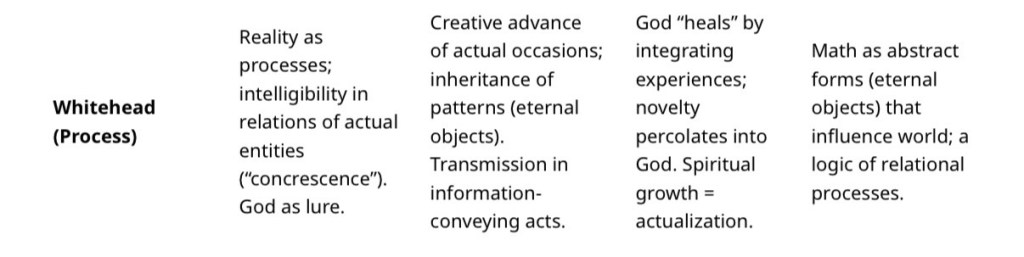
- Perfectibility as manufacturing perfections: The process of existence continually yields new levels of perfection. In process philosophy (e.g. Whitehead) and in a Platonic sense, there is no final “perfect state,” only an endless creation of higher forms of beauty and order. This resonates with the idea that life and language evolve toward ever-more-perfect expressions, leaving “greater and greater forms of perfection” in their wake. Whitehead’s theology even distinguishes God’s ethical perfection (unchanging goodness) from His “aesthetic” perfectibility (dynamic creativity), noting that the idea of a God who grows “fits Christianity far more naturally” than a static God. In other words, the cosmos continually “chases after” higher perfections (the Good beyond being) through history and language, suggesting that every act of creation (from new mathematics to a poem) is a manufacturing of perfection.
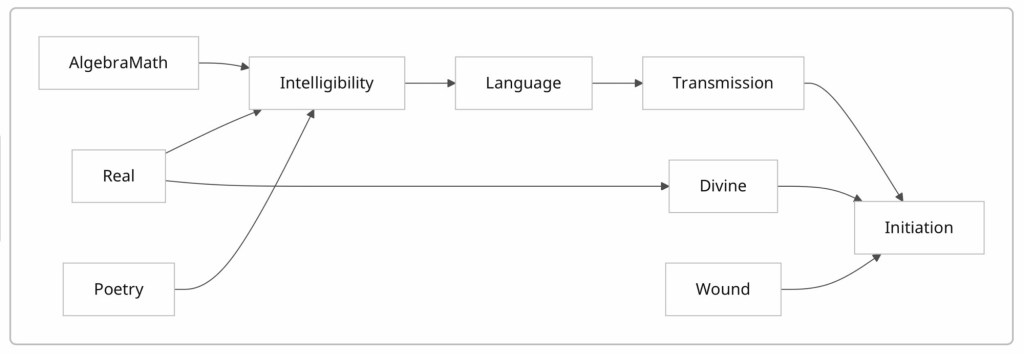
Figure: Conceptual entity-relationship diagram of key notions (Real, intelligibility, language, transmission, initiation, wound/trace, algebra/math, poetry, divine healing).
2. Intellectual History and Traditions
- Plato and Neoplatonism: Plato’s metaphysics anchors much of this program. In the Republic, the Form of the Good is the ultimate reality, beyond being and the source of intelligibility. This divine good orders the cosmos as the sun orders vision, making knowledge possible. Plato explicitly ties mathematics to the divine: in Laws he has the Athenian Stranger say that mathematical knowledge is “necessary and cannot be set aside… of divine necessity” (Russell quoting Plato). Thus, for Plato, true intelligibility is supernatural and mathematics is a royal path to it. Neoplatonists like Plotinus inherited this: all of existence emanates from the One (the Good), and the material world is a dim reflection (a ta’wīl, or veil) of higher truths. In Plotinus’s words, “The Living God… is manifested everywhere” (via all creation as a “giant mirror” of the Divine attributes). Thus Plato’s program of ascending via dialectic and harmony foreshadows the idea of language (logic) revealing reality and the soul’s wound (forgetfulness).
- Aristotle (and Scholasticism): Aristotle rejected Plato’s separate world of Forms, but kept the notion of intelligibility grounded in causes and logic. He famously begins Metaphysics by noting that “All men by nature desire to know” – an innate yearning toward understanding. For Aristotle, intelligibility comes through form and substance: knowing the essence of things is knowing their purpose. Transmission occurs via teaching and tradition (e.g. Aristotle’s Organon logic was transmitted to the medieval schools). Healing and initiation play out in ethics: knowledge of the good leads to the “healing” of the soul (virtue). Mathematics, while not his primary interest, was seen as a purified, abstract science; he noted that early mathematical study arose in societies with leisure (e.g. Egyptian priesthood), reflecting a contemplative ideal. Medieval scholastics like Aquinas synthesized Aristotle with Plato: God is pure form, and intelligibility and faith cohere. The Platonic “Good” was identified with God, and Augustine’s idea that “the world is a book written by God” echoes the notion of divine signs.
- Islamic Tradition: The Qur’an repeatedly calls creation āyāt (signs) of the Divine. For example, “We will show them Our signs in the horizons and in their souls, so that they may know” (Q41:53). Sufi exegesis (tafsīr) speaks of the universe as tajallī (manifestation) of the Names of God. As one Shi‘a commentator notes, “the entire creation is nothing but signs of God… a giant mirror reflecting God’s attributes”. Intelligibility in Islam is thus a divine illumination (nur) – e.g. Qur’an 24:35 calls God “the Light of the heavens and the earth”. Transmission relies on the chain of scholars and prophets (hadith isnād, ijmā‘), assuring continuity of meaning. Healing and initiation come through tazkiya (spiritual purification) and mystical practices, as the wounded soul seeks the Beloved. Algebra itself originated with al-Khwārizmī (“father of algebra”); in Islamic intellectual culture, mathematics was seen as uncovering God’s orderly creation. (A famed Islamic maxim says: “He who knows himself knows his Lord,” implying all knowledge reflects the divine.)
- Dante and Medieval Europe: Dante’s Divine Comedy explicitly casts Virgil (the Roman poet) as his guide out of the dark wood. Virgil represents reason and classical wisdom pointing Dante toward salvation. In our metaphor, Virgil → Algebra: just as Virgil structures Dante’s journey through allegory, algebra (structured logic) guides our ascent to truth. Medieval commentators read the Comedy allegorically, seeing cosmic order: the three canticles (Inferno, Purgatorio, Paradiso) and their symmetrical structure mirror a divinely ordered intelligibility. Dante’s numerology (e.g. 33 cantos per section, 3 major sections, 3-line terza rima) underscores the mathematical harmony of the divine cosmos. Transmission (the Church, monastic scholastics) preserved this vision. The initiatory journey (Dante’s repentance) is healing, and Virgil’s role parallels a mathematical mentor, leading from ignorance to illumination.
- German Idealism and Phenomenology: Thinkers like Hegel and Husserl build on these themes. Hegel’s Absolute Spirit is the self-disclosure of reason in history (intelligibility as world-history unfolding). Gadamer, in Truth and Method, emphasizes that understanding happens in language and tradition – truths emerge via hermeneutic transmission. Husserl’s phenomenology locates intelligibility in intentional consciousness (bracketing presuppositions to see essences). Language is no mere tool but the medium of meaning (Heidegger: “Language speaks”). The divine appears as the call toward the Infinite: Levinas claims “the Real calls, and it is the sense that responds” – making the face of the Other an ethical summons beyond Being. Mathematics, for Wittgenstein, is a rule-governed language game – its meaning depends on communal forms of life, not on a hidden platonist realm. In all cases, transmission (teaching, writing) and initiation (dialogue, moral subjectivity) are central. Modern phenomenologists and hermeneuticists thus supply a philosophy of language and meaning that bridges the mystical and the logical.
3. Analogies and Tensions between Algebra/Math and Poetic/Mystical Guidance
- Algebra as guide (Virgil analogue): Algebra (from Arabic al-jabr) is a formal system that reveals hidden structures (solving equations uncovers “lost” numbers). Like Virgil, algebra provides a clear path through complexity. For example, solving a cubic by radicals mirrors Dante being led through Purgatory by reason. Both algebra and Virgilic poetry transform ignorance into knowledge: an algebraic “solution” is like the epiphany at Purgatorio’s summit. Both require initiation: just as the pilgrim learns to understand allegory, the student learns algebraic language and manipulations. Tension arises because algebra is symbolic and exact, whereas poetic mysticism is imagery-laden and intuitive. Yet they converge in concept: both claim that deeper reality was always there, just not articulated. As Russell notes, mathematics “awaken[s] the learner’s belief in reason, his confidence in truth”, just as great poetry awakens a sense of wonder.
- Poetry and mysticism: Poetry (like Divine Comedy or Sufi poetry) uses metaphor and allegory as meanings disclosing truths that direct confrontation might miss. Mystics claim that certain truths are beyond literal articulation; they appear in symbolic form (e.g. Sufi ghazals using wine as symbol of divine love). Transmission here is often oral and communal (e.g. liturgy, poetry circles). The wound of uninitiation shows up as spiritual yearning; initiation heals through mystical insight. The tension is that poetic meaning is ineffable and personal, whereas algebraic meaning is precise and objective. However, both can claim to uncover what “was silently supporting everything” (a phrase used by some mystical thinkers) – algebra through hidden order, mysticism through hidden oneness. The program suggests bridging these: perhaps poetic algebra or mathematical mysticism where symbols are endowed with spiritual depth.
4. Metaphors and Their Implications
- Virgil → Algebra: Virgil, the rational guide, symbolizes the guiding force of structure and logic. In Dante’s Inferno, Virgil leads Dante by reason, just as algebraic rules guide us to correct solutions. If Dante had “Algebraic Virgil,” it means using mathematical insight to navigate the darkness of ignorance. Philosophically, this suggests that mathematics can play a prophetic or illuminating role, not just a technical one. It raises ethical questions: if algebra guides understanding, what responsibility do mathematicians have to guide society?
- Divine → Army hospital: Describing the Divine as an “army hospital” suggests a God who heals wounded soldiers of life (traumatized souls). It emphasizes mercy and care over judgment. This metaphor implies that encountering the Real (the Divine) often means confronting pain from our ignorance or sins, and the Divine provides healing. Theologically, it aligns with notions of cura animarum (care of souls) in Christianity or the Prophet as a healer of hearts in Islam. Ethically, it frames human failures as part of a healing journey: our imperfections are “wounds” that invite us to a path of recovery through divine guidance.
- Wound as trace of uninitiation: The wound is evidence of being “uninitiated” – it’s the mark left by not knowing the Real. This metaphor implies that suffering or existential ache are pointers to a missing piece of knowledge. Philosophically, this resonates with Plato’s “tear in the soul” or Nietzsche’s “disease of man.” It also invites an ethical stance: those who feel wounded are called to a quest for understanding (initiation), and those who are initiated have a duty to help heal others.
5. Methodological Framework
We propose a semantics-driven, logic-first approach. This means we start with clear definitions of key terms (Real, intelligibility, initiation, etc.) and follow their logical implications without metaphysical leaps. For example, we treat “the real demands articulation” as a thesis and examine its semantic consequences (e.g. if something is real, it must be expressible). This avoids ad hoc speculation and grounds the inquiry in language and logic. We also complement philosophy with historical case studies as empirical analogies:
- Newton/Calculus: Newton developed calculus while seeking to understand natural laws. His belief that mathematics was a way to know God’s creation (science as worship) is a prime case of “algebraic Virgil.” Newton saw divine order in his equations, treating God as a cosmic healer of ignorance. Studying his letters (e.g. Opticks, unpublished theology) could show how a mathematician acts as a Virgil-guide.
- Islamic Mathematical Tradition: The emergence of algebra in the 9th century (al-Khwārizmī’s al-Kitāb al-mukhtaṣar) exemplifies a culture linking math and revelation. Sufi and Quranic commentators (e.g. Rūzbehān, Qushayrī, al-Ghazālī) often speak of geometry and numerology as paths to the Divine. A study of medieval madrasa curricula and tafsīr on āyāt (signs) can empirically test ideas about language as divine sign.
- Dante’s Comedy Reception: Scholars have documented how Dante’s numerological patterns (e.g. number 3) encode philosophical ideas. Examining commentaries by Boccaccio or modern scholars on the Comedy shows how poetic symbols disclosed philosophical truths (the Real) to readers over centuries.
6. Comparative Table of Traditions/Figures
7. Sources and Bibliography
Primary/Official Texts: Plato’s Republic and Laws (Form of the Good); Aristotle’s Metaphysics and Nicomachean Ethics; Plotinus’ Enneads; the Qur’an (esp. 24:35, 41:53); Dante Alighieri, Divine Comedy; Al-Khwārizmī’s Kitāb al-Jabr; Isaac Newton’s Principia Mathematica and theological letters; Husserl’s Logical Investigations; Heidegger’s Contributions to Philosophy (From Enowning); Levinas’ Totality and Infinity; Gadamer’s Truth and Method; etc.
Secondary Scholarship: William A. Graham, The Qur’an as a Discourse of Signs; Levinas scholarship (e.g. Ethics and Infinity); Russell’s Mysticism and Logic (essay “The Study of Mathematics”); Ian Watt, Myths of Modern Individualism; Seyyed Hossein Nasr, Knowledge and the Sacred; Huston Smith, Forgotten Truth; modern algebra histories; Dante studies; Guénon on tradition (e.g. The Reign of Quantity); contemporary work on language philosophy (Stanford Encyclopedia of Philosophy entries on Heidegger, Wittgenstein, Gadamer). Many sources are available online via archives or university pages. For example, Paul D. Miller’s summary on Heidegger in Stanford Encyclopedia, or 1000-Word Philosophy pieces. Specific references (with URLs): Levinas (Stanford: see “Responsibility for the Other”); Graham’s talk summary; Russell’s online text; Islamic exegesis (Essence of Islam site); Plato (1000WPhilosophy); Aristotle (online Metaphysics); etc.
8. Next Steps and Research Directions
- Research Questions: How does viewing language as divine “sign” change our understanding of semantics? Can algebraic structures be interpreted poetically to reveal hidden truths? What does initiation mean in secular terms (education, conversion, cognitive breakthrough)? How do “wounds” in one tradition (original sin, existential angst, keening) correspond to each other? Does the history of math (e.g. calculus in Europe, algebra in Baghdad) support this model?
- Archival Sources: Investigate medieval Arabic manuscripts on algebra (e.g. al-Khwārizmī, al-Khayyām), Sufi tafsīr (e.g. Rūzbehān’s commentary on the Qur’an), Church Fathers (Gregory of Nyssa on Logos), Renaissance philosophy (Cusa’s De docta ignorantia), and scholastic trivium (grammar, logic, rhetoric as “virgils”) for analogies. Early modern scientists’ diaries (Descartes, Fermat, Newton) could reveal personal meta-views of mathematics as guidance.
- Visualizations: The above entity-relationship and timeline diagrams are prototypes. We could refine the concept-map with labeled arrows (“calls forth,” “reveals,” etc.) and a timeline of key moments (Plato ~380 BC; Qur’an 7th c.; Dante 1300s; Newton 17th c.; Hegel 1800s; Husserl 1900s; Levinas/Gadamer mid-1900s) to contextualize development. Possibly a graph linking authors and concepts (e.g. Plato→Neoplatonism→Christian Neo-Platonism→Islamic philosophy) or a network showing “transmission lines.”
- Methodological Elaboration: Further develop the “semantic-first” approach by applying formal semantics tools (truth-conditional analysis, pragmatics) to the idea of the “Real as summons.” For example, treat the Real’s call as an utterance requiring a response—modeled with speech-act theory. Use model-theoretic logic to explore “wound = ¬Initiated” as a formal condition.
- Peer Collaboration: Engage scholars in philosophy of religion, hermeneutics, and math history to critique and refine the framework. A workshop bringing together a Platonist, a Heidegger scholar, an algebraist, and a mystic would be illuminating.
Next Research Steps: Draft queries for archives (e.g. Bodleian, Gallica) on medieval commentators; compile relevant citations in primary languages (Arabic, Latin); and experiment with simple semantic analysis (e.g. formalizing the sentence “the Real demands articulation” to test internal consistency).
Sources (suggested): Plato, Republic (trans. Reeve, Hackett); Aristotle, Metaphysics (Ross trans.); Levinas, Totality and Infinity; Heidegger, Hölderlin’s Hymn “Germania” (Language lecture); Qur’an (trans. A. Yusuf Ali); Al-Khwārizmī, Al-Jabr (various editions); Dante, Paradiso (translation by Mandelbaum); Russell, “Study of Mathematics”; Husserl, Crisis of the European Sciences; Gadamer, Truth and Method; and scholarly articles (e.g. William A. Graham, The Qur’an as a Discourse of Signs; Nickolas Pappas, Routledge Guide to Plato; M. Augros on Aristotle). These provide context for and evidence of the themes outlined above.


